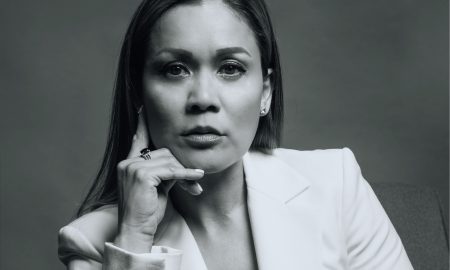
Today we’d like to introduce you to Jocelyn Francisco.
Thanks for sharing your story with us Jocelyn. So, let’s start at the beginning and we can move on from there.
In order for you to know who I am, or how I became the person I am today, I will begin by sharing with you who has made the greatest impact on my life, my father. The stories of my father growing up in Bulacan, Philippines has humbled me in many ways. He was the third oldest of six children. His father passed away when he was 18, which caused him to discontinue college in order to support his siblings through school. At one point, my father became a Jeepney driver.
A jeepney is a public mode of transportation that looks like a colorful army jeep. After the American occupation, many surplus jeeps were left behind and converted for commercial use. He eventually met my mother who was one of his passengers. They dated and continued to keep in contact even when she had immigrated to the United States in 1980. She wrote him letters and sent recorded messages via cassette tapes. She returned to the Philippines in December 1981 and married my father. She gave birth to me nine months later.
Due to my father’s struggles, he often emphasized two things: (1) education and (2) culture. Because he was unable to earn a college degree, it was very important that I did. He frequently reminded me that anything can be taken from you, except your education. This has been the source of motivation for me as I pursued a career working to help others and performing services that help solve social problems. I attended California State University, San Marcos, where I earned a Bachelor’s degree in Psychology. Immediately thereafter, I moved to Orange County, California to earn a Masters in Counseling Psychology and Doctorate in Clinical Psychology. I became a licensed Clinical Psychologist in 2008.
My father is the only one of all his immediate family members to be in the States, even to this day. As a result, we often traveled to the Philippines about every two years. Traveling to the Philippines exposed me to so many things, from seeing how people live to exploring many beautiful places. This exposure, along with being spoken to in Filipino, has been a gift.
Great, so let’s dig a little deeper into the story – has it been an easy path overall and if not, what were the challenges you’ve had to overcome?
For the most part, it has been a continuous learning process. I entered the year with the intention of “connecting” as something I wanted to focus on, as well as what I needed to improve on. This process has given me many opportunities to connect and step outside my comfort zone. In doing so, I have had the pleasure of meeting many awe-inspiring individuals who share similar values and goals. One piece of advice that I have found helpful comes from Brene Brown, “Somehow we’ve come to equate success with not needing anyone. Many of us are willing to extend a helping hand, but we’re very reluctant to reach out for help when we need it ourselves. It’s as if we’ve divided the world into “those who offer help” and “those who need help.” The truth is that we are both.”
Alright – so let’s talk business. Tell us about Little Yellow Jeepney – what should we know?
I am a parent of two second generation half-Filipino and half-Laotian children. As a professional and a parent, I believe it is important to inspire children to be curious about the world and to be globally aware. I believe in teaching children to not only appreciate, communicate and interact with people across different cultures and in other countries, but also provide them with a stronger sense of cultural identity in an effort to preserve their own culture. In order for children to be comfortable with the world, they must first feel comfortable at home and have a solid foundation from which to explore the world, which is what led to the evolution of Little Yellow Jeepney. I wrote and self-published Little Yellow Jeepney in 2015 for my first child. This book explores various tourist and historical locations within Manila.
It is not common for me to meet first generation Filipinos who speak, let alone understand the language. As I searched for resources to help pass the language on to my children, I found the resources to be limited; especially, compared to other languages. In 2008, with the amazing and talented illustrator, Jamie Lee Ortiz, we created a series that would teach children (and even adults) basic Filipino words. The first book of the series is Oh My Kulay! The literal translation of which is Oh My Color! Oh My Kulay! introduces and helps children acquire their colors using vegetables and fruits in Tagalog/Filipino. This year, Isa, Dalawa, Tatlo Ito Ay Obalo (One, Two, Three This is an Oval) introduces numbers and shapes. This past April, we announced the digital release of Abakada, which introduces the original 20 letters of the Filipino alphabet. I am excited to announce that we will have the hard copy of Abakada available by February 2020. Currently, a book on family members is in progress, with a goal of creating more and having them be an accessible resource to carry the Filipino culture into the future. This past year has been quite an adventure. I am truly overjoyed by the support I have received from the community within this past year. The books are now carried and sold in four bookstores, including Verbatim Books in North Park. I have received orders from and shipped to 19 states and two countries. They are also available for checkout at the San Diego County Library and will be included in the 2019 Local Authors Exhibit as part of the San Diego Public Library. I value the ability to share the language and culture through these books.
We’re interested to hear your thoughts on female leadership – in particular, what do you feel are the biggest barriers or obstacles?
In 2012, I gave birth to my first child. Because I had not worked for my current employer for at least a year, I returned to work after eight weeks of maternity leave, instead of the typical 12. I received many judgments for not being home with my daughter and having returned to work so early. However, in the same breath, there are judgments made about stay-at-home parents. I find that one of the biggest barriers to female leadership is that we are forced to choose between having a family or having a career, then the judgments are made based on the choice selected. During that time, Sheryl Sandberg’s book entitled “Lean In,” helped me accept that we can have it all, just not at the same time.
Contact Info:
- Website: www.littleyellowjeepney.com
- Email: littleyellowjeepney@gmail.com
- Instagram: @littleyellowjeepney
- Facebook: facebook.com/littleyellowjeepney


 Image Credit:
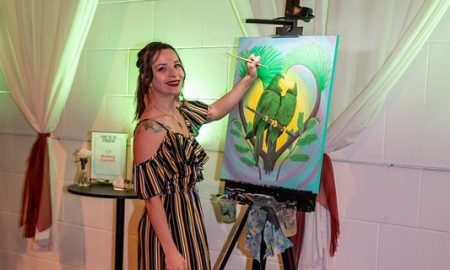
Personal Photo: Kristen Keyes Photography
Suggest a story: SDVoyager is built on recommendations from the community; it’s how we uncover hidden gems, so if you or someone you know deserves recognition please let us know here.