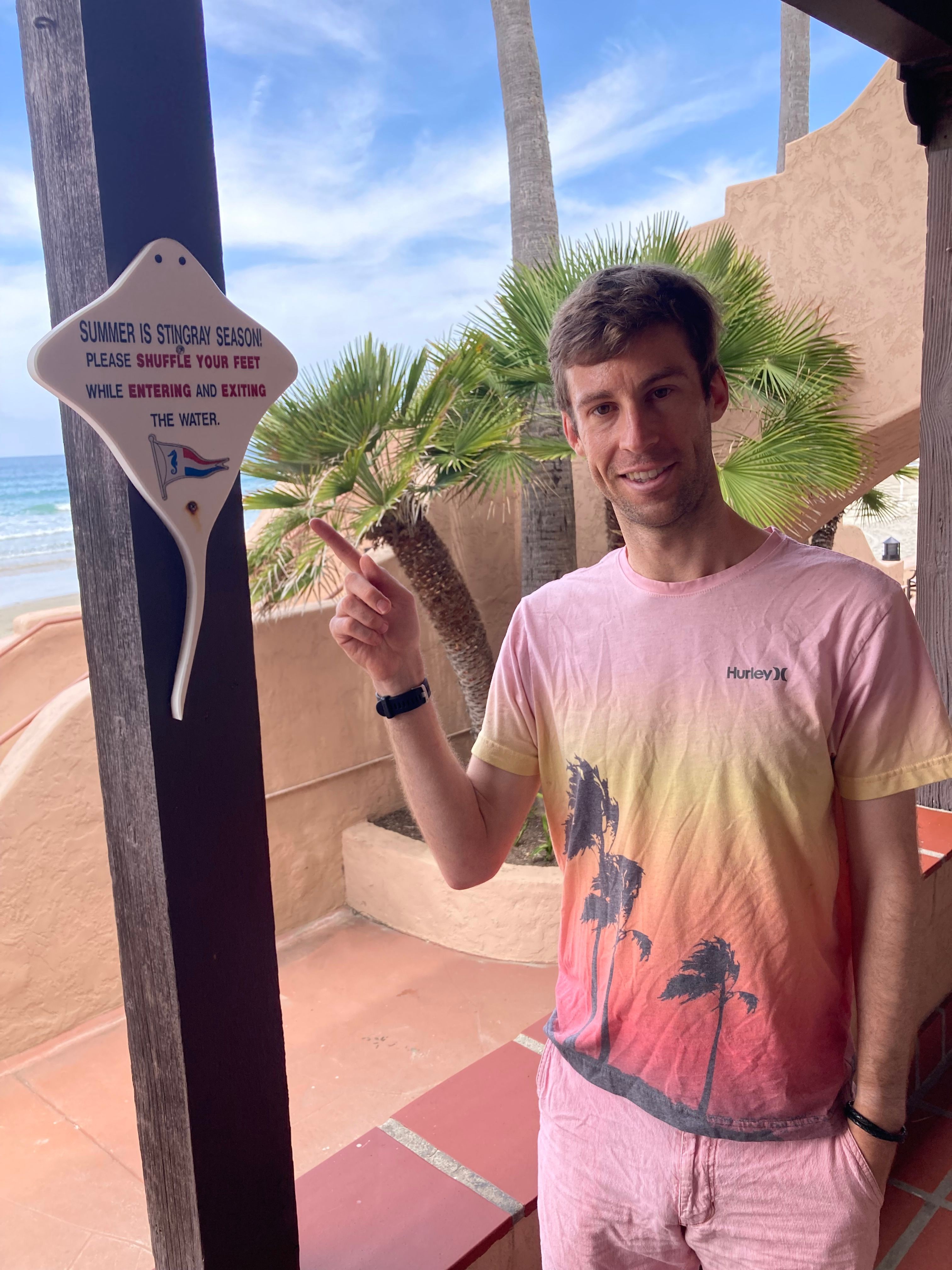
We’re looking forward to introducing you to Randy Lewis. Check out our conversation below.
Randy, a huge thanks to you for investing the time to share your wisdom with those who are seeking it. We think it’s so important for us to share stories with our neighbors, friends and community because knowledge multiples when we share with each other. Let’s jump in: What are you most proud of building — that nobody sees?
I really enjoy learning languages. I previously learned spanish and I’m working on mandarin right now. I usually just use courses and tools built by other companies and enthusiasts, because it’s not worth the ROI on my time to build and refine a tool just for my own use. However, in two cases, I built my own language learning tools, and I’m pretty proud of them.
The first is a piece of software that takes an existing podcast in the target language, and cuts it apart into ~4-6 second segmenets, that are each repeated 3X, with silence in between. I then listen and do my best to repeat while driving. I live in Southern California, so I drive a lot, and driving time essentially comes free. I’ve found this technique to be incredibly effective for both boosting vocabularly and improving accent. It’s essentially like the popular language learning course pimsleur, except there’s no english, and it has an infinite content library (as opposed to pimsleur, which I finished a long time ago).
The second is a piece of software I wrote to take an e-book in mandarin, cut it apart sentence by sentence, and add the corresponding pinyin and english translations under each sentence. This way, when I don’t recognize a character, or don’t understand a sentence, the definition is right there below. It’s super important to reduce the unit time cost of looking up words like this while language learning, because you’re going to do it 100,000 times. I didn’t need this software while learning spanish because I just bought the english and spanish versions of the same book, but with mandarin, you need the mandarin, the pinyin, and the english, and I found 3 different devices to be impractical. This tool enables me to read far above my level, albeit incredibly slowly. so I have access to more interesting content. Right now I’m using it to read 长安十二时辰 (the longest day in chang’an), and loving it!
No one outside of my wife and a friend or two have seen those, and I don’t have the time to turn them into the finished products/businesses they deserve, but they work pretty well for my own use!
Can you briefly introduce yourself and share what makes you or your brand unique?
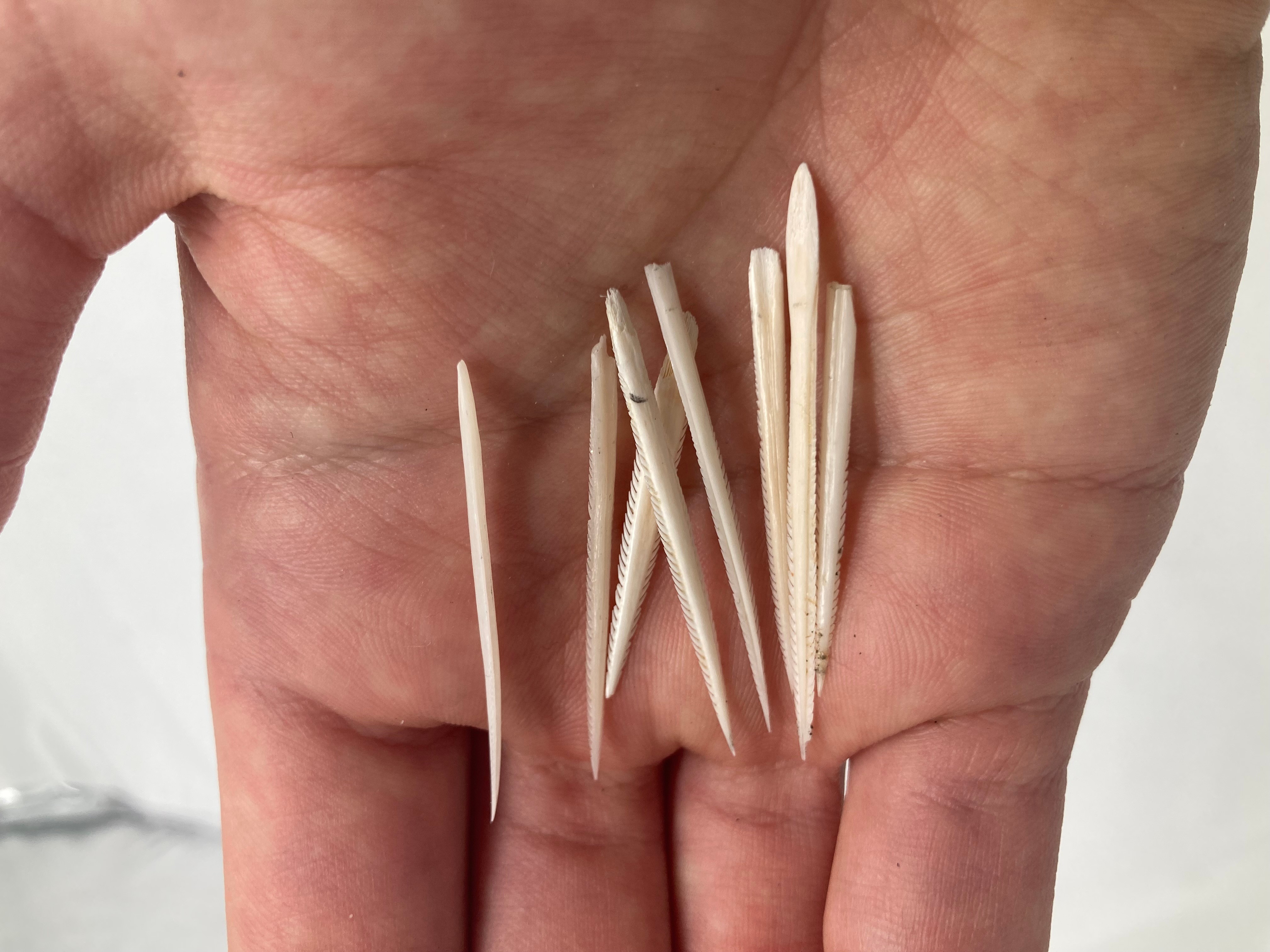
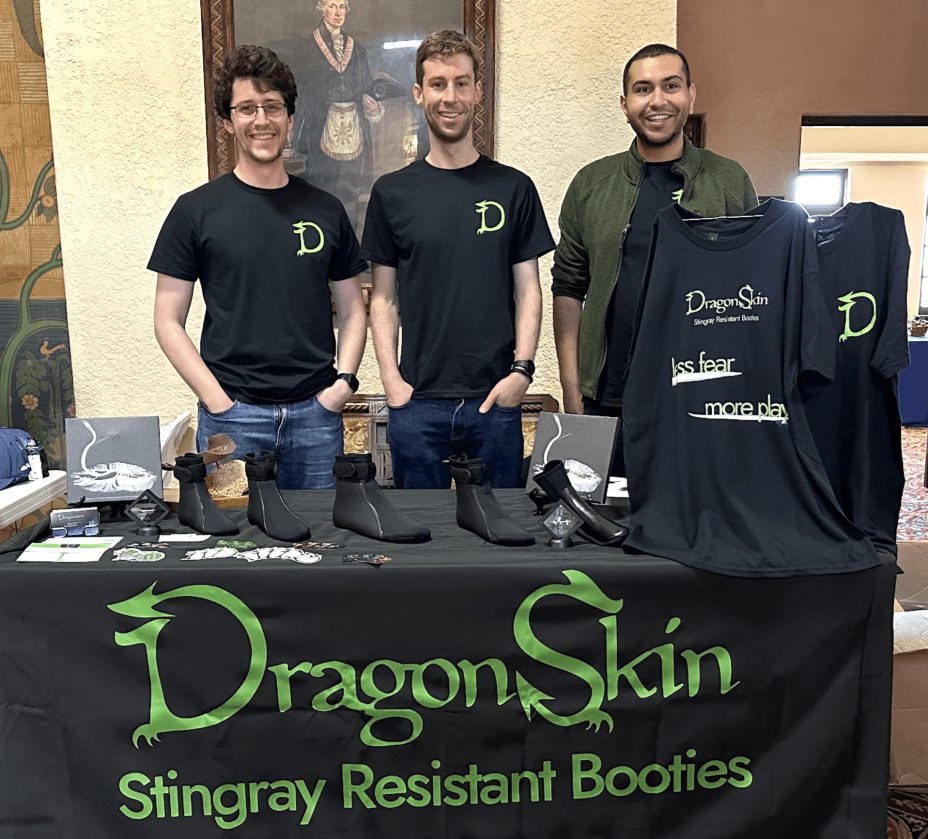
I’m the cofounder of DragonSkin. We’re the first in the world to make surfing booties that protect the wearer from stingray stings. Stingrays are a big problem in tropical oceans throughout the world. Stingrays live in the shallows, and when stepped on by accidental beachgoers, they drive their venemous barb (which looks like a serrated needle) straight into your foot. The resulting injury is excruciatingly painful, and can cause secondary complications like infection, and worse.
What’s particularly wild is how common these injuries are. In Southern California, where DragonSkin is based, it’s esimated that there are over 10,000 stingray injuries per year, as compared to the ~1 shark attack a year. If you spend any time at beaches in SoCal, or any other stingray hotspot (Florida, Baja California, the Gulf of Mexico, and many more), then gettting stung is a real danger.
The usual recommendation to avoid stingray injuries is to do what’s called the stingray shuffle, where you drag your feet through the sand, rather than picking them up with each step. It makes it less likely that you’ll stung, but it isn’t perfect, and the exact level of effectiveness is unknown.
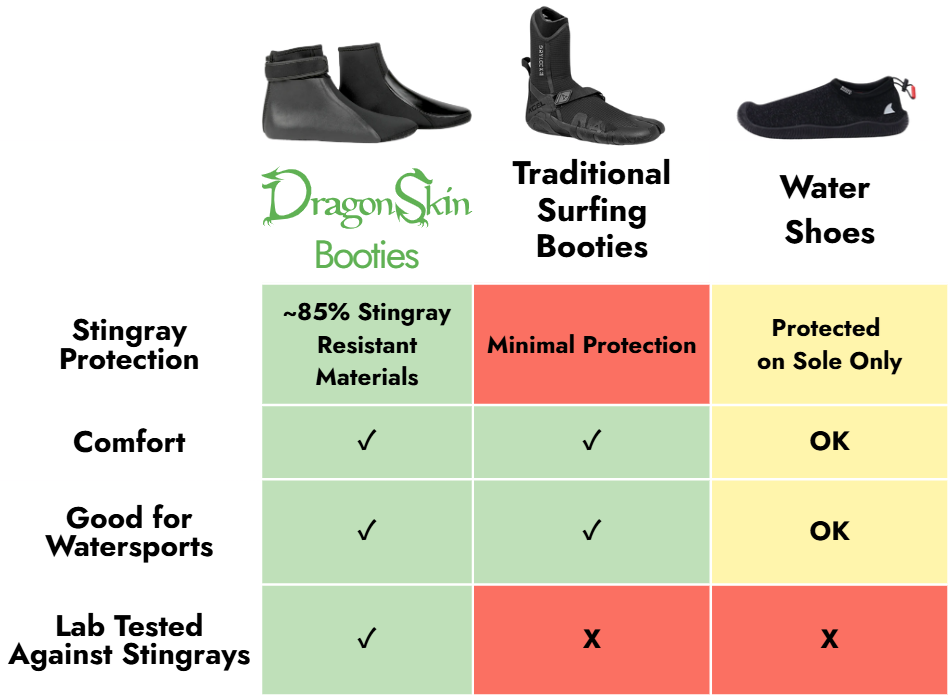
People also often assume that they’ll be safe if they wear dive booties or water shoes, but unfortunately, this isn’t the case. Regular surfing booties are just made with foamed neoprene and a thin layer of vulcanized rubber, which does almost nothing to stop the razor-sharp barb.
You can buy stingray resistant boots, but these are insanely cumbersome. The drag and weight in the water make them totally impractical to do anything in the water other than wade fishing, which is what they’re intended for. And even for that, I’m told it’s a stretch.
So that’s where DragonSkin comes in. We make stingray-resistant booties that are actually wearable, so folks can go about their choice ocean activity, whether that’s surfing, swimming, kiteboarding, stand up paddleboarding, or just hanging out in the water, without having to worry constantly about where they step.
Amazing, so let’s take a moment to go back in time. What did you believe about yourself as a child that you no longer believe?
As a kid, and a young adult, I thought that the best way to motivate yourself to do something was just to think about the right course of action, then to do it. For example, I never used to work in libraries–why waste time on the commute when you can just work in your room?
As I’ve gotten older, I’m come to realize that this appraoch, while it has its merits, also has its limitations. Willpower is not infinite, and I now frequently find it more effective to decide on a course of action, and then to change my environment in such a way that will natrually motivate me to complete it. Just a few examples:
1) If you want to excercise more, try biking, running, or walking places you need to go. The need to get to your destination in a timely manner will motivate you, at least once you’ve started. Or, if that doesn’t work, have a friend drop you off X miles from your house. You’ll be forced to get back on your own power. I find this a lot easier than, say, running on a treadmill, where you can easily stop at any time.
2) If you want to eat healthier, don’t keep junk food in the house. Shop for healthy food while you’re not hungry. Tell yourself you can have junk food, but only if you go out each time. The energy and financial barrier will greatly reduce the amount of junk food you eat, and your decision making is better during your once-a-week shop than it is throughout the day.
3) If you want to get work done, go the library, or office. Yes, it takes time to get there, but think of this as an investment in how much more productive you are likely to be when food and other distractions are inaccessible.
4) If you want to accomplish something, surround yourself with people who are also working towards that same goal (or people who have already accomplished it, as they’ll give the best advice).
What fear has held you back the most in your life?
So far, I would say it’s been fear of running out of money. I’ve known for a long time that I wanted to start a company, and in fact have been working on DragonSkin for many years, but I only recently quit my day job as an engineer to focus on DragonSkin full time. The problem is that DragonSkin, like many early-stage companies, doesn’t pay the bills yet. It takes a long, and undpredictable amount of time to build a profitable company, and I don’t have a huge amount of savings.
But in retrospect, I think that part of the reason it has taken so long for DragonSkin to get to a point where it can pay our bills, is because we didn’t quit our day jobs ealier. To a large extent, you get out what you put in, and this decision greatly limited the growth of our company for many years.
If I were to do it again, I wouldn’t quit my day job right away, because I think it’s worth derisking your idea and your team first, and this can be done without a full-time effort. You want to make sure it’s something that people want enough to pay for, and that your team won’t fall apart at the first sign of adversity or get bored and do something else after 6 months. But after that, I would quit, and if necessary, I would raise investment money to bridge the gap between ideation and profitability.
Yes, I’ve heard horror stories about raising money, it’s stressful and risky, how it sucks up all your time, how you give up control of your company, and I’m sure all of those things are true, to some extent. But I’ve also seen the flip side of playing it safe, not quitting the day job, and not raising money, and in a different kind of way, that’s risky too. It’s running the risk that one day will turn into the next and suddenly it’ll be 30 years later and you won’t have lived up to your full potential. Or it’s running the risk that someone else will see that what you’ve already started on the side has significant potential, then steal your idea and execute better and with more resources than you will, and beat you to the punch.
So a lot of these questions go deep, but if you are open to it, we’ve got a few more questions that we’d love to get your take on. Where are smart people getting it totally wrong today?
There’s a big difference between being smart, and being effective. I see many smart people wasting their time and effort by focusing on the wrong areas. Abraham Lincoln said “Give me six hours to chop down a tree and I will spend the first four sharpening the axe.” I think everything follows this paradigm. You should always be striving to improve the way in which you approach problems, and even in your choice of the problems that you approach, or you’ll likely be “cleaning the floor with a toothbrush”.
No matter what you want to do, I would start with some research into how to best go about it, rather than just diving in. Odds are, tens of thousands of people have done similar things before, have looked extensively into the most effective ways to do those things, and in many cases, they’ll have written books, articles, made youtube videos, explaining exactly how to do it. Keep in mind though, the collective wisdom of humanity is still incredibly limited, and conflicting. You’ll also need to use your judgement, bring your own ideas, and most importantly, test what works and what doesn’t. But just taking a step back to think about the best way to approach a problem will save you so much effort during the actual execution, it’s crazy.
Okay, we’ve made it essentially to the end. One last question before you go. What do you understand deeply that most people don’t?
I feel like many people don’t understand investing. They either basically don’t invest at all, instead keeping their money in savings accounts, or they attempt to pick individual stocks with the misconception that they’ll be able to beat the market, statistically. Most people also massively under contribute to their retirement accounts, especially at the beginning of their career, when the growth potential (and resulting tax savings) are by far the highest. Many people don’t even contribute enough to their retirement to get the free employer matching on the first 5% or so, which is totally insane to me, because this is as close to free money as it gets. I certainly don’t know everything there is to know about investing, but I investigated it extensively when I first starting having disposable income, and wrote this blog, mainly as a way to organize my thoughts. If you like money, and don’t like having to work, then I think it’s worth learning at least a little about investing, especially while you are young and have time to take advantage of compound interest.
Contact Info:
- Website: https://mydragonskin.com/
- Instagram: https://www.instagram.com/mydragonskin/
- Linkedin: https://www.linkedin.com/in/randylewis77/
- Facebook: https://www.facebook.com/MyDragonSkin
- Youtube: https://www.youtube.com/@dragonskin