Today we’d like to introduce you to Bryan Vejar.
Hi Bryan, thanks for sharing your story with us. To start, maybe you can tell our readers some of your backstory.
My journey with photography started at a young age; I’ve always been drawn to capturing moments. I started with disposable cameras, just experimenting and documenting whatever caught my eye. At 18, I got my first DSLR, the Nikon D3400, and that really opened up a new world for me. I started diving into the technical side of photography, learning how to shoot manually, edit my work, and develop my own style.
For the first few years, I was fully immersed in digital photography shooting constantly, working with clients, and building my portfolio. But in 2020, I became curious about the roots of photography and decided to try something new. I transitioned into film and got my first 35mm film camera which is the Pentax Spotmatic SP. That move completely changed the way I saw photography. Shooting film taught me to slow down, be intentional, and really think about each frame. It brought a new sense of artistry and discipline to my work that I hadn’t experienced before.
Since then, I’ve continued exploring both digital and film photography. Each medium brings something unique to the table, and I love blending both in my personal and professional projects. Photography has been a constant in my life, a creative outlet, a form of expression, and a growing career. Today, I’m focused on continuing to evolve, work with clients, and tell authentic stories through my lens.
Alright, so let’s dig a little deeper into the story – has it been an easy path overall and if not, what were the challenges you’ve had to overcome?
It definitely hasn’t been a completely smooth road, especially after transitioning into film photography. One of the biggest challenges early on was simply learning how to properly use a film camera. With digital, you get instant feedback, but with film, it’s a different mindset, you have to slow down, really understand your settings, and trust your eye.
Learning to work with available light was another major hurdle. Understanding natural light and how it interacts with film took time especially things like the Sunny 16 Rule and how different films react to light. It’s not as forgiving as digital, and mistakes can be costly.
Speaking of cost, film photography isn’t cheap. From buying rolls of film to getting them processed and scanned, the expenses add up quickly. On top of that, finding a trustworthy lab for processing and scanning was another challenge. You really have to do your research to find places that will handle your film with care and give you the quality you’re looking for.
Then there’s the creative side which is finding the right locations to shoot at. With film, you don’t want to waste a single frame, so location scouting becomes more intentional. I’ve had to really push myself to think ahead, visualize shots, and be patient.
But honestly, all of those struggles taught me a lot, not just about photography, but about patience, consistency, and trusting my creative instincts. It’s all part of the journey, and I wouldn’t trade the lessons for anything.
Thanks for sharing that. So, maybe next you can tell us a bit more about your work?
I’m a film photographer with a deep passion for storytelling, but I also work full-time from home in the medical field as a Patient Services Tech for Sharp. Balancing both roles has really shaped who I am, I’ve learned how to be disciplined, patient, and attentive, which carries over into how I approach photography as well.
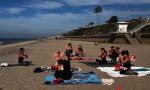
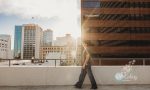
In terms of my creative work, I specialize in 35mm film photography, and I focus on capturing real, honest moments whether it’s portraits, street scenes, or everyday life. What I’m most proud of is my ability to create emotion-driven images that feel timeless. I don’t just take pictures, I aim to tell a story with each frame.
What sets me apart is that I approach photography from both a technical and emotional perspective. Film has taught me to slow down and be intentional, to really observe my environment and connect with people before I even raise the camera. My background in the medical field has also given me a unique ability to connect with people on a human level, which shows in my work especially when shooting portraits or capturing vulnerable moments.
I’m proud of how far I’ve come, self-taught, balancing two worlds, and constantly pushing myself to grow. I want people to look at my work and feel something to pause, reflect, and maybe even see beauty in the ordinary.
What do you like and dislike about the city?
I absolutely love San Diego. There’s so much to appreciate, the weather, the diversity, the creative energy, and of course, the natural beauty. As a photographer, I’m constantly inspired by the city. From the coastline to the urban neighborhoods, there’s always something new to capture. The light here is incredible, especially during golden hour, it’s a dream for shooting film.
Beyond photography, I love how laid back and friendly the community is. There’s a sense of openness here that makes it easy to connect with people, whether you’re in the creative scene or just exploring new places.
What I like least is probably the cost of living. It’s an expensive city, and that can make it tough for artists and creatives who are trying to build something from the ground up. Things like studio space, film development, and even just general living expenses can add up quickly. But despite that, I still wouldn’t trade San Diego for anywhere else, it’s home, and it continues to inspire me every day.
Contact Info:
- Instagram: https://www.instagram.com/d.bryanvejar/


Image Credits
1. Alfredo B.
2&7. Kaithleen G.
3. Alex V.
4&5. Chola Baby
6. Jose C.
7. Dafne F.