
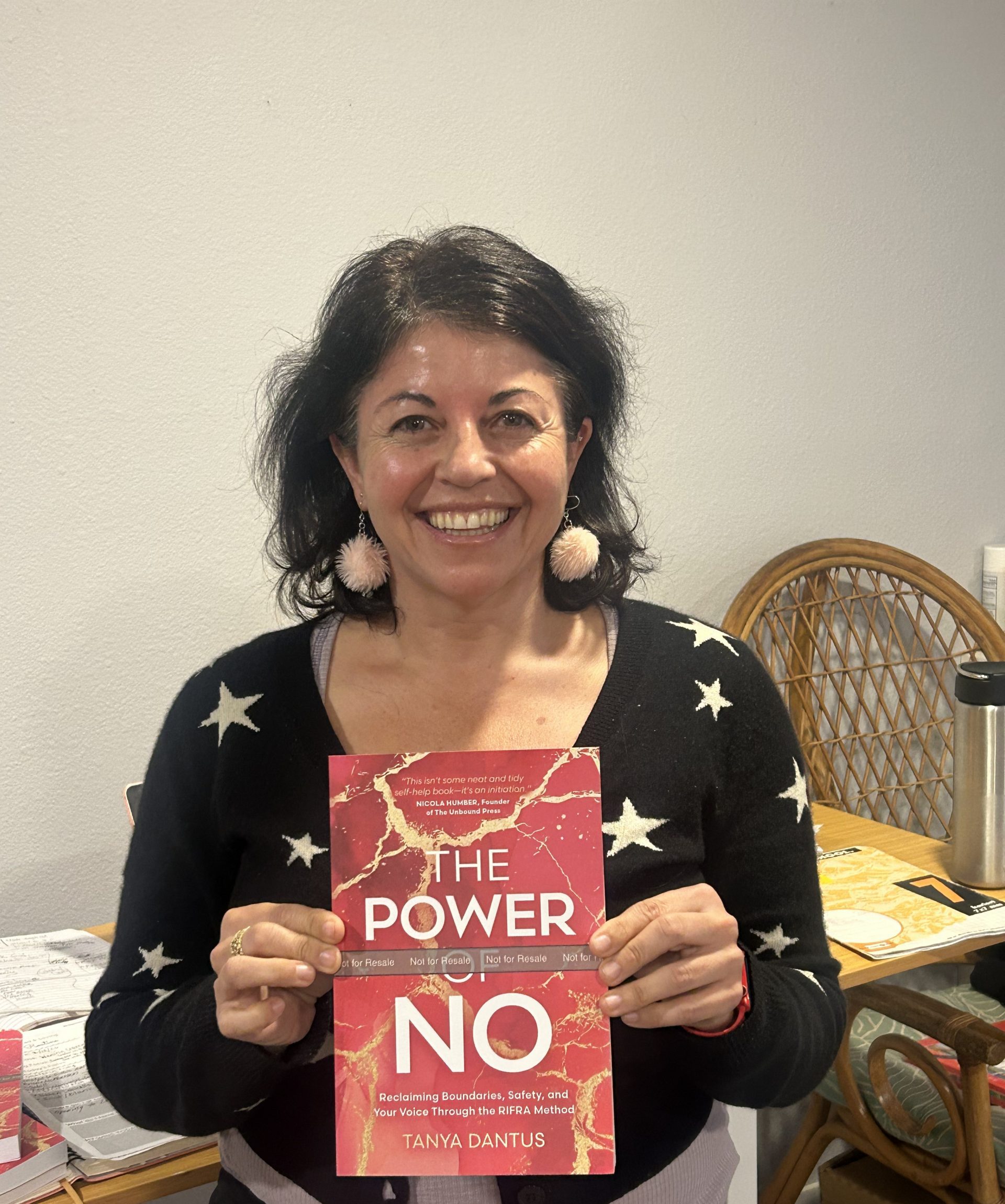
For therapist and author Tanya Dantus, the inspiration behind her new book The Power of No came from years of working with high‑achieving women who appear successful outwardly but often feel exhausted and disconnected from their own needs. Through her therapeutic work and the RIFRA method—Root, Impact, Feel, Reflect, and Empowered Action—Dantus helps women understand the deeper origins of people‑pleasing and over‑functioning patterns. She believes learning to say no is not about rejection or selfishness, but about restoring clarity, self‑trust, and emotional balance, allowing women to set healthy boundaries and reconnect with their authentic voice.
Tanya, congratulations on the launch of The Power of No—what inspired you to write this book now, and what conversations were you seeing with high-functioning women that made this message feel urgent?
Thank you. The book really grew out of years of conversations with women who are incredibly capable on the outside but quietly exhausted on the inside.
Many of the women I work with are intelligent, successful, responsible, and deeply caring. They show up for everyone—partners, families, teams, communities. But somewhere along the way they lose connection with their own voice and needs. They struggle to say no, set limits, or trust their instincts.
What I kept seeing again and again in my therapy practice was that this wasn’t simply a “confidence issue.” It was rooted in early relational patterns, nervous system conditioning, and cultural expectations around being accommodating, self-sacrificing, and “good.”
The Power of No was born from the desire to name these patterns clearly and offer women a pathway back to themselves. Saying no is not about becoming harsh or shutting people out—it’s about reclaiming clarity, safety, and self-trust.
In your work as a therapist, why do you think saying “no” is especially difficult for women who appear successful and capable on the outside?
Many high-functioning women learned early that their value came from being responsible, helpful, and emotionally attuned to others.
They became the ones who kept things together—the mediator, the caretaker, the reliable one. That role can bring a lot of external success, but internally it often creates a pattern of over-functioning and people-pleasing.
The nervous system begins to associate harmony with safety. So even when something doesn’t feel right, saying no can feel risky or uncomfortable—almost like it threatens connection.
Over time this can lead to women saying yes to things that drain them, tolerating dynamics that don’t honor them, and feeling resentful or depleted. The difficulty with saying no isn’t a lack of strength—it’s often a deeply conditioned survival strategy.
Your RIFRA method looks at the root causes of people-pleasing and over-functioning—can you explain how understanding the origin of these patterns helps women create real, lasting change?
RIFRA stands for Root, Impact, Feel, Reflect, and take Empowered Action.
The first step—Root—is essential. Instead of simply telling ourselves “I need better boundaries,” we explore where the pattern actually began. Was it growing up in a family where conflict didn’t feel safe? Being praised for being the “good girl”? Learning to manage other people’s emotions?
When we understand the root, something powerful happens: we stop shaming ourselves.
Then we move through the rest of the process. We recognize the impact the pattern has had on our lives, allow ourselves to feel what we’ve been carrying, reflect on what we truly want now, and finally take empowered action that aligns with our values and wellbeing.
Real change doesn’t happen through willpower alone. It happens through awareness, compassion, and embodied shifts in how we relate to ourselves and others.
You often speak about the hidden cost of being “the strong one”—how does this role contribute to burnout, resentment, and disconnection over time?
Being “the strong one” can look admirable from the outside. It often means you are dependable, resilient, and capable.
But many women in that role rarely feel safe to lean on others themselves.
They hold space for everyone else’s emotions, manage responsibilities, anticipate needs, and keep things functioning. Over time, that imbalance creates exhaustion and emotional isolation.
What I often see is that underneath the strength is a longing to be supported, understood, and met. When that need goes unmet long enough, resentment can quietly build.
Part of the healing journey is allowing strength to coexist with vulnerability—learning that you don’t have to carry everything alone.
For women who fear that boundaries will disappoint others or feel selfish, what mindset shift do you believe is most essential for reclaiming their energy and sense of self?
One of the most important shifts is understanding that boundaries are not punishments—they are forms of clarity.
When we avoid boundaries, we often end up saying yes while internally feeling overwhelmed, resentful, or disconnected. That doesn’t actually serve anyone.
Healthy boundaries create honesty in relationships. They allow us to show up from a place of choice rather than obligation.
When women reconnect with their voice and their limits, they often become more present, creative, and alive in their lives. Boundaries don’t close the heart—they protect the conditions that allow the heart to stay open.
Links:
- Book:https://www.amazon.com/dp/
031ZP7D4 - Website: https://www.tanyadantus.com
- Instagram: https://www.instagram.com/
tanyadantus
Popular
-

Reclaiming Boundaries: Tanya Dantus on the Transformative Power of Saying No
-

Reclaiming the Kitchen: CC Consalvo’s Mindful Approach to Everyday Health
-

Leading Through the Hard Seasons: Dr. Anita Polite‑Wilson on Resilience, Anticipation, and the Real Work of Leadership
-

Hidden Gems: Local Businesses & Creatives You Should Know