Hi Aesha, thank you so much for joining us and for sharing your highly relevant insights and learnings. Your work sits at the intersection of science, mindfulness, and performance. What inspired you to launch Tone and Strengthen Wellness, and how are you helping executives turn health into a real competitive advantage in their lives and careers?
Tone and Strengthen Wellness was inspired by the recognition that for executives, health isn’t just about fitness; it’s a strategic asset. As the demands of C-suite life intensify, the ability to manage stress, maintain energy, and think clearly becomes the ultimate competitive edge not just for their health but also for performance at work. I was motivated to start this business because years of sedentary work as a computer programmer led to spinal compression and severe sciatic pain for me.That was my wake up call. I started getting more active, I cut down my work hours, and started prioritizing my health which helped me with pain relief and eventually getting rid of sciatic pain. At the same time my energy levels improved and I was more productive at work. I knew if I had that experience other busy professionals must be going through it too. That’s what inspired me to start Tone and Strengthen wellness.
My core philosophy is to integrate the objective, data-driven insights of exercise physiology with subjective mindfulness training to optimize performance.
My approach helps executives turn their well-being into a concrete advantage in several key ways: My programs move beyond simple fitness routines to combine physical conditioning like strength training and cardiovascular training with mental resilience conditioning like mindfulness, breathwork, and cognitive techniques. As an exercise physiologist, I use a science-based approach to measure and improve key metrics like sleep quality, stress response, and cognitive function, directly correlating these health markers with professional output and leadership effectiveness.
Another key differentiating factor of Tone and Strengthen is that my coaching recognizes that time is an executive’s most valuable asset. Let me share an example here; one of my executive clients took 72 different flights and spent 150 nights away from home (for work) this year. Creating outside the box training and nutrition plans is key for my clients. My wellness plans are designed to be efficient, effective, and fully integrated into busy schedules, ensuring consistency is achievable and sustainable.
Ultimately, my goal is to equip leaders with the physical vitality and mental fortitude required to not just succeed, but thrive in high-stakes environments, making well-being the foundation of their long-term professional success.
You’ve built an incredible career blending neuroscience and movement. For people who sit at desks all day or feel constantly “on,” what are some of the small but powerful posture or movement shifts that can transform how they feel and perform?
Absolutely, neuroscience connecting exercise and productivity and even wealth is amazing and I want to take you behind the science a little bit. Structured movement literally grows our brain by increasing the brain’s ability to reorganize and form new neural connections. Exercise boosts the production of a growth factor called brain-derived neurotrophic factor (BDNF), which is crucial for creating new neurons and neural connections and for improving brain function. Scientific research reveals that professionals who exercise for just 15 minutes a day have better work performance and productivity than their peers who don’t. Multiple studies have also found that people who exercise also earn more than people who don’t.
Exercise doesn’t always have to be for hours. Small exercise snacks during the work day are equally powerful for productivity and vitality. I recommend taking a five minute movement break every sixty minutes to my clients. Some sample exercises are shoulder rolls, chair squats, and desk push-ups. We often spend time hunching over our desks and our chest and shoulder muscles get tight so, my go to upper body stretch is that offsets the hunched position. Place your arms out to the side and gently press your arms to the back wall while pulling your shoulder blades together to open your chest and front of your shoulder. For my clients these small movement snacks lead to better posture and mobility. Movement breaks also lead to improvement in health biomarkers like blood glucose levels and blood pressure reducing their risk of chronic diseases.
These small steps can reduce muscle tension, boost energy levels and ultimately lead to more productivity.
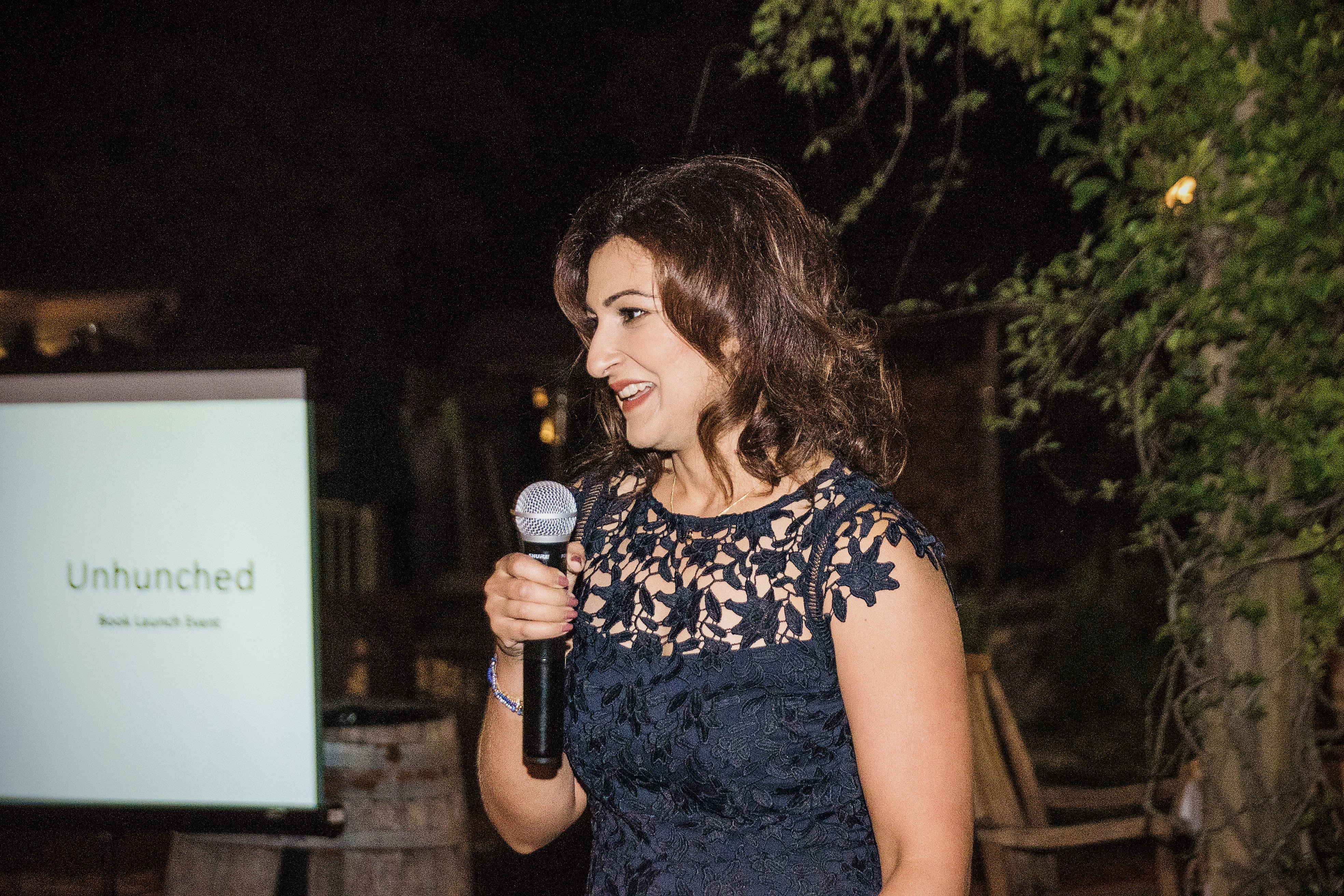
Your book, Unhunched: Discover Wellness Through Posture, dives deep into the connection between posture and overall wellbeing. What’s one insight from the book that tends to surprise people the most?
This is probably a tough question because our posture is so closely tied to so many aspects of our health.
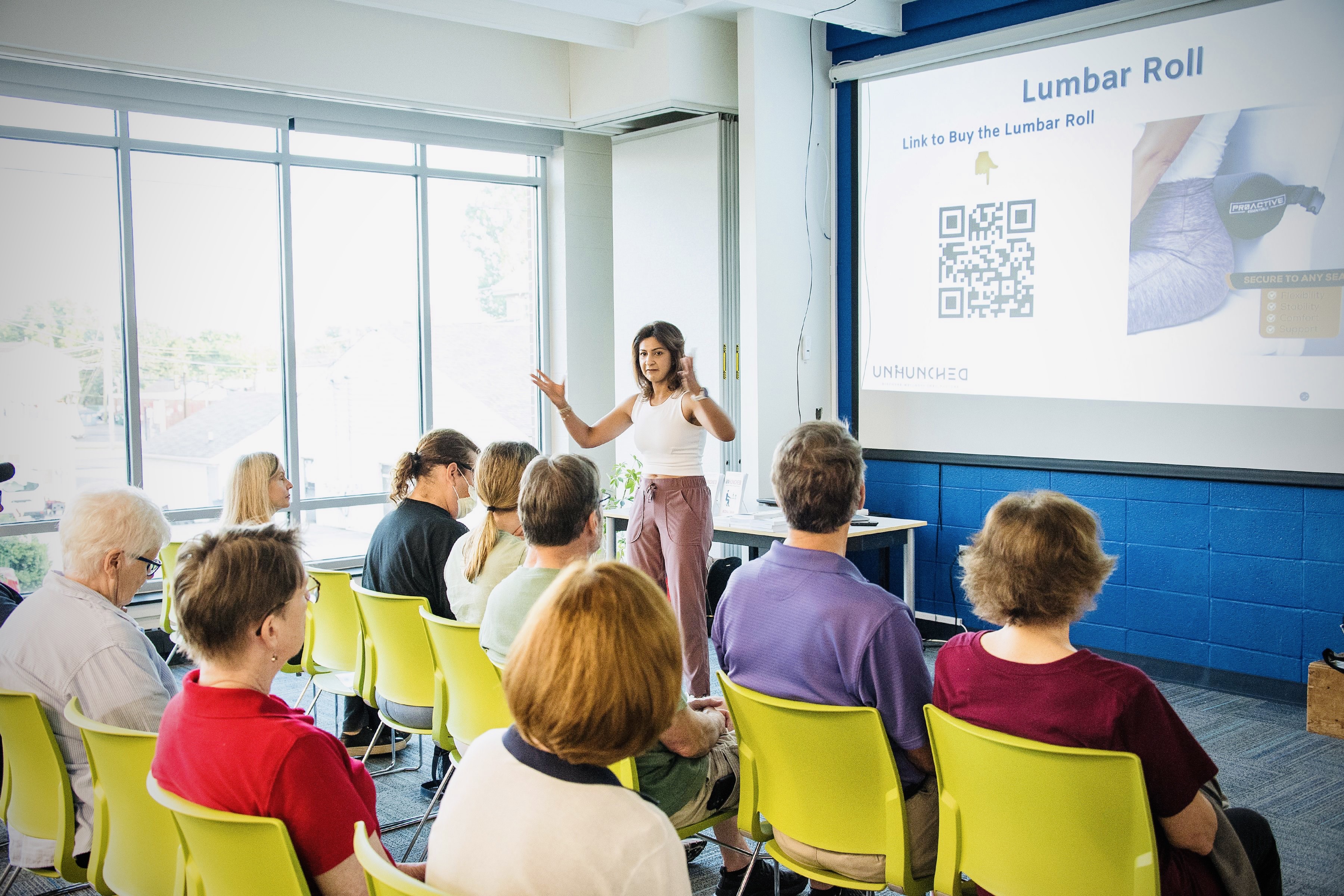
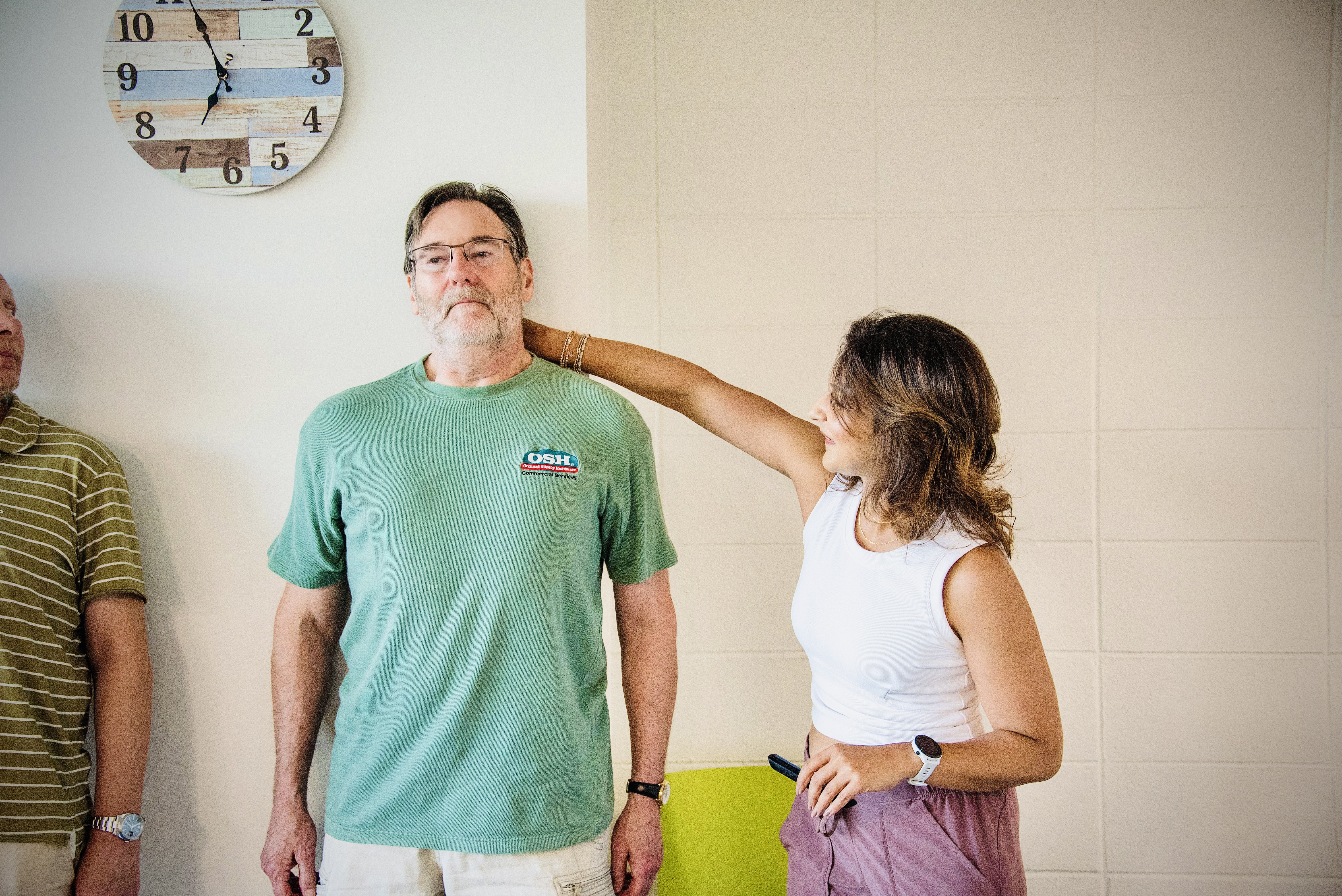
Often when I present posture workshops people are surprised to find out that, “our posture is a reflection of our inner state like confidence and self-esteem.” Our self perception and physical posture form a feedback loop. Where your body position influences your feelings, and your feelings influence your posture. An upright posture reduces the stress hormone, cortisol and increases the power hormone testosterone which helps boost your mood, self-esteem, and increases confidence in your own ideas and decisions.
As an author it resonates with me because I often doubt my decisions. Yes, author’s imposter syndrome is for real.I had serious self doubt during the publishing phase of my book. So, I started practicing power poses, postures that open and expand your body, for two to three minutes whenever self-doubt took over. Power posing helped me overcome my self-doubt and get my book published.
Your new podcast, 9 to 5 Wellness, breaks down complex health science into real, actionable steps. What motivated you to start the show, and what kinds of conversations or topics can listeners expect?
My podcast, 9 to 5 Wellness, was inspired by the need to bridge the gap between academic health science and the daily realities of busy professionals. From my own corporate experience and working with many busy executives, I realized that there was a void in the wellness space, busy professionals were looking for efficient and practical wellness solutions. So, my motivation was to provide actionable steps for the professionals who find themselves constrained by sedentary jobs and busy schedules, but they want to optimize their health. My podcast covers various relevant topics like; ergonomics, exercise strategies for desk workers, exercise principles, stress management and mental resilience in the workplace to name a few.
Most of the guests on my podcast are industry leaders, like leading physiologists, physicians, nutritionists, sleep specialists, fitness experts, and mental health professionals to offer diverse perspectives on health. Each episode provides practical tips that listeners can implement immediately, such as bite sized exercise routines, simple meal prep strategies, or steps for improving sleep quality even with a demanding job.
Honestly, 9 to 5 Wellness is my contribution to the health wellness industry. It is produced in service to the hardworking employees and leaders of every organization who I aim to bring wellbeing.
You’ve spoken to organizations like Salesforce and the University of Pennsylvania about longevity and health optimization. What do you see as the biggest challenge — and opportunity — in helping high-performing professionals truly prioritize their wellbeing?
Working with Fortune 500 companies and top tier academic institutions, I’ve realized that we’ve got the high performance mindset all wrong. There is a constant pressure to be working all the time to be productive.
It’s actually the other way around. Prioritizing our health, our relationships, and mental wellbeing leads to efficiency and high performance. Many research studies have proven that better health leads to better performance at work. Because prioritizing all three of these factors leads to a fulfilled and purposeful life. There is also a serious lack of leadership support and modelling of prioritizing wellness over work.
The biggest opportunity lies in shifting the always ON work culture and giving employees the time to prioritize their wellbeing. And if the leaders can set that example for their team it will have a trickle down effect which will boost loyalty, increase productivity, and create a more resilient and engaged workforce.
Links: