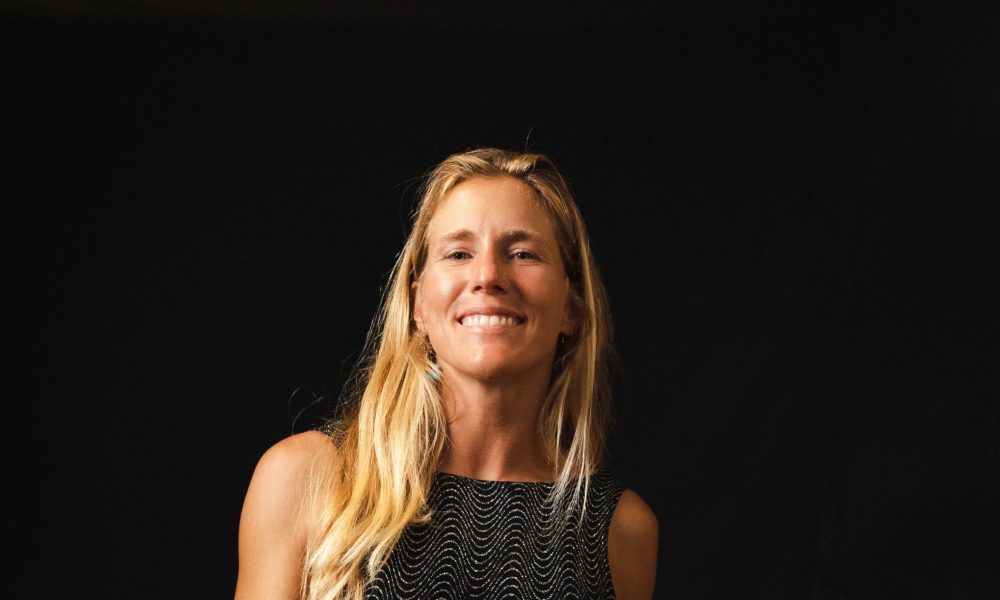
Today we’d like to introduce you to Katie Mae McConnell.
Hi Katie, can you start by introducing yourself? We’d love to learn more about how you got to where you are today.
Hi there! My name is Katie Mae McConnell, and I am an ocean scientist and big wave surfer from Encinitas. Some people know me by my nickname “Katie Mar” from my time spent in Chile, spelled phonetically in Spanish @keiti_mar on Instagram.
Although I spent several years as a professional scientific SCUBA diver, marine scientist, and biology teacher, last year– my rookie year– I was one of the top-performing female big wave surfers in the world, and this year I built on my successes by placing 5th in Hawai’i’s Red Bull Magnitude Women’s Big Wave Contest.
Growing up in Encinitas and Cardiff, my earliest memories are from when my grandmother Martha would take me down to Moonlight Beach and set her bamboo mat under that one palm tree in the middle of the beach. She would recline in her beach chair, smoking cigarettes and tanning with some SPF 2 oil while she listened to the radio and watched me play around in the little shallow waves.
Even though I always loved jumping into waves with a boogie board or when my dad would push me into some waves on a soft top surfboard, I didn’t really learn to surf until I took Surf PE and Ocean Surf Lifesaving PE when I was a sophomore at San Dieguito High School Academy. Once I started surfing, my auntie Jan Bartlett started taking me to see surf premiers at La Paloma Theater. I remember being amazed by Riding Giants, fascinated by the distinct surfing style of the Irons brothers juxtaposed with David Rastovich in Blue Horizon and lulled into a peaceful, happy haze by Glass Love. I never imagined I would ever surf big waves, though!
After high school I attended UC Santa Cruz, and because of a life-changing experience looking into the tide pools at Natural Bridges State Park, I decided to study Marine Biology and become a Scientific Diver. Living in Santa Cruz also opened my novice surfer’s eyes to the power of California’s cold, central coast waves.
After graduating, I began to work as a diving field assistant for a number of projects around the world, from the coral reefs of French Polynesia to the kelp forests of Oregon, California, and Baja, to the most remote fjordlands of Chilean Patagonia and even under the Antarctic ice. Everywhere I went, I almost always found a way to sneak away to ride a couple waves.
After living 5 years in southern Chile, I returned to the USA for a graduate Microbiology program at Oregon State University. It was then that after borrowing a big wave surfboard from my boyfriend at the time for several sessions, I called up Oceanside’s legendary surfer and shaper Gary Linden about making me my own gun. Gary encouraged me to go for a bigger board than I had initially imagined, and he shaped me a full-on, 10-foot-long, heavily glassed board that turned out to be a sort of “gateway” board.
After spending the summer of 2019 training by paddling that board up and down the Willamette River in Oregon, I finally caught my first wave at Mavericks just before the pandemic began. I didn’t get another chance to surf big waves until almost a year later.
In December 2020 I was in between jobs, and a giant swell was going to hit the west coast with clean conditions. I decided to head to Nelscott Reef, where the first day a nice man gave me a ride off of the beach, and the next day I paddled off the beach on my own to paddle into a couple waves. It was in the water that I met a team of towsurfers including Erik Akiskalian, Ollie Richardson, Will Skudin, Drake Stanley and Austin Gibbons. Although I had been introduced to towing once before by Craig Spjut, Erik offered to tow me into a couple bombs which was rad!
After sticking around for a subsequent giant swell, I chased the swell and followed Drake and photographer Ben Schuster overnight to Mavericks, where I pulled in at 3:30am to a dirt parking lot in Half Moon Bay, sprawled across my center console, “woke up” at 6am, made a bit of coffee and oats with my little camp stove, and paddled out for my second-ever session at Mavericks. It was December 9th, the day after the famous December 8th swell. I ended up catching 4 waves that day, but I was so sleep deprived that I fell on every one. It felt like as soon as I would make the drop I would just black out and take a nap and flop off.
Choosing to surf Nelscott Reef, then chasing the swell from Oregon to Mavericks, marked a turning point in my life where I became committed to surfing big waves, and never again did I want to miss a single big swell within my reach.
Riding a big wave, or a wave over 20-30 feet on the face, was something that I had never before thought possible for me, so once I realized that I could both do it, loved it, and had skilled and experienced big wave surfers paddling up to me telling me that I was doing well and should keep going, I began looking for new ways to challenge myself, which included trying to catch even bigger waves with improved technique and exploring other big wave spots. I dreamed of testing my abilities on the Big Wave World Tour, which in the past had been a men’s tour that in its final years included one event for women at Maui’s Pe’ahi/Jaws. Although the tour doesn’t exist anymore, I told myself that I wasn’t going to wait for anyone to make my dreams a reality.
I began to work whatever jobs I could find and managed to get myself to big waves spots such as: Nazaré, Portugal; Todos Santos and Zicatela, Mexico; Punta de Lobos and El Buey, Chile; Itacoatiara, Brasil; and Pe’ahi/Jaws, Hawai’i.
Around this time, people started to take my picture when I surfed. So, I sent a couple shots to the event organizers of the Red Bull Magnitude Women’s Big Wave Contest that takes place each year in Hawaii. I was blown away when they invited me to compete last year, and by the end of my first-ever Hawaiian winter of 2021-2022, my second year surfing big waves, I won 3rd place and Rookie of the Season surfing alongside my longtime surfing idols. One of my waves also placed 3rd for that year’s Red Bull WSL XXL Awards for Women’s Biggest Paddle.
That experience propelled me to continue surf and competing, and I traveled to South America for the 2022 austral winter big wave season. There I won 1st place women’s division at Punta de Lobos and El Buey in Chile, and 7th overall paddling at Itacoatiara, Brazil.
Now, my goal is to continue surfing big waves to see what I can really do and give back more along the way. From what began as just a curious experiment, now I really believe I have the potential to do whatever I set my goals to, whether it be winning competitions, setting new world records, making a positive impact for our planet and communities, and helping others dream bigger and make their dreams come to life.
We all face challenges, but looking back, would you describe it as a relatively smooth road?
It’s honestly kind of both… in some ways, once I finally started to just believe in myself a little bit, and gave myself permission to go all-in to pursue what I love, surfing big waves came very naturally and a whole new reality opened to me. Sometimes I get a feeling like I was meant to be surfing big waves. Sometimes I feel this crazy connection to the ocean and the waves, and I look out at all these giant waves breaking and crashing, and I feel the energy, and I feel like not only does it feel like a part of me, but I feel like I see myself reflected in it as well. Sometimes I feel like the ocean speaks to me, sometimes even while riding a wave. All the time I’m in the water and I’ll have this feeling like, “Am I in heaven? Thank you, thank you!”
Once I started surfing big waves, it was like an old life passed away, and with it a lot of struggles that I was carrying. Now I experience a new set of joys and challenges, but there is just something that is unshakeable and fulfilling about feeling like I am finally on the path I was seeking.
That said, not only is surfing big waves a super risky thing to do, but dipping my toes in the surf industry, media and professional surfing has been, to me, pretty boggling at times. That, and trying to balance my work and family life with all the swell chasing I try to do.
Furthermore, though much is changing, the inclusion, participation, and acceptance of women in big wave surfing is not yet mainstream, and the performance of women big wave surfers is still severely underestimated, misrepresented and underserved.
The Red Bull Magnitude Women’s Big Wave contest has probably been the biggest game-changer for women’s big wave surfing in recent years. In comparison to a “live” tournament-style event where surfers compete to advance through heats, the Magnitude is “virtual”-style, where women submit their 3 best video clips of them riding 30-foot-plus faced waves in Hawaii at the end of the season for judging.
What’s extra-special about the Magnitude is that on days with sustained 15ft+ swells and good conditions, Red Bull provides safety skis and videographers at up to three different spots throughout the islands.
Remembering that women make pennies to the dollar in comparison to men, come from a long history of being oppressed by culture/politics, and have a unique suite of social vulnerabilities and challenges in comparison to other demographics, this investment from Red Bull opens access to big waves for women to be able to surf with increased safety and improve their skills.
Additionally, the Magnitude is special because when there are more women representing in big wave lineups surfing well and their stories are told, it fosters community and inclusivity. Studies have shown that likeness is an important factor for successful mentorship. This is why diverse representation is so important for inspiring people from all walks of life, and may explain why even a slight improvement in the treatment of women in surf culture has sparked a literal explosion of top-performing, cutting edge women surfers– especially young girls.
After winning Rookie of the Season, I went to Chile and Brasil to keep surfing big waves during the austral winter, and to search for more women big wave surfers to try and find ways for them to come to Hawaii for the Magnitude. I found South America’s events to be interestingly inclusive in that they not only allowed women to compete, but live events actually integrated women into heats with men. This concept was first pioneered by the Eddie Aikau Big Wave Contest although the ocean-dependent event didn’t run with women surfers in the water until this January 2023. In Chile and in Brasil, though there were very few of us (often only 2-4 women surfing with upwards of 20 men), I was proud that we were there at this sort of new dawn to represent, and performed well even in comparison to the male surfers. The best part was probably having the experience to learn from and support our international family of big wave sisters and brothers in some unforgettable surf sessions.
There’s still so much to be done, though. I want to be able to do more for aspiring big-wave women surfers, or just women in general. It’s difficult enough to pursue this passion, or any passion, in the United States as a woman (even a white woman). It’s a whole other level as a woman in other countries with less freedom, more restrictive cultures and a weaker currency. Having equal prize purses in competitions is a start. Increased representation and accurate storytelling in the media helps expand how people value women in sports, too.
So yeah, it’s a rough road in the sea but mostly on land! My solution is to let my actions do the talking, so I am doing everything I can to be the best surfer and human I can be.
Living a life that is linked to the dynamics of the ocean makes it tricky to make commitments outside of surfing, but bills still have to be paid somehow. Currently, I juggle several jobs as a contractor which provides me with flexibility. However, I still struggle to pay the bills, be prepared and be able to actually go to surf big waves and often feel stressed out when my clients don’t have work for me to do. I try to save as much as possible so that I can surf and survive slow periods of work. In general, I have learned to lean in on my grit, sacrifice comfort, and work hard for the sake of realizing my goals.
Big wave surfing isn’t easy– but it’s all worth it! I may not have a full athletic sponsorship, but I am extremely fortunate that many people have helped me with equipment and mentorship along the way, like Gary Linden at Linden Surfboards, Marnie at Seapod Humboldt, Marc and Gina from Stay Covered. Many other friends have sent me their products to use or to give as gifts– everything little bit has made a great difference and I am so humbled and grateful.
As you know, we’re big fans of you and your work. For our readers who might not be as familiar, what can you tell them about what you do?
As many people might have seen in the popular documentary “100 Foot Wave,” big wave surfing is super dangerous and potentially lethal. I want to make sure I can keep surfing for my whole long life, so these days I’m training a lot and always make a risk management plan when surfing big waves. On any given day I am up drinking coffee around 5:30 or 6am, and every day I try to do at least 2 surfs, 1 training activity (cardio, breathing, strength or flexibility), 1 service act and work (or find work).
One thing about me that is a little different from most other big wave surfers is my background in marine science. I really love to delve into data and find evidence to support my decision-making, and as a trained ecologist I view a lot of things through a lens of cycles and disturbance across multiple scales of time and space. This helps me set goals in surfing but also helps me when I work– a lot of projects I’m involved with have to do with sustainability and climate change adaptation for vulnerable communities. I’m stoked that Save The Waves Coalition took me on as a volunteer Athletic Ambassador, where I can use my budding social media accounts to amplify their conservation initiatives and try to link them to funding opportunities for Surf Ecosystem Conservation.
Marine science also helps me take big wave surfing and safety very seriously. In the past, when I worked as a SCUBA diver for the US Antarctic Program and also on 4-6 week-long remote diving-based scientific expeditions in Patagonia, every move and decision we made was with an “expedition” or “mission” mindset. This means we identify all of the risks of what we are doing, plan accordingly with several contingencies, and then foster a culture of collaboration and accountability within our teams to ensure the plan is carried out successfully. We always debrief and learn from our experiences to be better and more efficient next time or to explore new possibilities in the future.
Although I am constantly learning and improving, my personal risk management model for any surf session on any given day always begins with goal setting, and my first goal is always “Safe and Smiley on the Sand at the end of the Session.” To make that happen, I create a plan and several contingency plans before I paddle out. Big wave surfing can be a bit like gambling, but it doesn’t have to be. We’re always considering risk/reward, and opportunities and their rarity. In a session I try to force myself to stick to the plan and not let any “mission creep” start introducing unnecessary risk into the session… but sometimes the situation is better than expected and you try to do/surf more!
It’s said that big wave surfing is a “team sport,” and in some ways, it’s true. At the end of the day, though, you are the only one who is going to turn and go, or let go of the rope. Or everything could go wrong, and all you have to rely on is yourself. That is why being as physically, mentally (and spiritually) strong as you can be is so important not just for yourself but for the team, everyone in the water, and all who are a part of the big wave community.
As much as we can prepare, train for and predict big waves, there is always the X factor that is the ocean itself. In my budding 3-year career, I’ve already witnessed a handful of life-threatening injuries, been minorly injured a couple of times myself, plus been caught by some giant, surprise cleanup sets that hurt surfers to my left and right but thankfully left me unscathed. In order to be self-sufficient and to be able to help others if necessary, I’m a certified Wilderness First Responder, former California State Beach Lifeguard, have trained in jetski rescues and tow surfing with Peahi Hui on Maui and Basque surfer Xabi Lopez in Nazaré, plus this year I took a Surf Survival Apnea class and invested in actual strength training.
I’m excited to keep surfing and see what the coming winters might bring! Thanks for having me SD Voyager Magazine!
Contact Info:
- Website: surfwithkatie.com
- Instagram: https://www.instagram.com/keiti_mar/
- Facebook: https://www.facebook.com/katiemcConnell44/
- Youtube: https://www.youtube.com/@katiemcconnell1200
- Other: https://www.tiktok.com/@keiti_mar


Image Credits
Red Bull Media House
Christa Funk
Sarah Lee
Miguel Diaz “Westside”
Fred Pompermeyer
Frank Quirarte
Cote Miranda
Mike Nulty