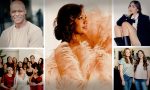
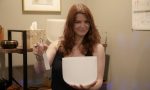
We recently had the chance to connect with Kristen Fogle and have shared our conversation below.
Hi Kristen, thank you so much for taking time out of your busy day to share your story, experiences and insights with our readers. Let’s jump right in with an interesting one: What is a normal day like for you right now?
One of the things I love most about being an Executive Director is that no two days are the same—and that’s exactly the beauty of it. A typical day might include anything from creating a new writing program or community partnership to curating an upcoming art show. I might spend the morning meeting with local arts leaders, the afternoon prepping for a public reading or podcast interview, and the evening tidying our space to get ready for a class or event. I’m constantly shifting between strategic planning and hands-on support—overseeing classes and instructors, promoting our work through speaking engagements, or making sure the lights are on and the coffee’s hot. It’s creative, it’s collaborative, and it keeps me deeply connected to both the literary and broader arts communities we serve.
Can you briefly introduce yourself and share what makes you or your brand unique?
I’m a writer, editor, teacher, and lifelong arts advocate with a background in both publishing and performance. I spent many years as a magazine writer and editor, and I’ve been deeply involved in theater for over three decades—as an actor, producer, director, and reviewer. Storytelling—in all its forms—has always been at the core of my work.
For over a decade, I have served as the Executive Director of San Diego Writers, Ink, a nonprofit literary arts organization that nurtures writers at every stage of their journey through classes, workshops, readings, and community programs. What makes Writers, Ink unique is our commitment to cultivating creativity and supporting the writing life in ways that are both accessible and meaningful.
Teaching is a vital part of what I do. I lead occasional playwriting workshops for La Jolla Playhouse, generative writing sessions for Armed Services Arts Partnership, and monthly journaling classes for the Wounded Warrior Project. Through Writers, Ink, I also teach in our partnership with Liberty School, bringing arts-integrated learning to students near the Arts District where we’re based.
In addition to my teaching and leadership roles, I co-host a podcast that features local leaders and organizations making deep, lasting impact in their communities. I serve on the board of Dorland Mountain Arts, a residency program for writers and artists, and I recently stepped into the role of Chair of my child’s parent-caregiver organization. I’ve also created a line of prompt-based journals designed to spark creativity and self-expression.
At the heart of everything I do is the belief that writing—and the arts more broadly—can be a powerful tool for connection, growth, and transformation.
Okay, so here’s a deep one: What’s a moment that really shaped how you see the world?
One moment that deeply shaped how I see the world happened during my freshman year of college. I hadn’t traveled much growing up, and I had followed my high school best friend to Baltimore for school. Just a week or so into the semester, 9/11 happened. Being away from home, in a city full of East Coast families directly impacted by the events, I felt the weight of what it meant to be part of something so much bigger than myself. It was the first time I really understood our global interconnectedness—not just politically, but emotionally and culturally.
My view of the world was further shaped later in college when I saved up to travel to 13 countries across Europe. After graduating, I spent extended time backpacking through South America, India, and New Zealand. Each journey challenged me to expand my perspective—to listen more, assume less, and observe how culture, community, and creativity show up differently around the world. These experiences didn’t just teach me about geography or customs—they reshaped the way I relate to people, and to the world as a whole. They deepened my empathy and curiosity, and they continue to inform the way I approach my work, my writing, and the communities I serve.
Was there ever a time you almost gave up?
Yes, I “give up” all the time! I think that we need to redefine this obsession with pushing forward at all costs. I came of age in the “girl boss” generation where your productivity and hours worked were truly a badge of honor. As I get older, and I have seen some effects health wise of staying at that steady, busy clip for such a long time, I am very careful about what I say yes to. As someone who wants to do all the things, that is sometimes challenging for me, but I am much more likely to say no to opportunities or “give up “if it is impacting my health or my time with my kiddo.
Sure, so let’s go deeper into your values and how you think. What are the biggest lies your industry tells itself?
One of the biggest lies the publishing industry tells itself is that there isn’t room for everyone at the table. As we see more major presses merging and prioritizing celebrity authors or those with massive platforms, the industry often justifies it by saying it’s a matter of risk and economics. And while I understand the challenge of investing in an unknown author and hoping their story connects, this mindset leaves so many vital voices out of the conversation.
It sends a message—not just to writers, but to readers—that only certain stories matter, and that’s simply not true. That’s why I believe the role of hybrid publishers, small presses, and community-based literary organizations is more important than ever. They’re the ones taking risks on emerging voices, on writers without massive followings but with something meaningful to say. We need everyone’s stories at the table—especially those we haven’t heard yet.
Okay, so let’s keep going with one more question that means a lot to us: Are you doing what you were born to do—or what you were told to do?
I’ve been really fortunate in that I was never told what I had to do—I had parents who supported my interests from an early age. I was the kid organizing a play yard sorority at 8, penning horror stories about my classmates by 13, and doing nonstop theater from the age of 11. So in many ways, I’ve always followed what lit me up creatively. I’ve built a life around storytelling, community, and the arts, and for most of that time, it’s felt like exactly what I was meant to do.
That said, as I enter this sort of middle stretch of life, I’ve started to ask bigger questions: Has it been enough? Have I been enough? And maybe more importantly: What do I want the next 20 years to look like—if I’m lucky enough to have them? Or 40? I think those questions are natural, especially after two decades of giving so much to creative work and community building. It’s not about regret—it’s about recalibration. I’m still doing what I love, but I’m also listening more closely to what’s next.
Contact Info:
- Website: https://Writeyourstorynow.org
- Facebook: https://www.facebook.com/sandiegowritersink