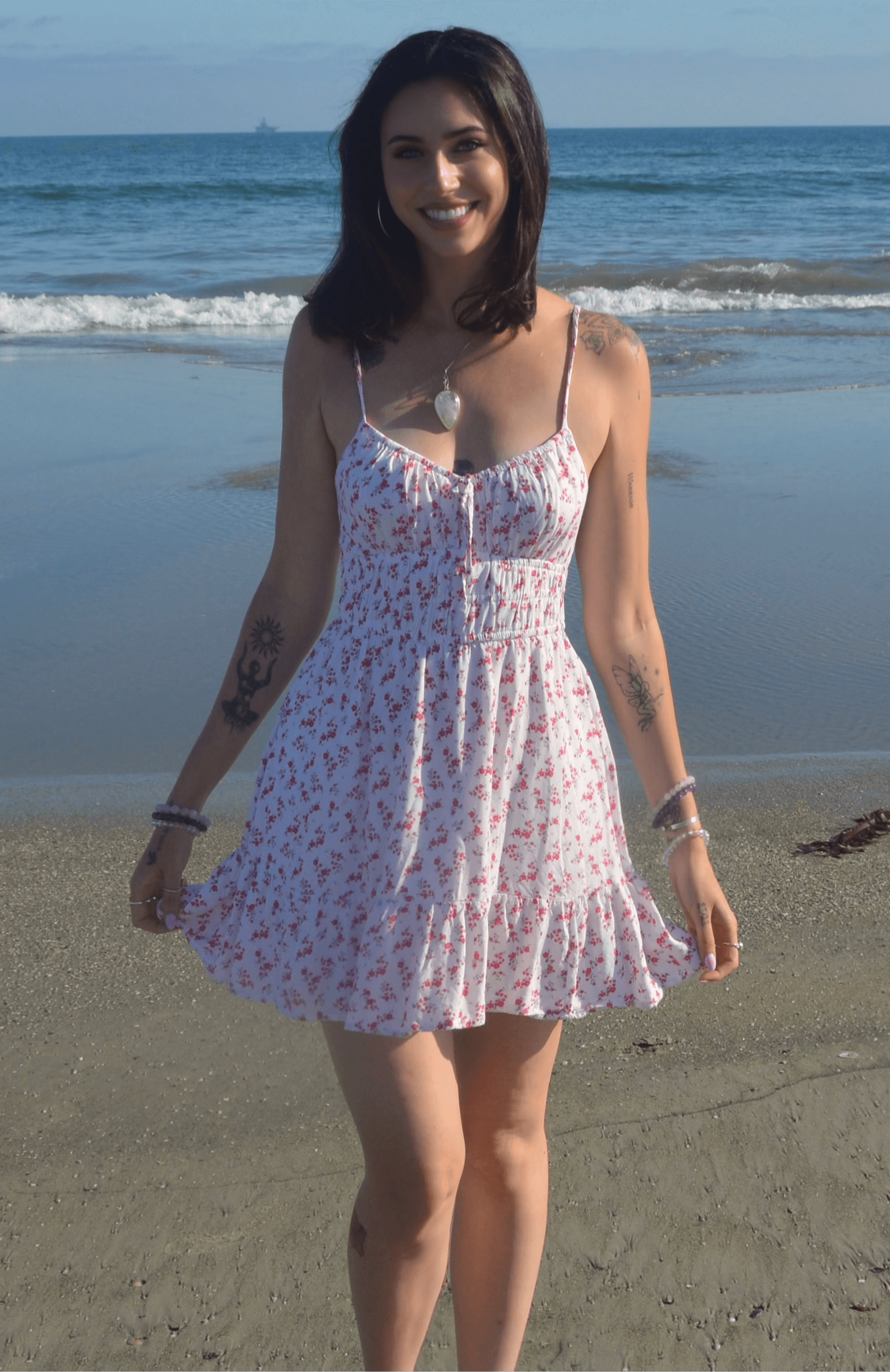
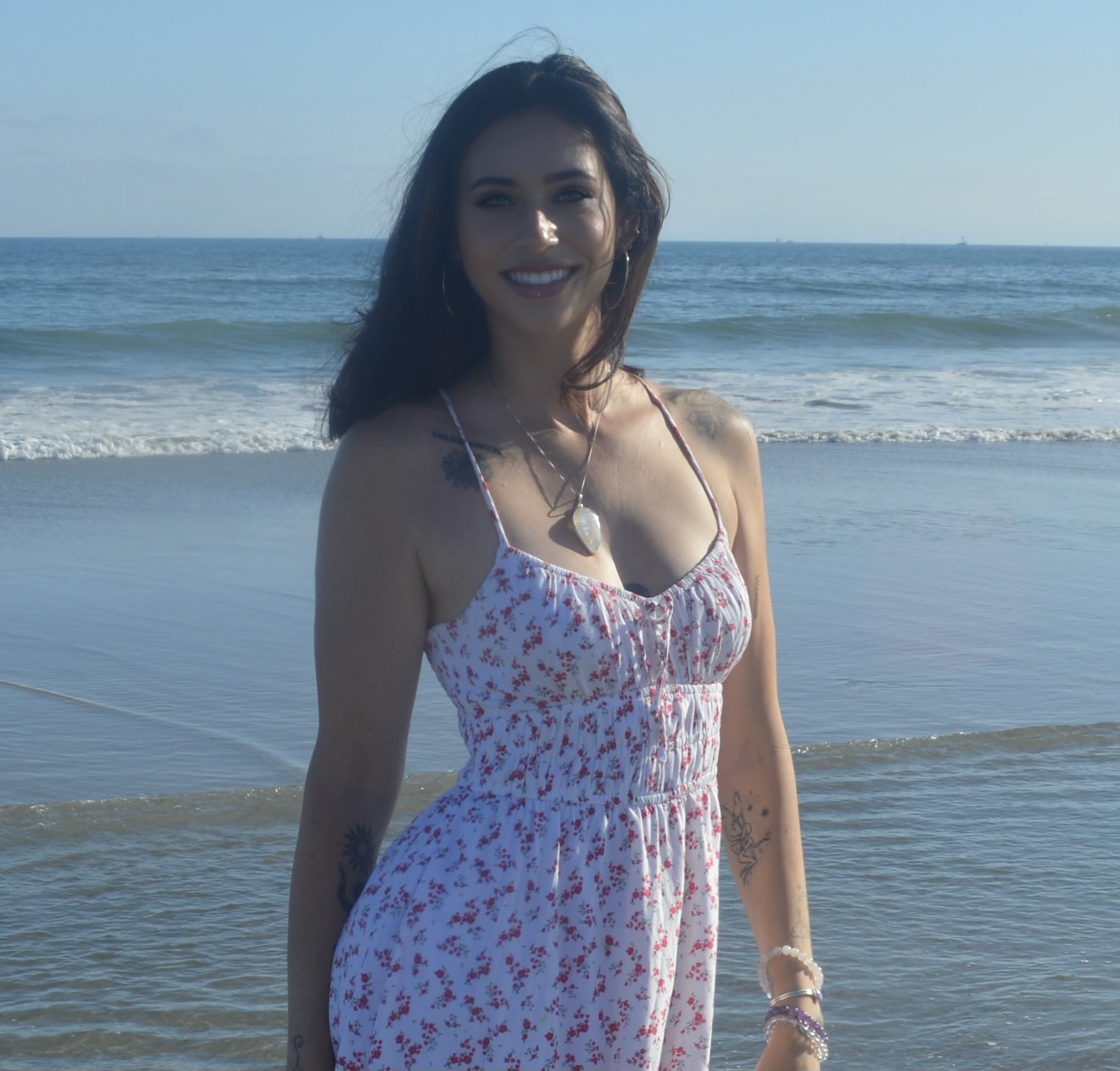
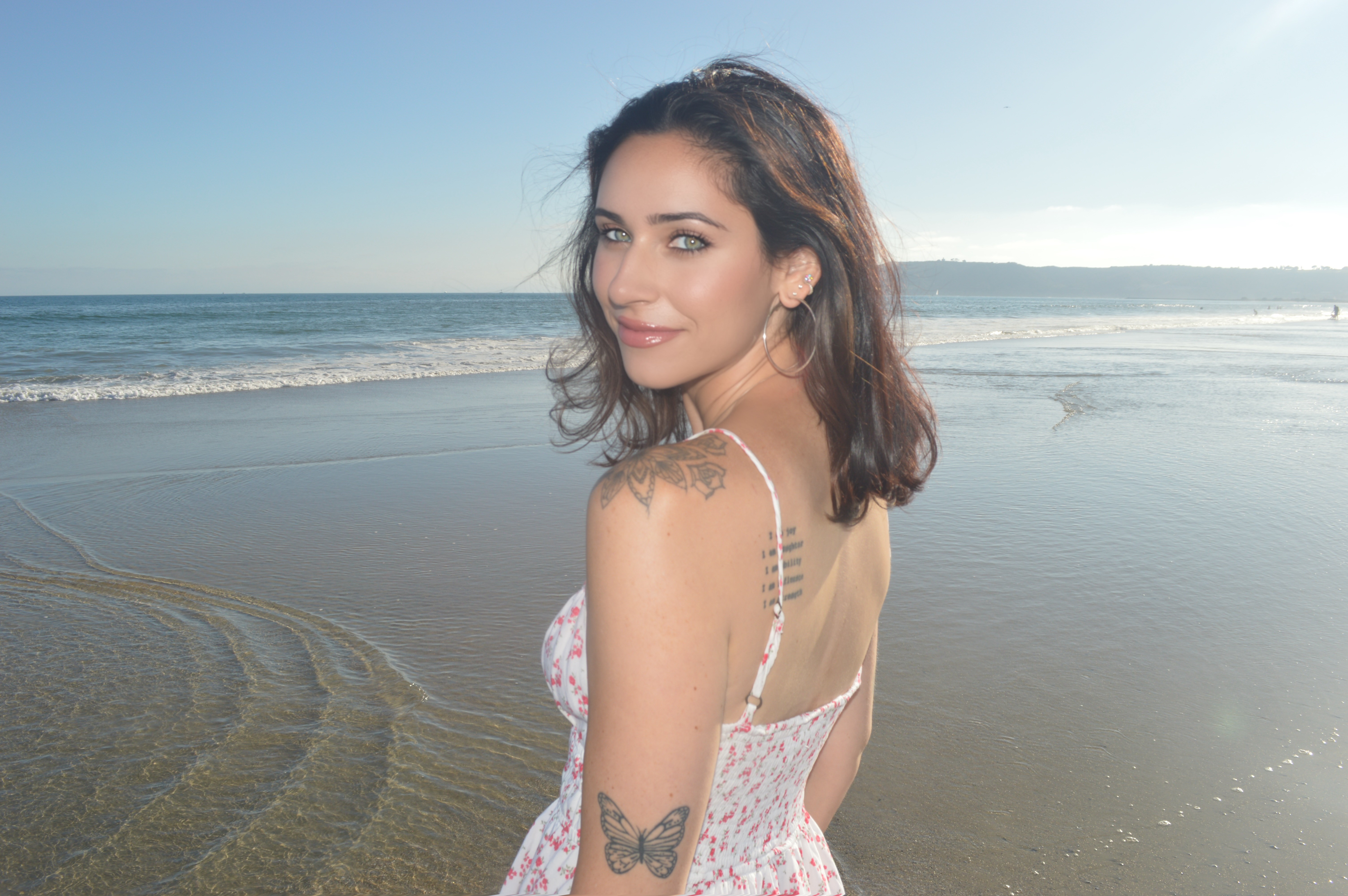
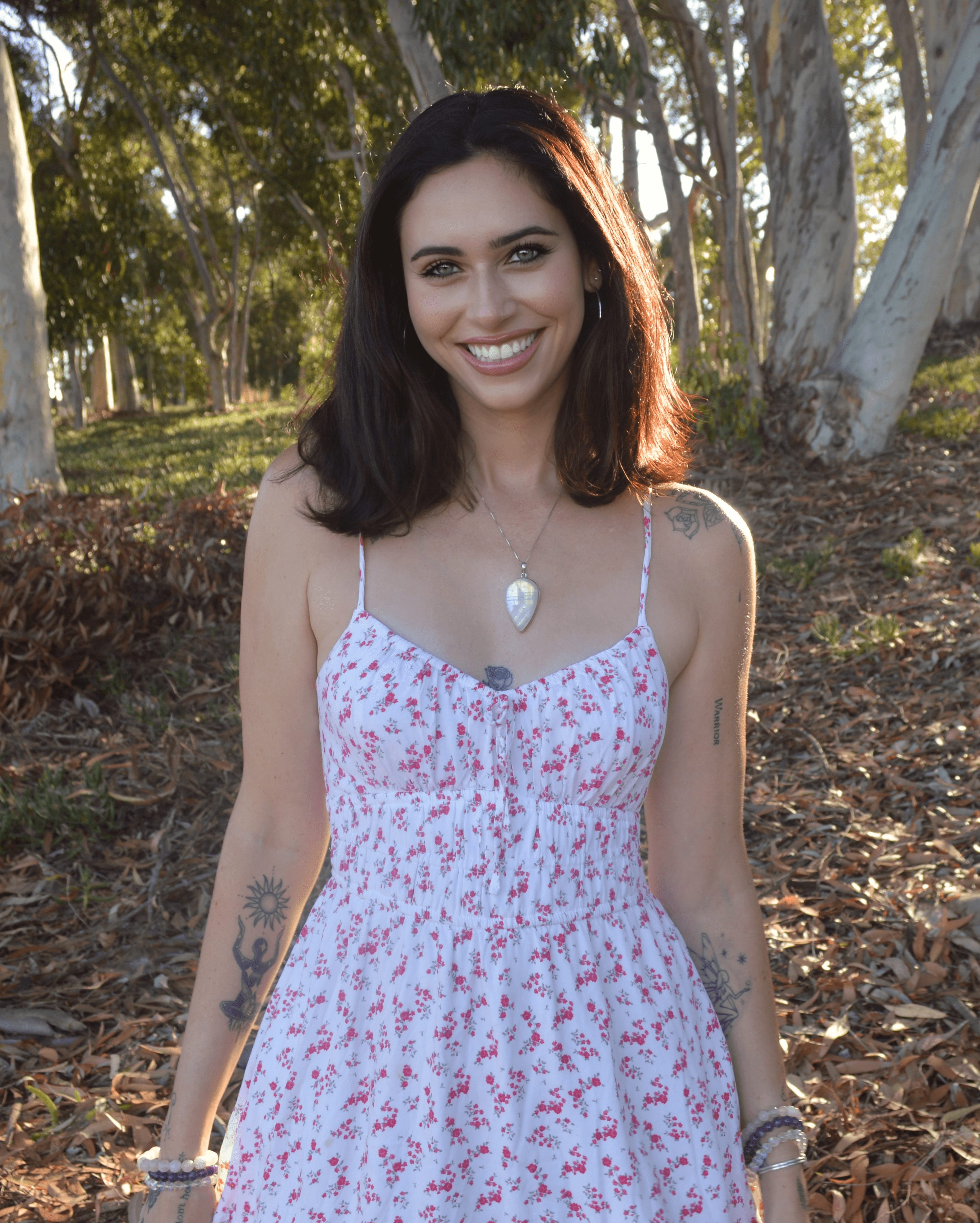
We’re looking forward to introducing you to Dr. Sasha Faust. Check out our conversation below.
Hi Dr. Sasha, thank you so much for taking time out of your busy day to share your story, experiences and insights with our readers. Let’s jump right in with an interesting one: What do the first 90 minutes of your day look like?
Each morning, I wake up and begin by drinking a few glasses of water. From there, I pray, write a gratitude list, pull an oracle card, read an affirmation script, meditate, and then work out. I’ll wake up as early as I need to in order to complete my full routine—it helps keep me grounded, connected, calm, and centered!
Can you briefly introduce yourself and share what makes you or your brand unique?
Hi! I’m Dr. Sasha Faust (she/her), a licensed clinical psychologist, psychic medium, author, and the founder of Enchanted Mind, a private practice rooted in California. At Enchanted Mind, I provide individual therapy, group therapy, Reiki energy healing, psychic mediumship readings, and mentorship.
I believe in awakening the magic within! And guiding clients toward healing that is both soulful and grounded. Enchanted Mind is where psychology and the healing arts converge, nurturing transformation through a blend of compassion, ritual, intuitive presence, and evidence-based tools.
What makes Enchanted Mind unique is that each person is held as a whole being of body, mind, and spirit. Whether you’re drawn to therapy, spiritual healing, or energetic insight, the journey is crafted with intention and reverence.
Right now, I’m pouring my energy into sharing my debut book, Waking Up—a poetic memoir chronicling my own journey through grief and spiritual rebirth after the suicide of my first love.
Amazing, so let’s take a moment to go back in time. Who saw you clearly before you could see yourself?
I come from an extended history of complex trauma, so feeling truly safe—let alone seen—was rare for me growing up. But when I was 14, I met Walter Aubin (to whom Waking Up is dedicated). We formed a deep, soul-level friendship that lasted until his death by suicide when I was 18.
Walter was the first person who looked at me like I was powerful. He didn’t just believe in me—he reflected back a version of me that felt magnetic, talented, worthy, and capable. At a time when doubt was my safety net, he remained unwavering: kind, encouraging, and always in my corner.
He was a living, breathing affirmation of all I could become. And through his belief in me, I slowly began to believe in myself. Thank you, Walter!
Was there ever a time you almost gave up?
Oh my gosh—yes, absolutely! Imposter syndrome is too real. I think most of us feel it at some point, whether we admit it or not. For me, it hit hardest during the second year of my doctoral program. The days were long—some stretched over 12 hours—and I had gone straight from undergrad into grad school without any pause. I remember asking myself, Do I even like psychology? Did I choose this for the right reasons? Was I pressured into this? Have I healed enough to truly hold space for others?
I’d committed to this path after losing Walter—declaring my major and dedicating my future to helping others who were suffering—and still, there were moments I felt like I was caving in under the pressure. I reached out to my academic advisor to explore my options and ultimately decided to drop two classes. That small decision changed everything. On Tuesdays, while most of my cohort went to the next class, I would slip away to the beach to breathe and reset. I know not everyone has the flexibility to do that, and I’m deeply grateful I did. That space brought me back to myself—and, eventually, back to the love I have for this work!
I want to be clear: I loved my program, my professors, and my training. But I also want to normalize how overwhelming it can feel to be in your early twenties, trying to map out your entire future while everyone’s asking what you’re going to do with your life! Doubt doesn’t mean you’re on the wrong path—it just means you’re human.
So a lot of these questions go deep, but if you are open to it, we’ve got a few more questions that we’d love to get your take on. Is the public version of you the real you?
Yes—and that’s something that is incredibly important to me. I once read that when you live in alignment with your truth, the path that’s meant for you will begin to open. There will still be challenges, of course—but there’s less resistance, fewer blocks, because you’re moving in integrity with who you truly are. For me, authenticity is a spiritual practice. I want to be known as someone who is real. Someone who lives what she teaches. Someone who doesn’t shift depending on who’s watching. I want my frequency to be consistent.
During my third year of graduate training, I had a supervisor who emphasized the importance of bringing our full selves into the therapy space—not as a polished version or a persona, but as real human beings. I don’t compartmentalize who I am. For me, being in right relationship with others means first being in right relationship with myself.
I also believe that clients can always feel when you’re truly with them—when you care, when you’re actually in it with them. That’s how I try to show up: fully present, feeling, attuned, and connected. It’s not everyone’s approach, and that’s okay. But for me, it’s part of what makes the work its most powerful.
Okay, so before we go, let’s tackle one more area. If immortality were real, what would you build?
I believe immortality is real—in the sense that death itself is an illusion. Our energy doesn’t simply vanish; it transforms and continues. As Bastille sings in Poet, “I have written you down now, you will live forever.” That lyric holds a profound truth: through art, memory, and storytelling, we extend life beyond the body. What we create, how we love, the way we show up—those things ripple outward, across time and space.
This idea echoes in literature, too. In The Things They Carried, Tim O’Brien writes, “In a story, which is a kind of dreaming, the dead sometimes smile and sit up and return to the world.” When we tell stories—about others, about ourselves—we give shape to the invisible. We keep the essence of those we love alive. They return in memory and imagination.
Thich Nhat Hanh, the renowned Vietnamese Buddhist monk and peace teacher, beautifully reinforces this truth from a spiritual lens. He taught that when we die, our energy does not disappear but simply takes new form. It becomes the rain, the blossom, the wind. There is no separation. And we are always transforming.
So if I could build something with immortality, I would hope to build a legacy of deep kindness. I want to be someone people trust with ease—a steady presence that creates safe and healing spaces where others feel deeply seen, heard, valued, and uplifted. Kindness, too, is a form of eternity. It’s a seed we plant, and its growth continues long after we’re gone.
Contact Info:
- Website: https://www.enchantedmindpsyd.com
- Instagram: @drsasha_the_enchanted_oracle
- Linkedin: https://www.linkedin.com/in/dr-sasha-faust-psy-d-13421b139/