Today we’d like to introduce you to Wendee Nicole.
Alright, so thank you so much for sharing your story and insight with our readers. To kick things off, can you tell us a bit about how you got started?
In 2013, I received Mongabay.org’s inaugural “Prize for Environmental Reporting” to report on “the next big thing in tropical biodiversity conservation.” This brought me to Uganda, initially so I could finally see my favorite animal, mountain gorillas. What I hadn’t known when I was a kid obsessed with gorillas and Dian Fossey was that the indigenous Batwa “forest people” were evicted at gunpoint from their ancestral forest homeland in 1991 to save said gorillas, and given no compensation or land in return. I received the grant to report how forest conservation and human livelihoods could work together instead of in opposition, as “fortress conservation” too often kicked native people out to save ecosystems. Though I never knew it when I applied for that grant, it was the origin of my nonprofit charity, Redemption Song Foundation (RSF).
I tracked the majestic mountain gorillas in the UNESCO World Heritage site Bwindi Impenetrable National Park and the next day saw the settlements where the Batwa people lived in the most extreme poverty I’d seen in any of the continents and countries I’d visited. Not much later, I decided to sell my house and move to Uganda to try to see what could be done in partnership with a couple of Ugandan friends. Since I had seen corruption and embezzlement by other organizations during my researching, I decided I’d be better off starting my own organization.
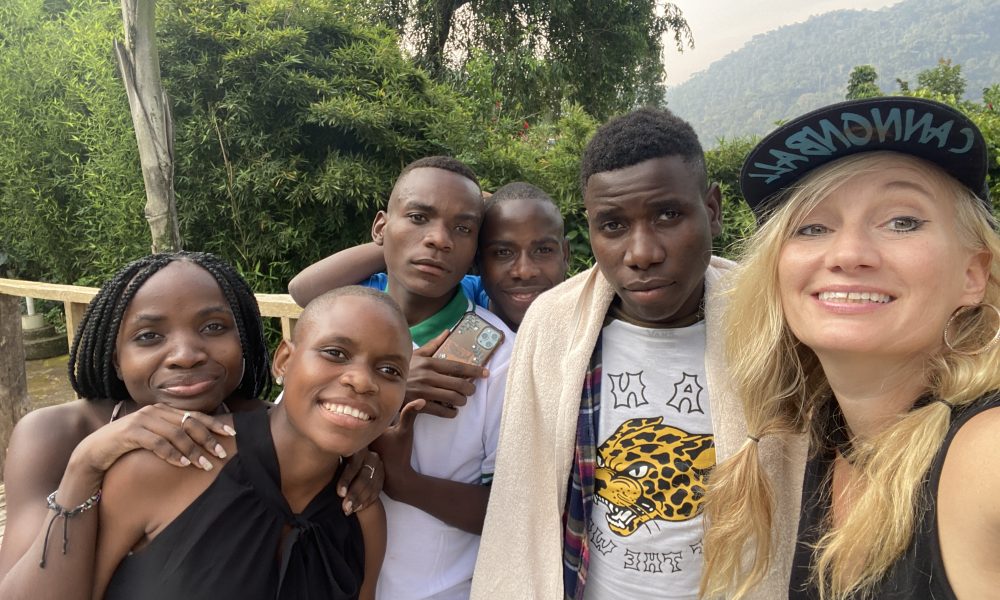
I moved to Uganda in September 2014 and lived there for 3 years. I rented a space that became the RSF Community House and hired local staff to translate and work with me. I created close relationships with the Kalehe village Batwa community close by, and their stated needs determined what we worked on. They wanted clean water, houses, education for their children, and a bridge across the river. The women made beautiful handmade baskets, so I started by buying them at a fair trade price and sold them online. Before I even came back to the US the first time, I’d sold enough to build the bridge they wanted. This established trust with the community as I’d told them I’d resell the baskets and the money would come back in projects. Several laughed and sneered at first in disbelief; they’d been taken advantage of so often that trust was lacking. But within 3 weeks of me buying the first round of baskets, the bridge was being constructed – with their labor – and they were thrilled. We celebrated with a party!
I traveled back and forth between 2014 and 2017, selling baskets and giving talks at churches, colleges, and friends’ homes to raise money. I moved back to the US in 2017 after adopting a Batwa child (who told her own story in an award-winning New York Times essay that got her media coverage across San Diego), but we have gone back multiple times. RSF continues to support Batwa students in primary and secondary schools through the generous sponsorship of US families and individuals, and we do community development projects ranging from a “sustainable food forest” that involves planting more than 4,500 native and fruit trees (with a goal of 10,000), goats and rabbits, and organic vegetables, to maintaining the clean water system we installed in 2017, to building brick homes, installing solar power, and other projects determined by the Batwa, our Ugandan staff, myself and my daughter Joyce Orishaba, who is from the village we work with. In recent years, we created the country’s first Batwa Children’s Dance Troupe which performs cultural and modern dance and bought land with a lovely cottage we will soon be putting on Air BnB for visitors. We are actively seeking long-term volunteers to live in country and help!
On our 10-year anniversary, we have a newly minted mission statement: “Changing the narrative and trajectory for the indigenous Batwa people from victims to leaders. We do this through cultural appreciation, whole-person education, environmental and cultural conservation, social support, and business literacy.”
Alright, so let’s dig a little deeper into the story – has it been an easy path overall and if not, what were the challenges you’ve had to overcome?
Nothing about running a charity in a country you are not native to is easy, especially a country that consistently ranks as one of the most corrupt in the world (Corruptions Perception Index https://www.transparency.org/en/cpi/2023/index/uga).
Though English is Uganda’s national language, no one understood my American accent at first and it went both ways. I have learned some of the language, and the accent by now! In addition, people who did not attend school speak the tribal language, Rukiga. Since most Batwa adults did not have any schooling, I had to use a translator. Sometimes this worked in my favor as the translator knew how to convey the appropriate sentiment in their culture but sometimes I myself was misunderstood by my translator.
Alcoholism is extremely high in the Batwa but I found the stereotypes that they “were lazy and would not work” to be untrue. We had workdays in their community and as long as they got fed, they were eager to work and contribute to the betterment of their village. Problems came when the tourism company that exploits them would call them. The Batwa would stop building a house or whatever project we were working on to dance for tourists for basically less than $1/month each in the off chance that a generous tourist gave a hefty tip or bought a basket. They would then immediately spend it on alcohol. This is an ingoing challenge.
Working on behalf of a population that many people in the dominant tribe disliked brought its own issues. Batwa are only 1% of the population in that region of southwestern Uganda and are highly discriminated against. To encourage good faith in the community, we also help other (Bakiga) people in the community, such as buying baskets, supporting local businesses, and payment assistance for medical emergencies.
One of the biggest struggles of running a small organization is finding board members with knowledge and skills to help me grow it (this is still an ongoing need) and raising funds that would enable me to take a part-time salary to run things full time or hire someone with the skills to do so have eluded me so far.
Thanks for sharing that. So, maybe next you can tell us a bit more about your work?
Redemption Song Foundation celebrates its 10 year anniversary September 2024. We exist to “Change the Narrative” for the indigenous Batwa forest people and to help them embrace their culture while living in the modern world. Our long-term vision is “To see all Batwa people celebrated instead of victimized; educated instead of illiterate; healthy instead of unwell; financially secure instead of impoverished; proud of their culture instead of ashamed; and thriving and hopeful about the opportunities that exist for them in the world in Uganda and beyond.”
RSF has an online Fair Trade Shop (www.RedemptionSongFoundation.org/shop) which sells truly unique handmade baskets, cloth goods, hand-carved gorillas, jewelry and other items at reasonable prices and the money goes right back to help the Batwa people. We also need sponsors for the 30 children we support in school, which costs just $45/month or an annual $500 donation. Sponsors get to write to their child and they write back and because we have close connections with each child and their families, it’s a much more personal experience than a bigger organization like Compassion International. You can sign up by setting up a $45/mo recurring donation and we will get in touch to assign the most in-need student or you can email for more info (RedemptionSongFoundation@gmail.com).
We have a Gold Transparency rating on Guidestar/Candid and are happy to answer any questions and start a dialogue with anyone wanting to collaborate or partner.
Networking and finding a mentor can have such a positive impact on one’s life and career. Any advice?
I would love to find myself a mentor in this work! Wish I had better advice in that regard but it has been a lonely journey. I can answer that it’s easier to find people interested in the work generally, potential collaborators and partners than mentors. For that, I say just reach out to others doing similar work or in areas tangential to your interest area and strike up a conversation online (since most people working in my field are not necessarily in San Diego – though some are!)
Pricing:
- $45/mo Sponsor a Child
- $10-$50 Items in RSF Fair Trade Shop
Contact Info:
- Website: www.RedemptionSongFoundation.org
- Instagram: www.instagram.com/redemptionsongfoundation
- Facebook: www.facebook.com/redemptionsongfoundation
- Linkedin: https://www.linkedin.com/company/27018550/admin/feed/posts/
- Twitter: www.twitter.com/AfricaRSF
- Youtube: https://www.youtube.com/channel/UCn93f13vL9CMSRHtbWglaKQ?view_as=subscriber
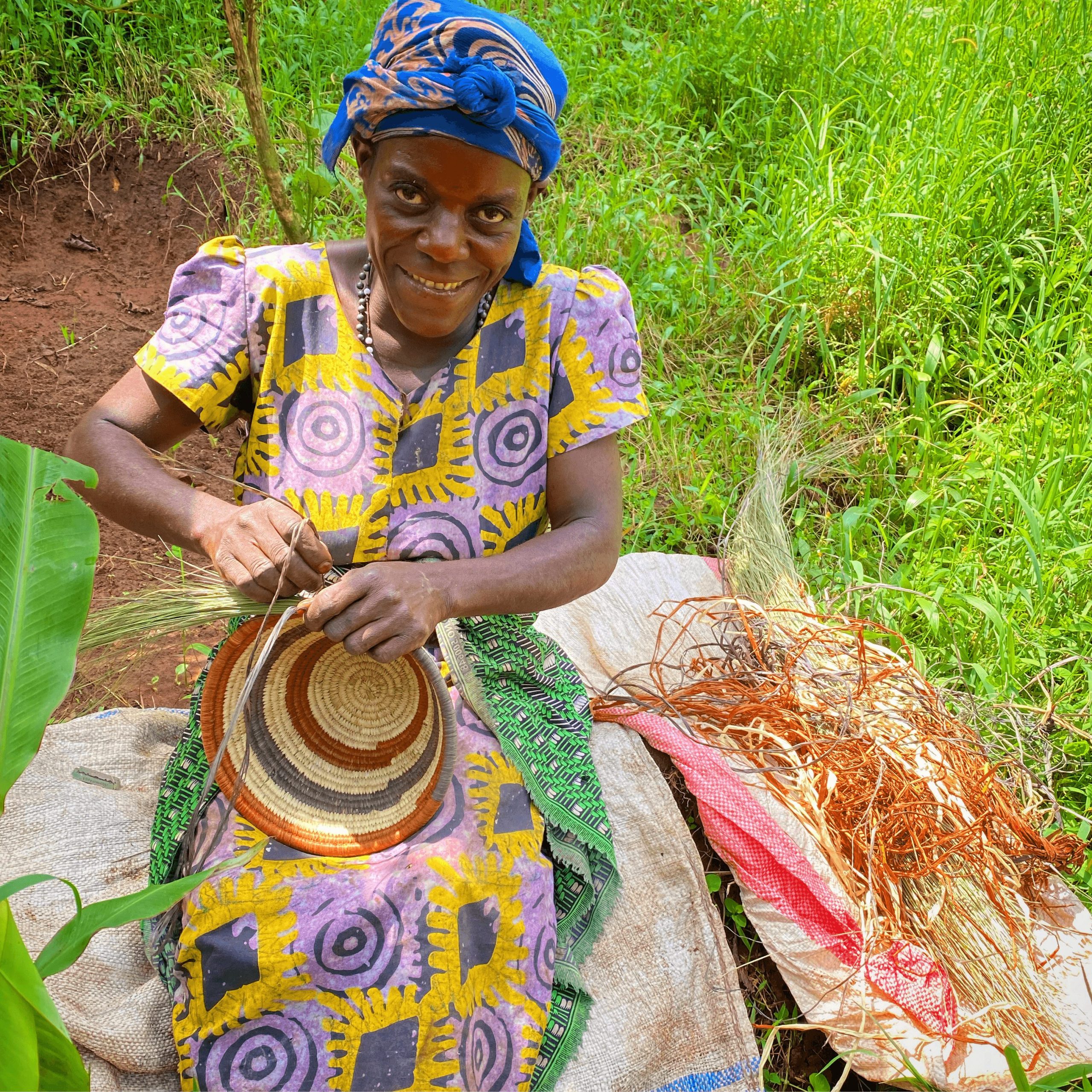

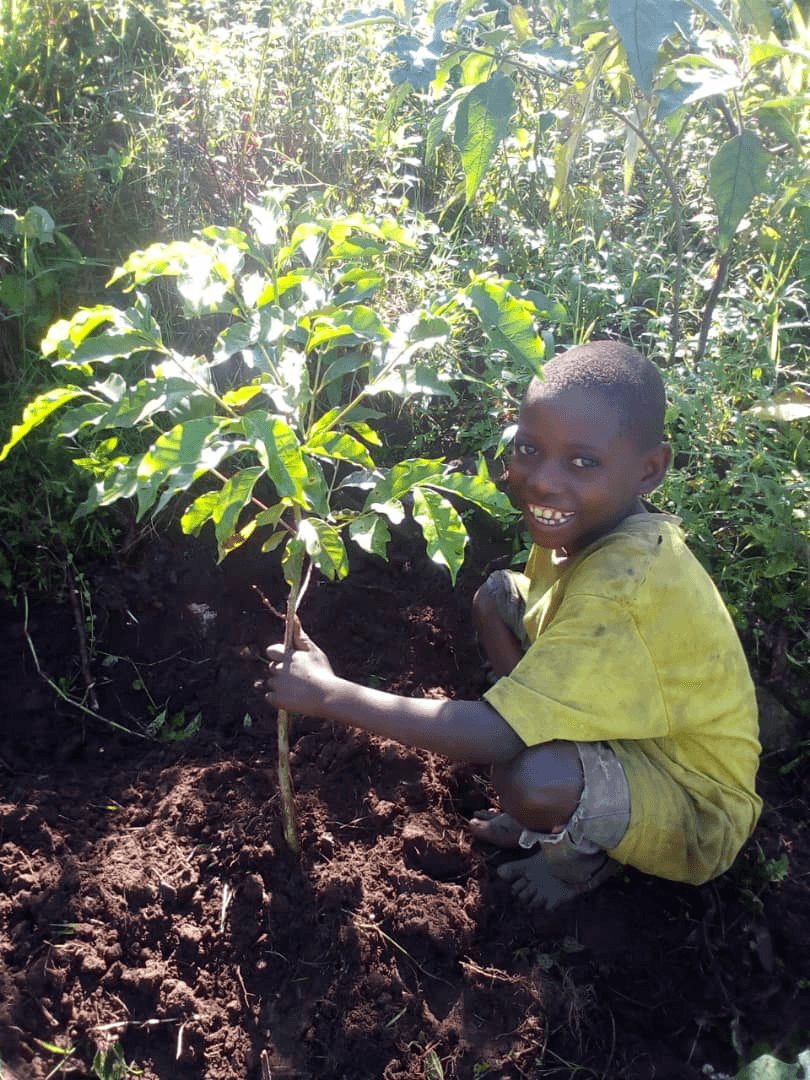
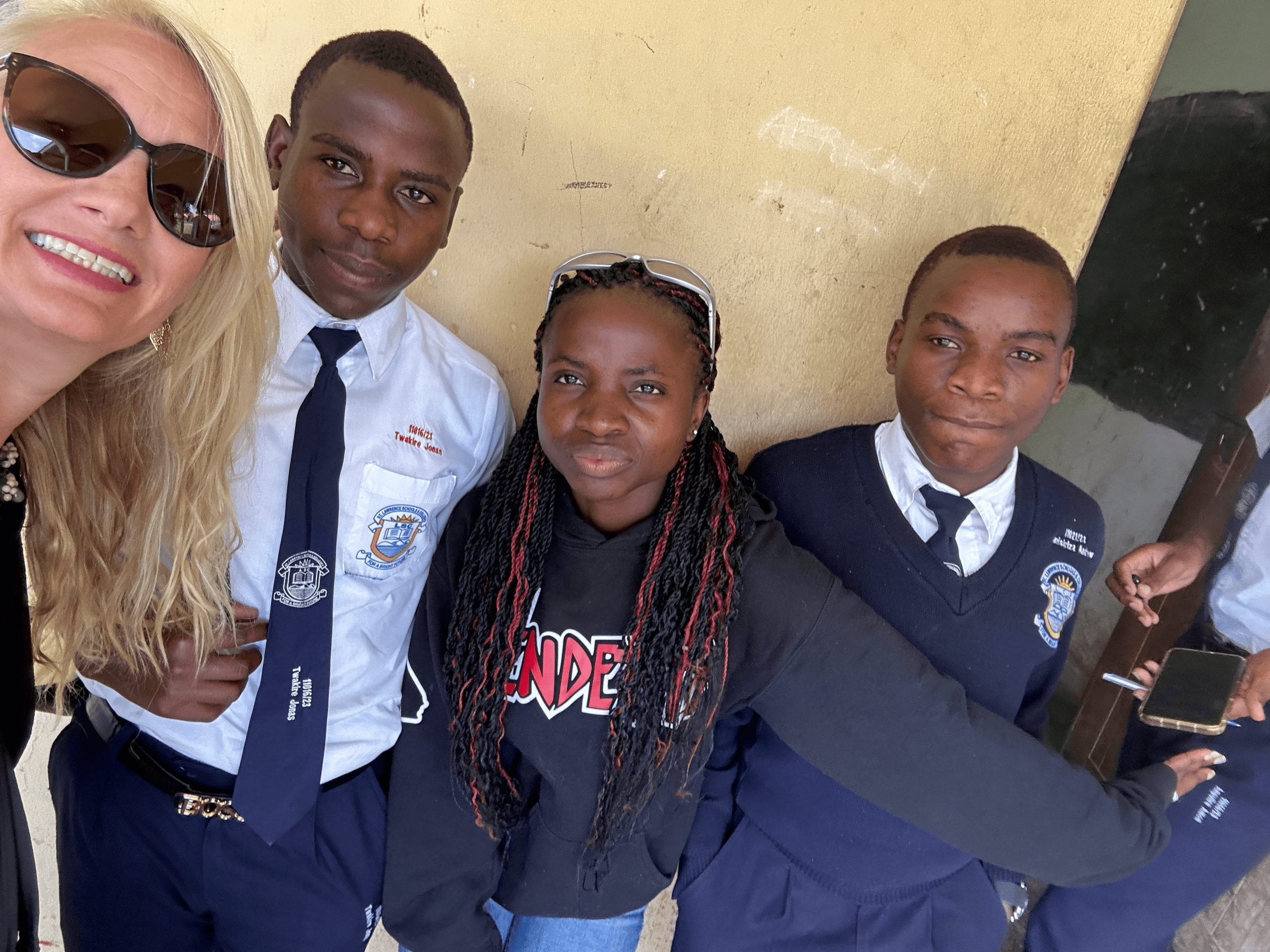

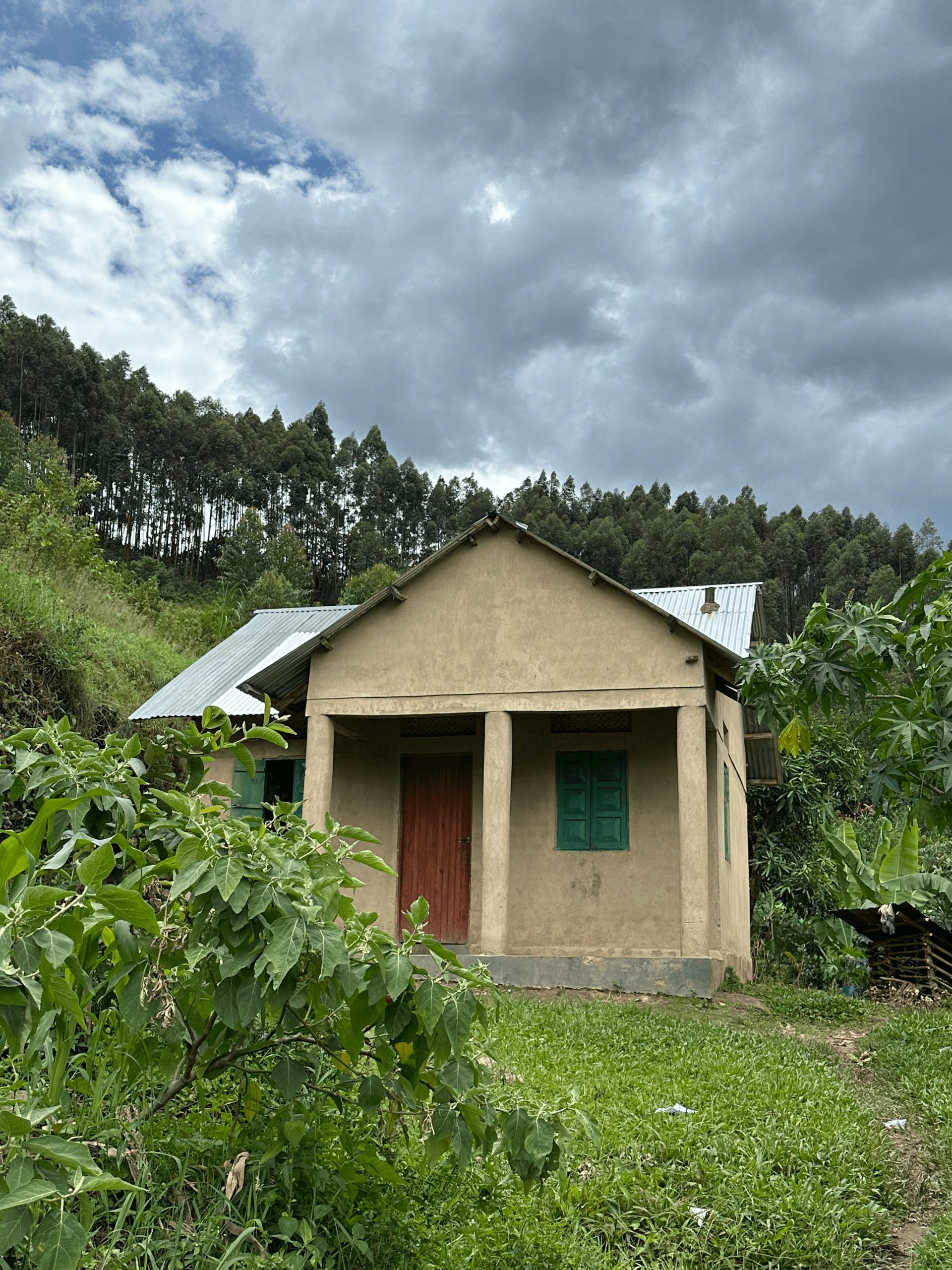
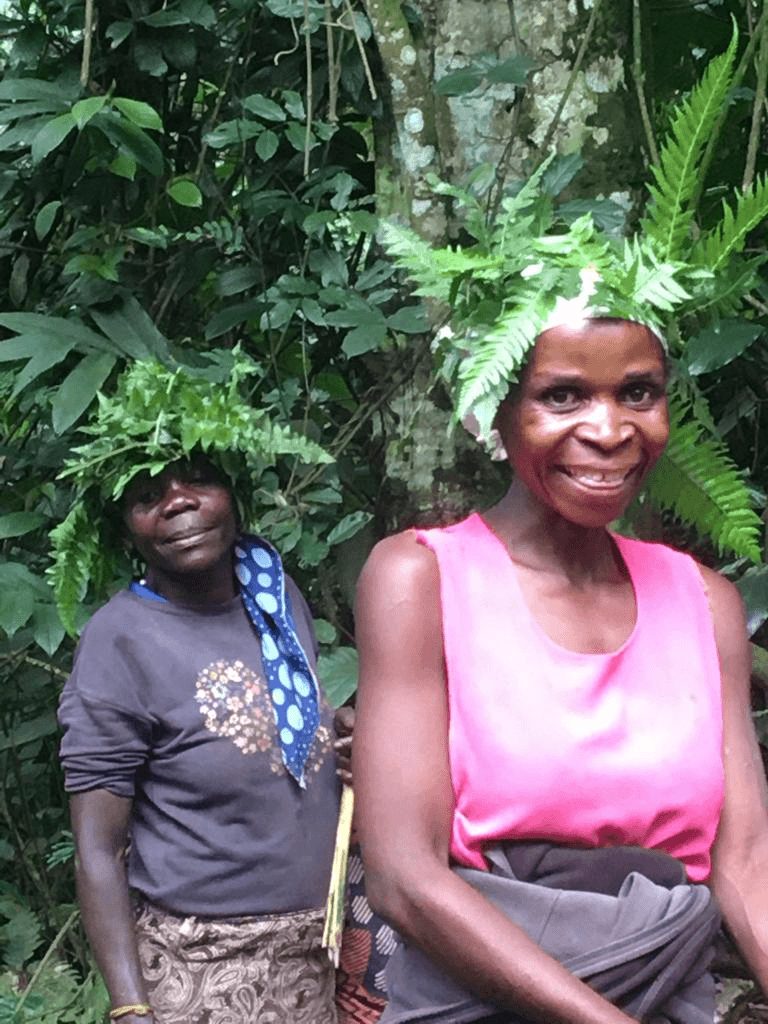
Image Credits
(c) Wendee Nicole