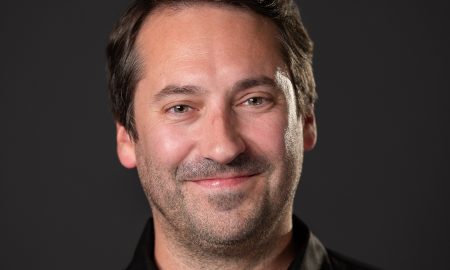
Today we’d like to introduce you to Diego Narvaez.
Diego, let’s start with your story. We’d love to hear how you got started and how the journey has been so far.
To start a career as an artist, you have to listen to the inner call and to some that takes a long time, while others have known it since they were children. As for me, I had no clue what to study after completing high school. I had some savings, got a cheap flight from my hometown, Mexico City, to Europe and began a journey to get to know myself better. I traveled a while with some friends and ended up in London alone (my friends had all gone back home to start their studies). I always carried a sketchbook and some drawing materials, growing more and more curious about capturing elements of reality through drawing and writing.
I constantly visited galleries and museums, and after some time I enrolled in etching, sculpture and photography workshops. When I thought once again of what I would do for the rest of my life, it was not that hard anymore. The idea of becoming an artist had just built up naturally, and so I enrolled in a BFA at UNAM in Mexico City. A second call came… this time was the ice beating inside me. I was in university, in the sixth semester and had found some images of icebergs while looking for seascape images to study. I was struck deeply. I was not sure what it was, but imagining me being in front of those massive bodies of frozen water was sublime.
An instantaneous connection with Ice was created, and in a way, this is how I learned to paint, by depicting misty atmospheres and submerging myself in the beauty of the silent frozen-scapes. After some time images and videos were not enough. I had to be there, to experience the low temperatures and the huge scales of the glaciers, the intense blues of the crevasses… I started looking for options to participate in an Artistic Residency, and I looked not only for a place with snow but a full polar experience. I found an Artistic Residency in Antarctica hosted by the Argentinian Government. I prepared the project, met the requirements and was selected.
Antarctica was a life-changing experience. Not only did I start to work in a way I still practice, but it also flipped my life upside down, and I realized I had to make some changes. I could talk about Antarctica for hours, but I am just going to say that it is the least and the most human place I have ever been. It is the closest you can get to another planet while on Earth and at the same time it felt like home to me. After Antarctica came Iceland, where I experienced the long nights, northern lights, hikes through snow and a whole range of stunning landscapes.
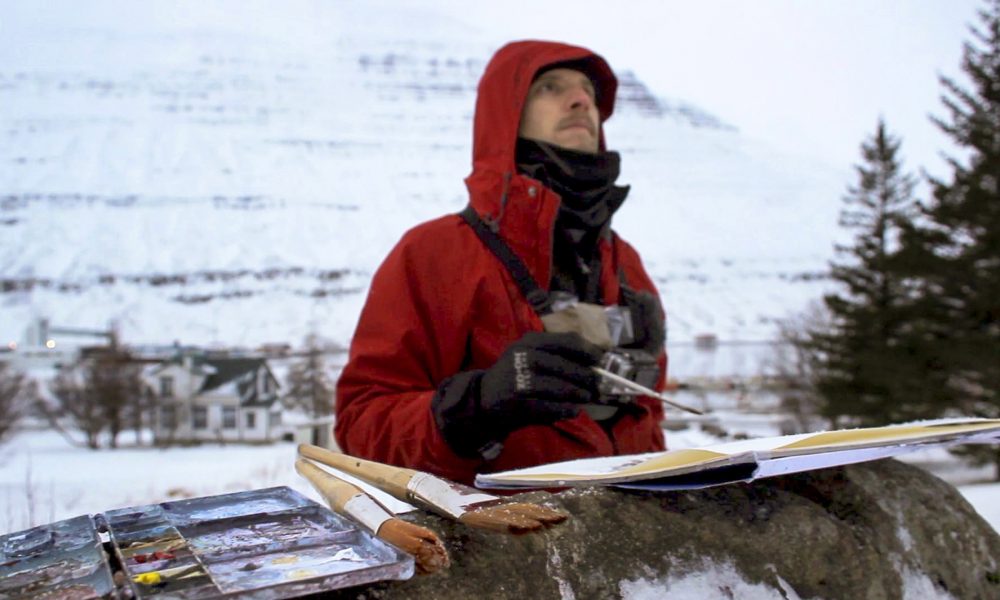
In these two places, I learned to work along with the climatic conditions and the specific phenomena occurring in that time and space. It is not about just representing the place in front of me but being aware of an immersive way of creating under snow, while the painting freezes, drawing along with wind gusts and painting over brushstrokes erased by rain. I now have a fondness for warmer landscapes, and I am currently working on a painting landscape project of the West Coast of Canada, USA, and Mexico.
Last year, I drove and camped along the Coast. I used watercolors, India ink, and graphite to sketch in many different types of landscapes, from mountain ranges to old growth forests, volcanoes, waterfalls and the vast ocean. I started in Vancouver and went further north and then all the way to San Diego. Back in my studio in Mexico City, I am working with tempera, using pigments and egg yolk as a medium to create a metaphor for the soil and organic materials found in those places. This Series is a way to reflect on the natural limits seen not as barriers or separate areas but as spaces where two places or conditions merge and create new opportunities in the landscape.
On the canvas, I explore these limits by working some areas in different ways or even keeping the canvas raw. In San Diego, I visited places such as Torrey Pines and Anza-Borrego State Park. At present time, I am working on a small work of Torrey Pines.
Overall, has it been relatively smooth? If not, what were some of the struggles along the way?
To be an artist is choosing a bumpy but astonishing road to discover. It is a path full of challenges and amazing rewards. For me, being an artist means to leave your comfort zone to reflect on the human condition, where crisis or obstacles are a means to learn and create in ways you did not know. For example, some years ago after returning from the Artistic Residency in Antarctica, I realized some big changes had to be done not only in my creative process but in my personal life. I started meditating, became a vegetarian and overall became more conscious about my impact on the environment.
In addition, I had no studio, and I was getting uneasy for not working as I was used to. I was off, not feeling well. My body was telling me that I needed to keep on doing art no matter what came my way. I had no space in which to paint, but I was able to buy a small freezer where I could put cookie trays filled with water to create ice plates that resembled the frozen ocean in the poles. I would break these beautiful ice plates on top of paper sheets and splash them with paint. The result was the Series Antarctic Coordinates, a group of paintings that resemble the aerial views I saw when traveling through the Antarctic Peninsula in a helicopter.
This way, I learned that being an artist is a way of living, where the external conditions meet your personal process and decisions have to be made to keep on doing what you are passionate about. I believe an artist is in a constant inner-struggle and he or she can understand his or her own process to create an artistic journey. To build an artistic career, from what I have learned, is a matter of persistence and resistance, of patience and love. Crises are unavoidable and sometimes necessary; they involve discomfort and great effort to go through.
In the end, they always payback and I come out stronger and with new energies. There has to be struggle in order to grow, but that does not mean that one has to suffer. As they say, the stronger trees do not grow in peaceful lands but in harsh conditions. However, one should learn to enjoy these hard times, and that is something I’m still working on.
We’d love to hear more about what you do.
As a landscape painter, the surreal Mexico City has been my lab ever since I was in school. My studio is located in downtown, where colors, textures, sounds, smells and all sorts of materials can be found. I am constantly getting lost in the city and find the sublime in urban ruins, non-places and buildings lost in time.
This chaos is often counterbalanced with residency programs and trips to Nature. I have a passion for adventures where some risk is involved and where without looking for it, some amazing places emerge into sight for me to paint or only stop and contemplate. My work starts with the experience of the place while working under specific circumstances in the precise moment. I try to be conscious of what I perceive, then process the experience and let that appear in the artwork when I am back in the studio.
I strive to reflect on the ways we relate with our surroundings. I have noticed that sight plays an important role in the way we perceive reality. Observation impacts directly on the way we understand (or not) different aspects of the environment. This understanding is the basis of our actions. Observation is key to our development; therefore, we can learn many things from contemplating a painting.
Ever since I completed my BFA, I have worked as a full-time artist. I have been able to receive grants, work with galleries, sell my work directly and earn awards. My work is my passion, and I am thankful for that. At present time, I am looking for opportunities to exhibit and sell my work abroad. Many projects are on their way, starting with a collective show along with other Mexican artists in early December in LA.
What is “success” or “successful” for you?
For me, success has less and less to do with recognition or fame but what my art does to me and to others. It has to do with inner growth and to reflect on the ways we can approach the places we inhabit and visit.
If I can connect with what I am doing and others can also connect with that, and if an inexplicable connection is created between us, then that is a successful work. I believe we are here to learn and share.
Therefore, if we can grow by reflecting and experiencing art, then that is success for me.
Contact Info:
- Website: www.diegonarvaezh.com
- Email: diegonarvaezh@gmail.com
- Instagram: @diegonarvaezh
- Facebook: https://www.facebook.com/diegonarvaezh/


Image Credit:
Raúl Pérez
Getting in touch: SDVoyager is built on recommendations from the community; it’s how we uncover hidden gems, so if you know someone who deserves recognition please let us know here.