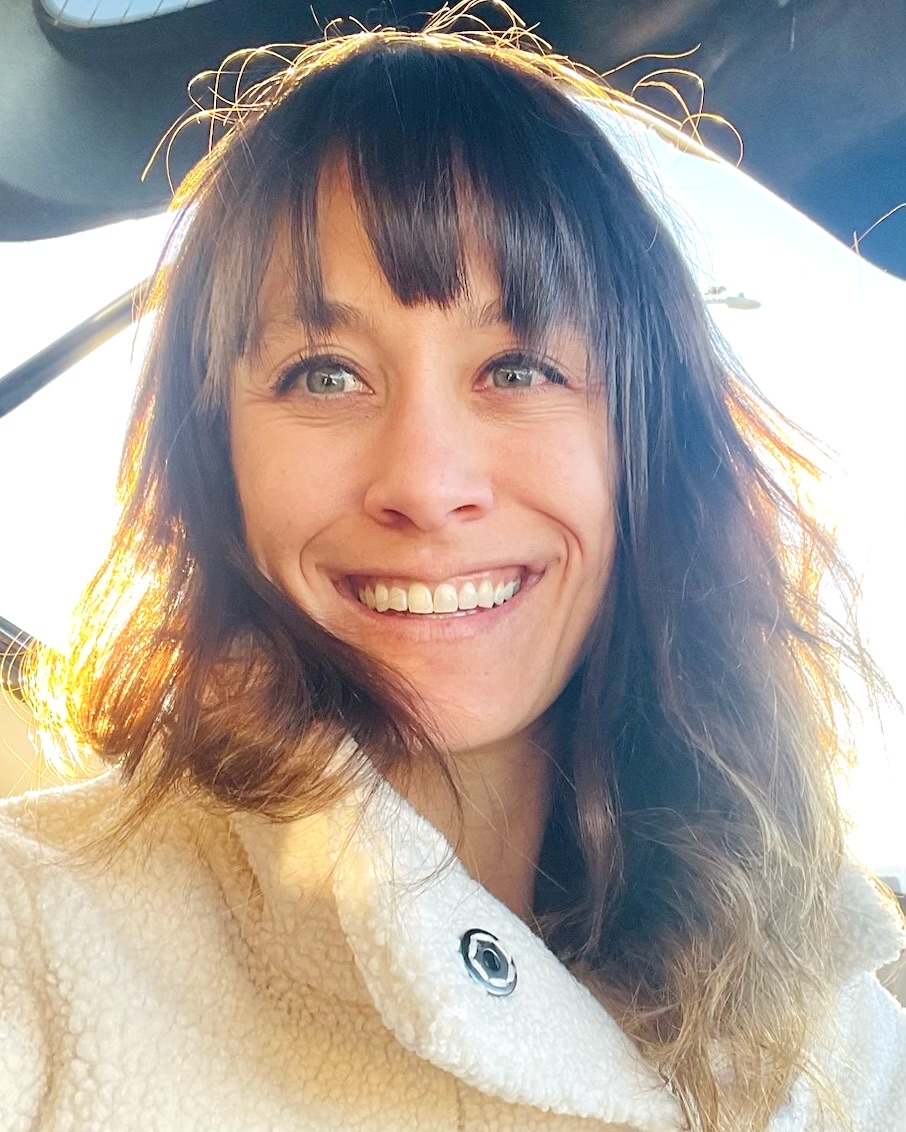
Desiree Borja is shifting the narrative around ADHD by replacing shame and masking with science, self-awareness, and advocacy. What began as a personal search for understanding evolved into a mission to highlight the strengths of neurodivergent minds — creativity, resilience, and deep focus — often overlooked in traditional discourse. Through practices that support both cognitive and emotional growth, and by leveraging AI as a powerful equalizer rather than just a productivity tool, Desiree is helping redefine what it means to thrive with ADHD. Her work calls for more inclusive systems, better representation in research and technology, and a future where neurodivergent individuals are not filtered out — but fully recognized for their value.
Desiree, sharing your ADHD journey so openly is powerful. What ultimately gave you the courage to stop masking and start telling the truth about your experience?
Honestly, it was not courage. It was information.
When I started understanding the neuroscience of how ADHD brains are wired, something changed. I found ADHD 2.0 by Hallowell and Ratey. I started reading the research on neuroplasticity, on hyperfocus, on creativity, on the strengths that people with ADHD actually have that nobody talks about. I realized how little of that existed. The researchers doing strength based work on ADHD are still calling for more funding because the field is that underdeveloped. Almost everything written about neurodivergence leads with the deficit.
I thought if this had been the conversation when I was growing up, everything would have been different. Not that there would not have been hard work or adaptation. But there would have been more spaces where neurodivergence was celebrated instead of concealed. More people who knew what we were actually capable of instead of spending decades hiding it.
Researchers like Professor Anne Marie Piper of UC Irvine and Distinguished Professor Carol Padden of UC San Diego are framing disability as expertise right now. The idea that diverse ways of processing the world are a competitive asset, not a problem to manage. When I found that, I did not want to stay quiet about it. That is what pushed me to share. Not bravery. Just the relief of finally understanding what I was working with, and knowing other people deserve to feel that too.
You mentioned hitting a wall and stepping back. What were the most important shifts or practices that helped you rebuild in a way that actually worked for your brain?
There was no single moment. It was cumulative.
None of it looked like what you would expect. Improv. Fencing. Balance practice. Toastmasters. Things that looked unrelated to work but were directly training the parts of our brains we needed most. Focus. Inhibitory control. Being present instead of already three steps ahead.
What I did not know at the time was that there was science behind why these things were working. The cerebellum controls both balance and attention span. Balance practice literally builds the part of the brain that controls how long and how well we can concentrate. Meditation rewires how we process stress.
The emotional piece was just as important. ADHD brains feel things deeply and intensely and most of us were never taught what to do with that. Building emotional intelligence was not optional. It was the foundation everything else sat on.
I kept educating myself. The more I understood about how ADHD brains are wired, the less I was fighting it and the more I was working with it. That is still happening. I am not the finished version of this. But I know enough now to know that the tools exist, the research exists, and none of us should have to figure this out alone.
Your perspective on AI as an equalizer is compelling. How specifically has it changed the way you show up and perform in your work?
The mainstream conversation about AI is almost entirely focused on productivity. For me it has never been about that.
AI is an equalizer. It allows me to be engaged and present. Before it, everything took twice as long and mental exhaustion was just part of the deal. Now I have the freedom to get creative and complete the work.
I can organize thoughts I cannot always structure on my own, research before a meeting, and break down complex information in a way that caters to how I actually learn. Because I am not arriving already drained, I show up excited for the work.
Piper describes this as a shift from usability to justice. It is not about accommodation anymore. It is about showing up and leading with expertise.
You’ve highlighted gaps in research and biased systems. What changes do you believe are most urgently needed to better support neurodivergent professionals?
Right now, AI has more influence over who gets hired than most people realize. It is trained on data that learned to associate ADHD and autism related traits with words like unprofessional and problematic. Recruitment algorithms are quietly filtering neurodivergent people out and most of them never know why.
The most urgent change is getting the positive attributes of ADHD into the conversation and into the models themselves. Creativity. Hyperfocus. Pattern recognition. Resilience. These are documented strengths. But if we stay silent they never make it into the data. The negative associations keep getting reinforced and the cycle continues.
Even at a basic level the information available online about ADHD skews negative. That feeds the models. That shapes how AI reads us in hiring, in communication tools, in workplace platforms. It is happening at every level and most people have no idea.
Research published in Human Resource Management confirms that neurodivergent employees remain underrepresented and undervalued at work, and that technology only creates genuine inclusion when it is designed around how neurodivergent people actually communicate and work. Piper and Alexander Dunn of Cephable are both pointing to the same thing. Neurodivergent people need to be in the room where these tools are being built. From the start.
For someone currently struggling in silence like you once were, what’s one small but meaningful step they can take toward understanding and working with their brain instead of against it?
Find one person who gets it, whether that is a coach, a therapist, or a community, just to feel less alone in it. Then get curious about how ADHD brains are wired, because neuroscience confirms your brain can change and grow at any age through neuroplasticity. Do the emotional intelligence work, because ADHD brains feel things deeply and nobody taught us what to do with that. Align your life with what actually drives you, because for us, passion is not optional.
Global Accessibility Awareness Day, observed on May 21, exists to disrupt the culture of technology and digital product development to include accessibility as a core requirement. This matters for more than one billion people worldwide living with a disability, 70 million in the United States, and more than four million in California alone.
This May, San Diego has four events built around exactly that. The Unequal Voices panel at UCSD on May 13 brings together Piper and Padden alongside Dunn, who is building adaptive AI for disabled users right now. The Neurotech Frontiers Summit on May 19 gathers neurodivergent innovators, researchers, and investors around what neurotechnology can actually do. TechCon SoCal on May 21 to 23 brings together founders, CEOs, and investors across AI and health tech. The health and AI panel at UCSD on May 27 examines how AI is reshaping care and who gets to define what that looks like. I will be writing about what I find. If you want to follow along, reach out.






 Maren Hoflund Is Expanding Holistic Healing Beyond the Treatment Room Through Education, Community, and Accessible Wellness
 How Casey Cantwell Turned a Viral Event Trend Into a Business Built on Celebration and Service
 Scott Hoops on Embracing AI Video Production to Expand Creative Possibilities and Shape the Future of Storytelling
 Emma Gardner on Building Brands Through Storytelling, Community, and Experience-Driven Marketing
 Heidi Greenwood on Reimagining Esquina as a Community Hub Built on Connection, Purpose, and Thoughtful Living
 Enrique Medina on Fatherhood, Purpose-Driven Leadership, and Building Community Through Hospitality
 Theresa Bruno on Creating Space for Midlife Voices and Redefining What It Means to Be Seen
 Gina Gerrato Greenhaus on Early Intervention, Intentional Planning, and Redefining What Makes Students Stand Out
 Helen Liang on Bringing North Coastal Floral Design to Life Through a More Personal, Community-Driven Retail Experience