


Today we’d like to introduce you to Cedric Enzo Agatep.
Cedric Enzo, we appreciate you taking the time to share your story with us today. Where does your story begin?
Certainly! As far as my personal journey, I was taught classical piano by my dad at the age of 4, and violin at the age of 7, so as far as I remember, music was just something that we did. I saw it as another chore that I had to do in the house, after cleaning up my room and feeding the pets.
My dad also had an 80s/New Wave cover band (Culture Shock) in the 2000s with my uncles and I would sometimes play a few songs at their shows (my first performance with them was when I was 7). They’d rehearse at the house, and I just thought it was a fun, “Oh my cousins are over”, and every once in a while I’d have to take a break from video games with my cousins to run the songs that I’m on with the band.
I started playing guitar because of Guitar Hero – my parents bought that game for my younger brother’s 7th birthday (his name is Amadeus Mozart Agatep, you might get a kick out of that), and he was expecting Shadow The Hedgehog so was super disappointed, especially since we’ve never heard of Guitar Hero before, but it turns out to be a really fun game that we bought Guitar Hero 2 when it came out, but my parents drew the line at Guitar Hero 3. Everyone was talking about how “Through the Fire and Flames” was difficult in that game, but I never got the chance to try it because my parents said “why don’t you just learn real guitar”, so I did.
Fast forward to middle school/high school, where I also get the opportunity to perform in orchestras and jazz bands, Mo starts taking vocal lessons and learns the bass and we start to play around town as an acoustic duo, and I feel like I have a very unique and diverse musical upbringing, and this is where Musicians’ Club’s story starts.
I was a sophomore in high school (2009-2010) at Rancho Bernardo High School when I saw a new club being offered at our school called “Music Production club”. Even though I was doing a bunch of music stuff, it didn’t quite feel “fun”, as in it wasn’t the music I particularly wanted to do, and not usually with my peers. If I was playing fun songs that I’d hear on the radio, it’d be with my dad’s band who were all much older than me. If I was playing with my classmates, it was usually because we were all in the same orchestra together, so I felt pretty excited about going into this club.
They presented their first meeting, and they had a lot of good ideas of things to do through the year, but no plans set in stone. The club was ran by another sophomore, and there was a Senior in the club meeting who just kept drilling the club leadership on things like, “How are you going to support this, how are you going to make it possible for students to come together and practice, who’s providing instruments” etc, and the leadership’s inability to answer a lot of those questions killed a lot of the momentum going into this club, and I don’t think they had very many meetings after that first one. But it sparked something in me – it showed me that there were people on campus my age who also wanted to do music, if we can figure out how to support it (and also, if you don’t have your ish together as a leader, people will grill you and walk away).
So the next year, I recruited some of the leaders of that previous club into my idea, and to distance ourselves a little bit from that club’s failures, we called ourselves “Musicians’ Club”, and we tried to organize performances. We ended up just organizing “one band”, which eventually evolved into my high school band. We performed at our school’s Talent Show and Battle of the Bands, so that was some success compared to no participation the year prior.
Coming into my senior year, we took all of the lessons that we learned into practice. We needed to address a few things:
We needed to provide the space for people to rehearse, and we were able to solve this by gaining access to the school’s “Music Rehearsal Hall”, because we were an officially recognized student organization.
We needed to give students a reason to practice, so we booked a date for our school’s Performing Arts Center, so they had something to practice for.
We needed to help organize students. Even though our school had a lot of talented musicians, they didn’t know each other, so we needed to help facilitate putting these groups together.
We ended up addressing all of these concerns by putting together a Showcase – instead of doing something like a “Talent Show” where people would sign up individually as their own act, we put together a 2 hour setlist, and had people sign up for songs they wanted to perform in. We called this show “Flashback, A Musical Journey Through Time”, where we took 2 or 3 songs per decade, starting from the 50s to current time, that we felt highlighted the sound of that particular decade. By the time we were ready for the show, we had 55 students (and one principal!) participating in the show, from your standard rock band configurations (guitars, bass, keys, drums) and a student string section and a student horn section. We were able to sell out our school’s Performing Arts Center, and it was definitely the highlight of my high school experience.
As I entered UCSD in the fall of 2012, one of my classmates that also participated in the Musicians’ Club at RBHS was also attending UCSD with me, and we expressed how we were both excited to enter college, and how we can’t wait to check out the music scene there, and they probably offer a similar musical experience to the one that we had to create in high school. As we saw the music student org offerings that they had, we noticed that they were all a capella groups. Armed with the knowledge of how to start a club, we set out to “run it back”.
By the Spring Quarter of 2014, Musicians’ Club at UCSD was an official student organization. We took the formula that “Flashback” taught us and created something similar at UCSD called “Iconic” and had our first show in the Winter of 2015, where we performed songs by Iconic artists throughout the generations. The Musicians’ Club at UCSD is still present today, and I believe is still continuing the tradition of “Iconic”.
With Iconic’s ticket success, we were able to use that to fund the other events throughout the year, so Musicians’ Club started to experience some serious growth. We were coming from, the Musicians’ Club at RBHS, who would typically only do two events a year, to the Musicians’ Club at UCSD doing around 15 events a year.
By the time my senior year at UCSD starts rolling around, we start noticing something – people are graduating UCSD but aren’t leaving the space. They’re still continuing to participate in our club events, and this got us to wonder, “maybe this space and community that we’re creating is something that doesn’t exist out in the ‘real world’”. So in 2017 (my super-senior year), we launched the Musicians’ Club of San Diego, the first Musicians’ Club organization that’s held outside of a school campus, where we had two goals.
1. Create a similar Musicians’ Club experience for the people of all ages and skill levels in the greater San Diego area
2. Help support current and future Musicians’ Club plants (Musicians’ Clubs have since started at CSULB, SDSU, Cal Lutheran, and USC).
It was a bit of an adjustment adapting Musicians’ Club from “campus life” to the “real world”, so we spent the first few years (2017-2019) of our existence figuring that out. We tried experimenting with showcases, music education, open mics, and jam sessions, and we felt like we found our footing in the tail end of 2019, and were preparing to start offering gig performances in 2020, but the pandemic shut that down. But we were able to take advantage of the shut down.
Instead of meeting in person for Open Mics, I used my background in event livestreaming to host “Virtual Open Mics”, where people would submit pre-recorded videos and we would watch them together on the livestream. We still do do Open Mics virtually twice a year, so that our out-of-town friends can still participate in Musicians’ Club.
Instead of jam sessions, we started a “Recording Project” series, where we’d record a backtrack to a song, and then ask musicians to record their parts over it, and then we’d edit it together for a cohesive performance.
When we were ready to come back in-person, we were met with a community of people who were excited to finally meet us in-person, after interacting with us virtually, and our event offerings to the community have been growing ever since. The past few years, we’ve been averaging 40 events a year, between our Open Mics, Jam Sessions, Social Events, Gigs, etc. But as we make space to support the local artists in our community in 2026, our event offerings will be around ~60 next year, and we’re excited to see you there!
Alright, so let’s dig a little deeper into the story – has it been an easy path overall and if not, what were the challenges you’ve had to overcome?
Absolutely not. It was a bumpy ride getting here – the first rehearsal at the high school org, we only had 2 people show up and it was extremely discouraging. Every time we started a new org, we couldn’t really rely on the success of the previous org to make things easier – just the lessons we learned along the way.
I put myself in a position of leadership at 16, but didn’t always have the maturity to handle all of the stressful situations that this club would put me in. Between balancing people and their song preferences, their skill levels, which instrument they play, their personalities, it can often feel like you’re in a position where whatever choice you make, you’re going to disappoint people. Even though I’ve grown and am much better at handling these situations, I don’t always get it right. But my family was super supportive and were coaching me throughout that process, and even still to this day they continue to help me out – my wife, my parents, and my brothers.
Even as recently as 2024, I felt that the club and its staff really extended itself to offer so many events to cater to all different types of musicians, and it took a toll on our staff. We offered less events in 2025, but I think it rallied our community to come together and understand that this community effort truly requires everyone’s help.
Great, so let’s talk business. Can you tell our readers more about what you do and what you think sets you apart from others?
So we’re the Musicians’ Club of San Diego, we’re an organization that nurtures community, educates our members, and expands access to music for musicians and artists of all ages and skill levels. We do this through our events like our Open Mics, Jam Sessions, Workshops, Recording Projects, Socials, and even performances with our community band throughout San Diego.
Wherever you are in your music journey, we want to make sure that we can get you to play and perform music with your musical peers, and all of our events support that.
While other orgs and communities may have their own Open Mics and Jam Sessions, I think what really sets us apart is our Community Band Performances – there isn’t another space that I’m aware of that lets you sign up and join a group to perform music like Musicians’ Club does. This idea already exists for things like recreational sports – I can move to a new city and not know anyone and sign up for a basketball league and start playing, but unless you’re hitting up Craigslist and Facebook groups for bandmates, it’s hard to find people to play music with.
That’s where we come in – anytime we have a performance at your local street fair (like the San Diego County Fair, or December Nights in Balboa Park), we send out a Google Form to our members and through our process, we’ll be able to create a setlist and sign up to perform on songs. I act as the Musical Director (in the sports world, I’m like a coach), that helps make sure that the group is ready for the stage, so even beginner performers can feel like they’re meaningfully contributing to the music that we’re creating on stage. At the same time, we have plenty of room in songs for our advanced performers to stretch out and show off their musical chops, and support the rest of our musical community.
Do you have any advice for those just starting out?
If you’re just starting out on your music journey, my advice is to come check out a Musicians’ Club event that most resonates with you! It’s easy to get discouraged on your musical journey, but it’s a lot easier to stick with it when it’s fun, and when you’re doing it with friends that you make. There’s literally nothing better than fellow musical friends.
As far as anything I wish I knew sooner, I would just say don’t be afraid to dive into that thing, whatever that thing is. Whether it be learning how to play an instrument or anything else in life, if you’ve been wanting to do it, and you haven’t started, just start. Imagine how far you’d be today if you started two years ago.
Pricing:
- Most of our events are free! But we take donations to support all of the events that we do.
- So far, the only events that we charge for are our Workshops (where pricing varies by topic), and our Community Band performances, which cost $40 to participate, but the first time you participate is free.
- If you’re against paying, we waive performance fees for people who volunteer at enough events!
- Lastly, you can become a member by pledging $20 a month (or $200 a year), and you’ll gain some membership perks (like waiving all performance fees and discounts at workshops). You can do that here: https://musiciansclub.
com/membership-join/upgrade/
Contact Info:
- Website: https://musiciansclub.com
- Instagram: @musiciansclub.sd
- Facebook: https://www.facebook.com/musiciansclub.sandiego
- Youtube: https://www.youtube.com/@musiciansclubsandiego
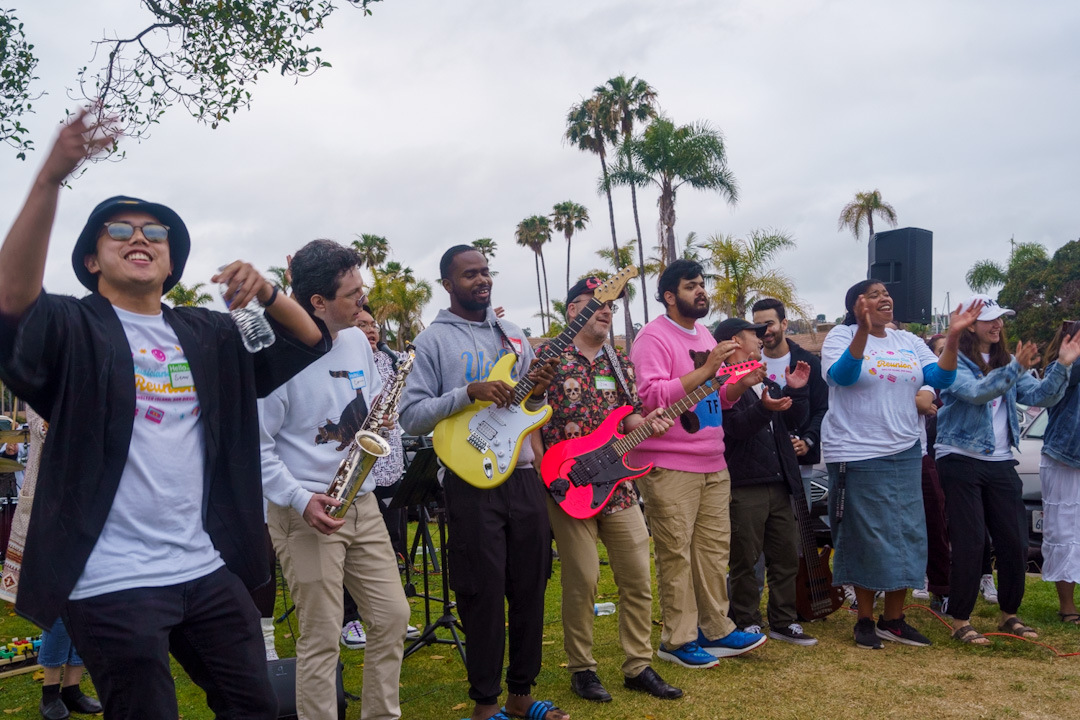


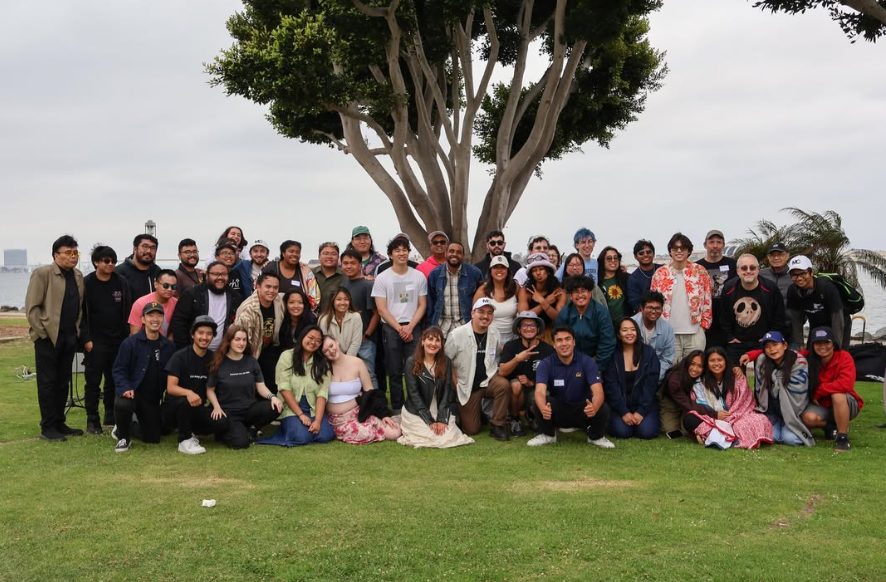
Image Credits
Andre Takei, Rashad Griffin Sr, Huy Huynh, Vanessa Roldan Agatep
Popular
-

Hidden Gems: Local Businesses & Creatives You Should Know
-

San Diego’s Most Inspiring Stories
-

Helen Liang on Bringing North Coastal Floral Design to Life Through a More Personal, Community-Driven Retail Experience
-

Ryan Grow on Turning Personal Struggle into Atmosphere, Memory, and Meaning in The Water Remembers

