Today we’d like to introduce you to Tiffany Haug.
So, before we jump into specific questions about the business, please give us a brief overview of your story.
Sure!
I had a pretty eclectic childhood growing up and spent the first 16 years of my life living in a rural part of Southern Japan because of my parent’s work. My sister, brother, and I were the first ever ‘White people’ to ever attend the schools we went to. Japanese public school was pretty rough for me and I experienced severe bullying. My best at the time, Naomi, ended up committing suicide in 9th-grade as a result of bullying that she too had experienced at school.
As a way to cope with that trauma, I slipped into an eating disorder for the next four years. I was also diagnosed with major depression. At the age of 16, I moved to Thailand to complete the rest of my high school years.
After high school, I moved to the States and started to put serious effort into my own recovery from my eating disorder which was hard. However, I’m nothing if not determined, so I made recovery a non-negotiable part of my every day life. I started college and was studying psychology with the goal of being a therapist, and quickly changed my major over to Dietetics with the goal of being an eating disorder dietitian. I pretty much based this decision on the fact that when I was in recovery from my own eating disorder, the person I hated the most was my dietitian. Now that I was a few years into recovery, I figured I’d pay it forward and take one for the team and become that “most hated” person, ha.
Fast forward several years and I work as a Master’s level eating disorder dietitian at an eating disorder specialized group practice in Sorrento Valley (EveryBODY Behavioral Health) along with 3 great eating disorder therapists. I also work at an eating disorder treatment center in Del Mar (Center or Discovery). I additionally do consultant work and provide nutrition education groups for substance abuse treatment centers and community non-profits in San Diego.
Aside from my direct client care work, I speak at both state and national levels on topics related to eating disorders and supporting clients in achieving greater peace and freedom in their relationships with food. One of the topics I speak on most often is the topic of Food Addiction. I also have had the pleasure to serve as the past Education Chair for the International Association of Eating Disorder Professionals (IAEDP) San Diego Chapter from 2017 to 2019.
We’re always bombarded by how great it is to pursue your passion, etc – but we’ve spoken with enough people to know that it’s not always easy. Overall, would you say things have been easy for you?
Ha! No.
One of the things that I’ve both simultaneously grown into with experience, as well as intentionally worked on, is learning the art of meeting clients where they are at–while still nudging them towards progress–whatever that means for their own specific recovery processes. I think when you’ve gone through recovery personally like I have, it’s important to constantly remind yourself that their story is not your story, and their journey to recovery might look very different than mine ever did. Even though it is a human condition to struggle with self evaluation, it is absolutely vital when working with clients in this field to “check yourself” to not get ahead of your client’s recovery process.
The worst thing a provider of any kind in this field can do is to project their own story on to their clients’ process. Recovery is possible, but it’s not possible until someone decides that it’s something they are willing to commit to. And everyone comes to that commitment at their own pace. It’s important to respect that. Even if a client chooses that they are not ready to commit to recovery at the time, giving them unconditional positive regard is one of the most powerful things you can do.
So, as you know, we’re impressed with the great work you do as an eating disorder dietitian – tell our readers more, for example, what you’re most proud of and what sets you apart from others.
Before mentioning what sets me apart, I want to give a shout out to all the wonderful eating disorder dietitians that I am proud to call my colleagues in San Diego. I think anyone who enters this field has to have an unshakable passion for it, and San Diego is blessed with many wonderful eating disorder dietitians who fit that bill.
One of the aspects of my own work with clients that I enjoy the most is being able to provide the “why” behind each recommendation that I make. In other words, I love diving into the nitty-gritty of the science of nutrition and what our bodies do with the nutrients we give it to help us function in day to day life, as well as heal. It’s important to me to provide this context, because recommendations from healthcare professionals can often come across as condescending, or autonomy-robbing, especially when it’s a recommendation provided with no context or reasoning. Even difficult recommendations can feel a lot more doable when you know why the recommendation is being made in the first place. It’s a lot more possible to push yourself to consume the nutrients you need to thrive when you know how these nutrients are going to benefit your brain, muscles, immune system, hormones, gut microbiome diversity, digestion etc.
Do you think there are structural or other barriers impeding the emergence of more female leaders?
Absolutely. I think that women tend to be held to an impossible standard of ‘niceness.’ And by that, I’m not saying that we shouldn’t hold individuals of all genders to the standard of treating others with kindness. Rather, I’m referring to this yucky societal structure that pervades business spheres, where women who hold strong business boundaries and/or have very matter-of-fact personalities are often referred to as a “b***.” There is this elusive ‘niceness’ standard, and somehow men get a pass from being under it’s oppression. It isn’t frowned upon for men to be blunt, but when women speak their boundaries or opinions in a firm way, it’s kind of met with shock.
A lot of times, women are expected to “soften the blow of the actual truth” in the spirit of ‘niceness.’ I find this to be incredibly oppressive. Speaking the truth doesn’t always come across as nice, but it can actually be the kindest thing one can do, because it reflects the reality of the situation back to someone. Knowing the reality is what allows us to make changes and grow. On the other hand, holding ourselves to a standard of niceness above all else, can lead to glazing over the truth and gets us and society nowhere but in a state of perpetual stuck-ness.
Because a huge part of my work with my clients involves helping them develop their authentic voice as it relates to self advocacy within the context of their recovery, it is important to be consistent with that in my own life. This means that I intentionally try not to get caught up in placing niceness on a pedestal above all else, when it comes at the cost of suppressing my own authentic voice or conveying the truth of a given situation.
Contact Info:
- Address: Eating Disorder Specialized Group Practice:
EveryBODY Behavioral Health
6540 Lusk Blvd
Suite C277
San Diego, CA 92121 - Website: https://tiffanyhaugrd.wixsite.com/freedomwithnutrition
- Instagram: https://www.instagram.com/freedomwithnutrition/
- Facebook: https://www.facebook.com/freedomwithnutrition/
- Twitter: https://twitter.com/tiffanyhaugmsrd


 Image Credit:
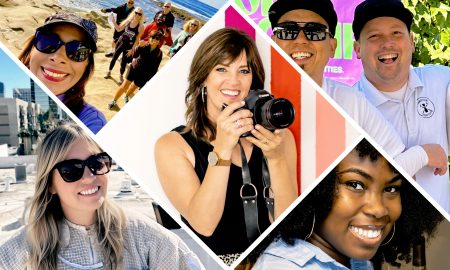
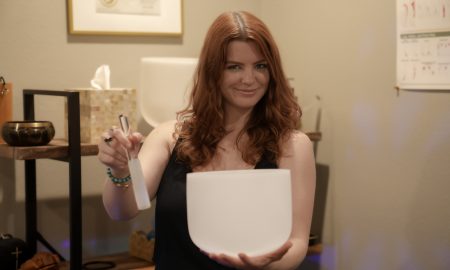
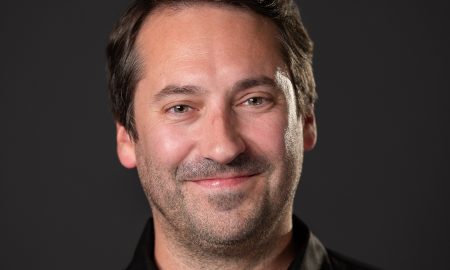
photo cred for pic with blue shirt and pink striped shirt: Titus Haug
sushi photo cred: Alexander Pecoraro
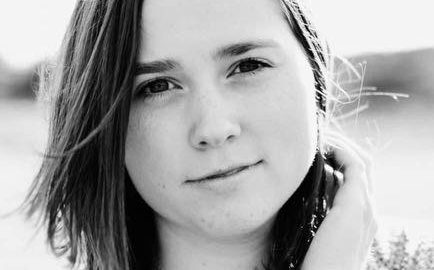
black and white photo cred and photo cred for pic by boulder: Tiffany Haug
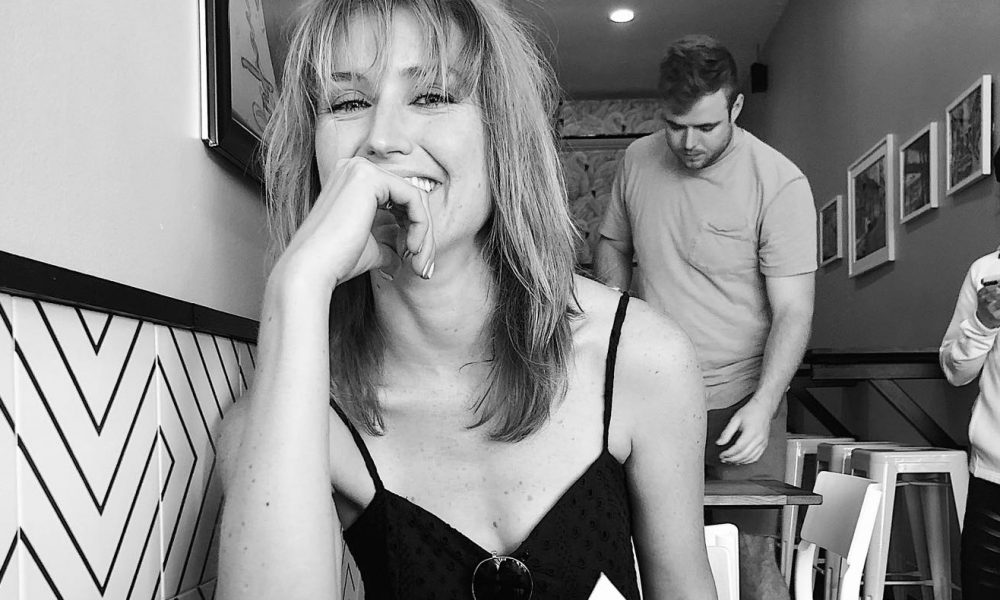
photo cred for main headshot (black and white photo with just one person in it): Tiffany Haug
Suggest a story: SDVoyager is built on recommendations from the community; it’s how we uncover hidden gems, so if you or someone you know deserves recognition please let us know here.