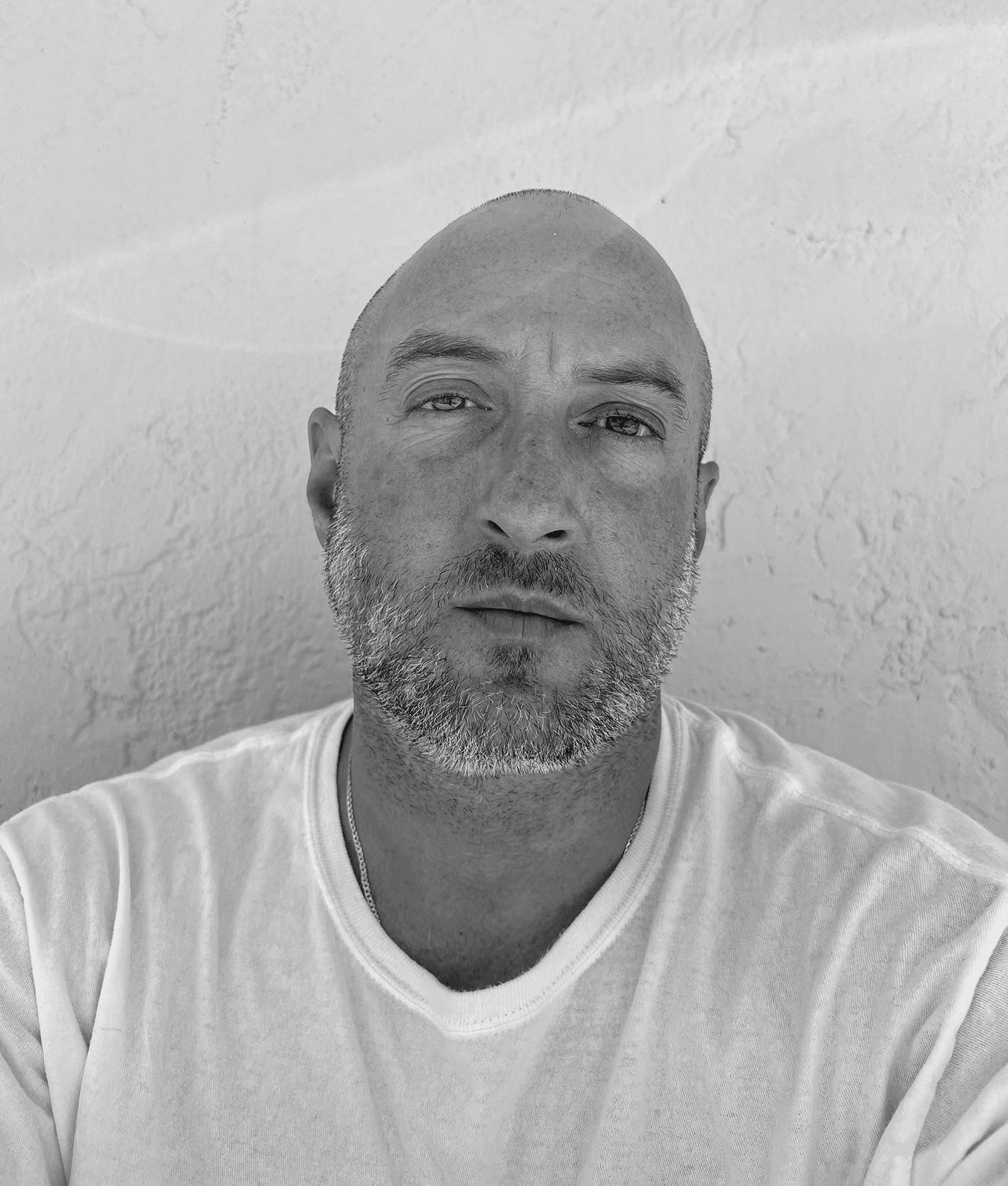
Today we’d like to introduce you to John Francis Peters.
Hi John Francis, we’d love for you to start by introducing yourself.
I started getting into photography when I attended the School of Visual Arts in New York City back in 1998. I was actually studying graphic design, but at SVA we had what was called ‘foundation year’, where we took classes across a range of mediums like painting, drawing, sculpture, writing, and photography.
When I took the photography class, this was still completely the film era, and I spent a lot of time in the darkroom working mainly with black and white film. From the very first day I picked up the camera, I absolutely fell in love with it. I spent the next few weeks just wandering around New York City, photographing constantly. That really became the beginning of my journey with photography.
I graduated in graphic design, and after school I got a job at Def Jam Records as a production designer. I was working alongside a lot of incredible creative directors who were collaborating directly with major music artists at the time. I also worked with a small design studio in New York called Toast Cafe, which specialized in branding for major companies. At the same time, I was consistently practicing photography on my own.
While I was at Def Jam, I was introduced to the photographer Jonathan Mannion, and I began assisting him. I learned a tremendous amount from that experience. One of my main roles was helping organize his extensive film archive. For me, that was incredibly meaningful because I greatly admired his work, especially the early work he did for The Fader magazine. He had also worked for Richard Avedon, so it felt like I was getting this amazing education through both Jonathan’s experience and that connection to Avedon’s legacy and approach to portraiture.
Through Jonathan, I was introduced to people at The Fader. Back then, you would physically drop off your portfolio at magazines around the city, and I dropped mine off there. That’s when I connected with Phil Bicker, who was the new creative director at the time. I would later realize just how influential and groundbreaking he was as a creative director and photo editor, and years later I would end up working closely with him.
I started freelancing, shooting for music and culture magazines including The Fader, XXL, and Elemental Magazine in New York. Then in 2007, Phil called me about an opening to work alongside him as photo coordinator at The Fader. I took the position, and that became the beginning of about five years working at the magazine, first as assistant to the creative director and later as the photography director.
During all of that, I was constantly making my own work. Every weekend or whenever I had time, I was out photographing personal projects, both in New York City and eventually upstate New York after I moved back to the Hudson Valley. I was commuting into the city while continuing to develop long-term personal projects. During 2008-2010, I worked on a long form series documenting the home foreclosure crisis, and I continued making portraits and photographing life in the towns where I grew up in the Hudson Valley.
That period really shaped the foundation of how I approach photography today, balancing editorial work, portraiture, documentary projects, and long-term personal work all at the same time.
We all face challenges, but looking back would you describe it as a relatively smooth road?
It has definitely not been a smooth road, but I also wouldn’t necessarily complain about that because I knew what I was getting into. The artist lifestyle is notoriously unpredictable and full of ups and downs. I’ve had to sacrifice different things along the way, but for the most part, the decisions I made were intentional and strategic. I accepted early on that trying to make a living as a freelance photographer comes with a certain amount of instability and risk.
I think one of the hardest parts has been simply believing in yourself and staying connected with other artists. It’s a highly competitive field with a lot of talented people, and I’ve never really approached art from a competitive mindset. Competition made sense to me in athletics, but art has always felt different. So learning how to navigate that side of the industry has been challenging at times.
A big part of the struggle is constantly trying to find ways to continue making new work, whether that’s through client projects or personal projects. There are periods where things feel very active and inspiring, and other periods where you question everything.
The most difficult stretch of my journey began in 2020. Like many people, the pandemic deeply affected my life, but for me it was also an intense period of personal loss. Within a two-week span, I lost both my sister and my grandmother. That experience completely shattered my sense of stability and changed the way I viewed the future. Over the past several years, I’ve really been trying to rebuild myself and regain some footing after that period.
Only within the last year or so have I started to feel more like myself again and feel creatively energized in a deeper way. During that time, I stepped back from photography in some ways, although I continued editing and revisiting older projects, which actually became very meaningful for me. It allowed me to finally organize and share work that had been sitting in archives for years.
I also had to find other ways to stabilize myself mentally and physically. I got deeply into swimming, weightlifting, and learning about finance and other areas of life I had largely overlooked while pursuing an artist’s path. Those things helped ground me and also connected me to different communities outside the art world, which I realized I really needed.
I think being an artist requires a certain level of vulnerability and openness, which can be incredibly meaningful, but it can also leave you exposed emotionally. Over time, I learned that I needed balance in my life. Photography and mixed media work remain central to who I am, but having more structured and grounded practices alongside them has been very important for me.
Looking back, the years after 2020 were by far the hardest part of the journey, but they also taught me a tremendous amount about resilience, perspective, and what actually matters to me both as a person and as an artist.
Can you tell our readers more about what you do and what you think sets you apart from others?
My main profession is photography. I’m a freelance photographer based out of San Diego, and my work spans documentary projects, portraiture, and photojournalism. I usually just refer to myself simply as a photographer and artist because I’ve never really wanted to categorize myself into a specific genre. I’m interested in following subjects and projects in a way that feels natural to me rather than forcing myself into one category.
I think what really defines my work is the way I approach subjects and stories. Over the years, through studying photography intensely and working alongside people like Phil Bicker at The Fader, I learned the importance of refining your vision and figuring out how you personally want to see and interpret the world. Early on, like many photographers, I was heavily inspired by other artists and photographers whose work I admired. But eventually you realize that you have to peel back those layers and stop trying to be someone else or chase what feels trendy. You have to figure out who you are, what you naturally connect with, and what your strengths actually are.
For me, photography has always been about that process of connection. With portraiture, I want to learn about the person I’m photographing and create images that feel natural and honest. Most of my portraits are pretty stripped down. There usually isn’t a lot of theatrics involved. I’m interested in creating a space where the subject can connect with the camera in a natural way.
With documentary work, I often focus on subjects that are connected to my own life and experiences. Even when I’ve photographed different communities or traveled to other parts of the world, the work still usually ties back to something personal, whether that’s family, where I’m living, or experiences I’m going through at that time in my life. A lot of my work in California, for example, connects back to moving here from New York because of family.
When it comes to editorial and photojournalistic work, I try to approach stories in a way that feels true to how I naturally work visually. My goal is always to create images that not only support the story being told, but also hopefully contain some nuance and emotional depth on their own.
I think what sets me apart is consistency and experience. Over the years, I’ve spent a tremendous amount of time refining how I approach image-making, learning from mistakes, and continuing to evolve. I actually think making mistakes is essential creatively. You learn through experience, through failure, through experimenting and continuing forward.
I’m also very grateful for the opportunities I’ve had to work with publications like The New York Times, The Wall Street Journal, Bloomberg Businessweek, and others. That’s never lost on me. Every assignment still feels meaningful and special to me, and every time I go out to photograph something, I genuinely want to do the best work I can.
Ultimately, I think what sets anyone apart creatively is staying committed to their own path long enough for their experiences, interests, struggles, and perspective to naturally merge into something personal and distinct. That’s something I’m still continuing to explore and refine through photography and art.
What matters most to you? Why?
What matters most to me by far is my loved ones, my family, my girlfriend, my dogs, and taking care of myself as best I can. Without those people and animals in my life, nothing would feel the same. They give me energy through love, connection, support, and simply learning from one another through life.
Especially now, because I don’t have much family left, those relationships mean everything to me. I love my parents more than words can express, and my girlfriend has been by my side through some of the darkest moments of my life. I owe all of them more than I could ever fully put into words.
Beyond that, what matters to me on a broader level is staying connected to other people and continuing to think critically about the world around us. I think one of the dangers right now is that people are increasingly isolated inside their own information bubbles, fearful of one another, and disconnected from real conversation. If we continue down that path, I think the future becomes a much darker place.
I’ve always believed in the importance of dialogue, especially conversations that are challenging but still respectful. I don’t think growth happens when everyone agrees all the time. I think it happens when people are willing to listen, exchange ideas honestly, and still recognize each other’s humanity even when they see the world differently.
There has always been darkness in the world, and everyone experiences life differently depending on where they come from and what they’ve gone through. But for me, what matters is continuing to be a loving and responsible person to the people closest to me while also trying to share some sense of connection, curiosity, and humanity through my photography and artwork.
Contact Info:
- Website: https://www.jfpetersphoto.com
- Instagram: @jfpetersphoto