Today we’d like to introduce you to Ahna Lipchik.
Ahna, please share your story with us. How did you get to where you are today?
I grew up in Milwaukee training as a gymnast and studying various styles of dance (African dance, tap, hip-hop, jazz, and ballet). As the years went by, my interests evolved, and ballet became the main focus. Until I was 16 I studied under incredible faculty at the Milwaukee Ballet School and Academy (Rolando Yanes, Monica Isla, Nadia Thompson, Karl Von Rabenau, Mireille Favarel and more).
Armed with what they had taught me, I left for boarding school at the University of North Carolina School of the Arts for my last two years of high school. Here I had the honor of learning from some of the most accomplished artists in the ballet and contemporary dance worlds. The school has a two-track dance program- one track classical ballet and the other, contemporary dance.
Thanks to this I was exposed to phenomenal contemporary dance faculty and the students in the contemporary track. The way some of them moved was revolutionary in my eyes and pushed me to explore more about how I myself can move, and perhaps how I can incorporate contemporary ideas into my ballet, and vice versa.
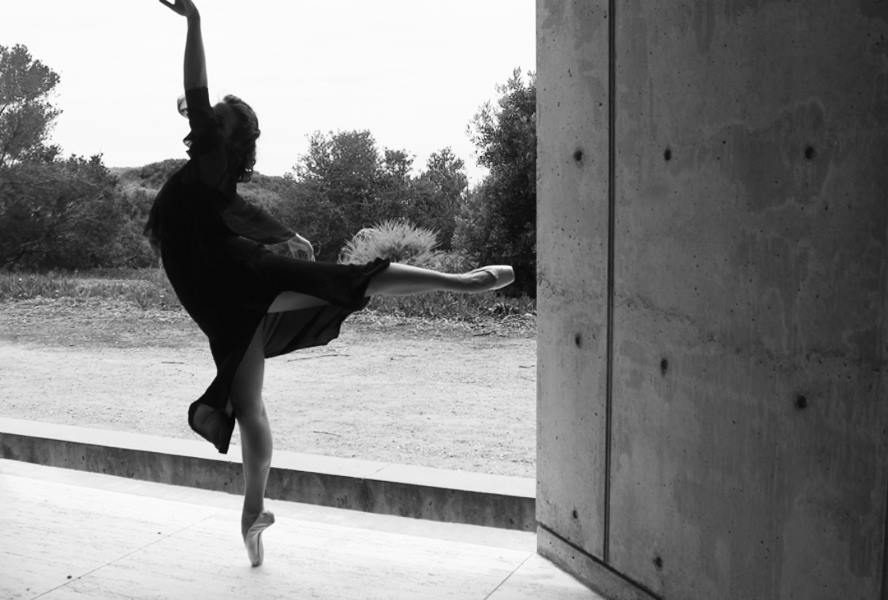
After three years (two years high school, one-year university) of intense training and self-exploration, I was offered a company contract with the San Diego Ballet. I left school to pursue my ballet career, and have now been here for two years.
Great, so let’s dig a little deeper into the story – has it been an easy path overall and if not, what were the challenges you’ve had to overcome?
The ballet world is one of great beauty and great heartache. Each person has their own experience, and I feel as though I’ve been exposed to some of the most amazing things ballet has to offer, and also some rather frustrating times. The feeling of being onstage, for instance, is one of the most euphoric I have felt. In that moment you are setting the scene and creating a personal connection with the audience. Regardless if you’re dancing directly to them, or dancing as a character to whom they relate, you, the artist, are hopefully triggering the emotion of some kind. And is that not the point of fine art? Is that not an amazing thing?
Sometimes the path to the stage is not so magical, however. During my school years, I suffered from a fractured foot (age 15) and an almost fractured spine (age 19). Being so injured that you have to take time off is devastating- you’re going at be out of ballet shape, you’ll have to watch other people learn repertoire you were meant to learn, and in my case, there was a time when I didn’t feel like myself. In each of these dark periods, I was lucky enough to have people around me to provide physical and emotional support. I have come to realize that each time we are injured, it is a mandatory opportunity to reassess and reset, to start fresh and to work smarter.
An age-old issue in the ballet world that is gaining exposure is the idea of the “perfect ballet body”. It’s nearly impossible to find someone who fits the ideal body requirements, and this is a struggle I have faced as a more muscular dancer. I have been turned away from schools, refused jobs, and warned that I won’t continue dancing if my body stays the way it is. Dancers can be too short, too tall, too broad, too flat, too far from the mold. I respect many of the traditions ballet has maintained over the centuries, but I feel that this stigma of not having the ballet body is one that we are ready to shed.
As ballet dancers we need to be in the best shape we can be, yes, but when it comes to a person’s natural build, we are each going to be different, and I think that is something to be celebrated! Show me a technically trained, strong dancer who can really move and create something meaningful with their dancing any day of the week.
Please tell us about San Diego Ballet.
The San Diego Ballet was founded in 1991 by Robin Morgan with contemporary repertory created by Javier Velasco. We perform many of Javier’s works, which tend to be a fusion of the ballet and contemporary genres with heavy jazz and musical theater influences. The company often collaborates with world-renowned jazz musicians Charles McPherson and Gilbert Castellanos. Audience members attending these programs get to experience the excitement of live jazz and dance, something not many other companies offer.
Do you look back particularly fondly on any memories from childhood?
Getting to perform in many of the Milwaukee Ballet’s productions as a part of the children’s cast was always exciting, but specifically getting to dance as one of the four lead children fairies in Bruce Wells’ “A Midsummer Night’s Dream” was definitely a highlight.
Getting to dance alongside the talented members of the company at such a young age was both terrifying and exhilarating. The cherry on top was visiting my mom in the orchestra pit during intermission, where she plays principal cello with the ballet orchestra.
Contact Info:
- Address: 2650 Truxtun Rd #102, San Diego, CA 92106
- Website: http://sandiegoballet.org/about-us/
- Phone: (619) 294-7378
- Email: [email protected]
- Instagram: https://www.instagram.com/san_diego_ballet/
- Facebook: https://www.facebook.com/sandiegoballet


Image Credit:
Emily Devito, Rosalie O’Connor, Taylor Oshiro, Troy Bloom, Claire Torres, Manuel Rotenberg, Emily Devito, Jennifer Mazza
Getting in touch: SDVoyager is built on recommendations from the community; it’s how we uncover hidden gems, so if you know someone who deserves recognition please let us know here.