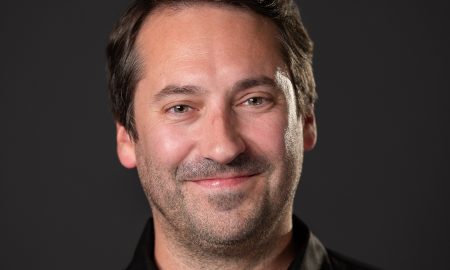
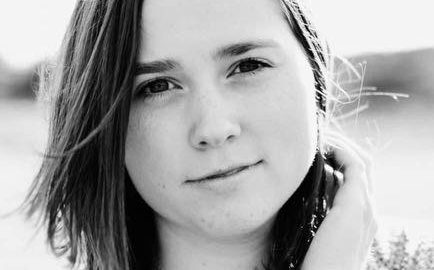
Today we’d like to introduce you to Nathaniel Haering.
Thanks for sharing your story with us Nathaniel. So, let’s start at the beginning and we can move on from there.
Thanks so much for having me! I was born in the state of Kentucky in 1994, and I’m a composer of experimental music.
As a kid who filled hours by coaxing every timbre and bizarre sound he could out of a frying pan and who was equally excited to stare at a computer screen for just as long, I am overjoyed to have found a profession that so thoroughly combines both interests. I loved banging on pots and pans, household items, toys, furniture, making sound with anything I could find (with the usual support and occasional chagrin of the family) and actively clamored to touch, explore, and play with any instrument I could get my hands and/or mouth on. I was also utterly fascinated by computers. At an early age, I created/programmed my own little rudimentary video games that I would argue to this day are still delightfully fun. As soon as I found out that I could create music and explore sounds with computers, I was absolutely in love with the idea. I am still slightly in disbelief and beyond thankful that I’ve found a way to make a career out of intertwining both of these passions.
In high school, I played horn in the symphonic band and youth orchestra, I adored marching band, played bass guitar and piano in the jazz band, sang in the choir, played in the orchestral pits for the school musicals, acted in the school musicals, and participated in talent shows, brass quintets, cabarets, among many, many more activities. I was a huge fan of movie soundtracks and considered the fact that the marching band played some of my arrangements during football games to be the highest possible honor. I loved music and aspired to write it, but at the time of college applications, I had no traditional “composition portfolio” to speak of.
Without a portfolio, most music composition programs would never have considered me for admission. Unlike most universities, Western Michigan’s school of music required all undergraduate students to enter as part of an instrumental studio acting as generic “music majors” and then apply to be part of the composition program (or music therapy, music education, performance, etc.) in their second year. This allowed students to develop and craft a substantial portfolio throughout their first few semesters. I auditioned to be part of the French horn studio and the horn professor, Dr. Lin Foulk Baird, a beyond remarkable artist and person, saw promise in me (reportedly I had a great attitude), believed in me, and by welcoming me into her studio and the school of music as a whole, opened the doors to a life-changing opportunity.
I was extremely fortunate that my first composition teachers and mentors at Western Michigan University, Dr. Christopher Biggs and Dr. Lisa R. Coons, were positively phenomenal! They were newly hired, engaged, and fiercely passionate about their art and their students. From the very beginning and earliest classes, they exposed me to the astounding world of experimental new music and its extraordinary sounds and seemingly limitless possibilities. I was enamored with the twisting, crackling, brutal yet playful, reverent, gorgeous, jarringly quick yet infinitely sustaining, sometimes silly, sometimes scalding, visceral variety of the contemporary works they shared. The positive impact of the inspiration, guidance, dedication, and love that they exuded during these formative years and the solid foundation they provided cannot be overstated.
Dr. Biggs specializes in the composition of electronic sounds, often in combination with acoustic instruments. This is referred to as “Electroacoustic Music”. When I found out that Electroacoustic composition existed and that I could further combine computer programing and live instrumental performance by processing the sounds of performers in real-time, I was absolutely hooked.
While I was his student, Dr. Biggs started a summer workshop specifically dedicated to creating and performing works for instruments and electronics called the SPLICE Institute. I was… young and naive and didn’t apply. I was, however, also very, very lucky as one of the participants dropped out at the last minute and a new composer needed to be paired with the now collaborator-less performer. They chose me!
It was at SPLICE that I met Dr. Elainie Lillios, a magnificent composer and educator whose work I greatly admired (and still do!). She was the honored guest for SPLICE’s inaugural year. Unbeknownst to me at the time, she was also my future mentor. I introduced myself to Dr. Lillios by saying “Hello! I’m Nathan and I am very interested in being your Music Technology TA at BGSU!” to which she replied with appropriate skepticism saying “…we will see…”. After interacting throughout the festival, sharing my work with her, and many other adventures, sure enough that same time next year I was on my way to Bowling Green, Ohio to start my master’s with a fellowship as the Music Technology Teaching Assistant with Dr. Lillios at Bowling Green State University.
BGSU has been described as a miraculous “oasis” for new music and I found that metaphor to be resoundingly accurate. While there, I helped teach electronic music courses, maintained the beautiful electroacoustic studios, ran tech/sound for all of the concerts, worked for the recording area, met a huge number of incredible friends and collaborators, and continued to write and develop my work in yet another catalyzing and nurturing environment. I studied with Dr. Lillios as well as the wonderful Dr. Mikel Kuehn. As I neared the end of my master’s degree, I went out on a limb and applied only to a few exceptionally highly regarded music programs but was most excited about UC San Diego.
I had heard about UCSD many times throughout both degrees; it has an outstanding reputation for being one of the greatest schools for new acoustic and computer music. I hoped that its highly experimental and collaborative program would be a great fit for me. I was beyond delighted that, soon after applying, I received a call from Professor Chinary Ung welcoming me to the program! After living in the Midwest all of my life, I was suddenly invited all the way to California where I’m currently a PhD student at UC San Diego about to begin my 3rd year in an (at least) 5-year program!
My time at UCSD so far has been fantastic. My colleagues have been beautifully welcoming, supportive, and inspiring in the level of excellence and diversity of ways they conceive of and create art. The pieces and rich collaborations I’ve been involved in here have been monumentally rewarding and I am beyond thankful to be a part of such a wonderful community. I miss everyone dearly and hope to see them all in person again as soon as it is safe!
Throughout all of this time, I was able to travel the world, having performances in beautiful limestone caverns in Matera, Italy; crypts in New York City; concert halls in Mykonos, Greece; Hong Kong; Valencia, Spain; Hsinchu, Taiwan; Toronto, Canada; Shanghai, China; Seoul, South Korea; as well as a slew of other national and international venues. I’ve also recently been honored to receive the ASCAP/SEAMUS (Society for Electro-Acoustic Music in the United States) Student Commission Award, PRIX/CIME (International Confederation of Electroacoustic Music) Residency Award, The Matera Intermedia Mixed Media Award of Distinction, and numerous other accolades. I am truly thankful for how far I’ve come and owe a tremendous amount of thanks to all of the amazing people who have helped me get here!
Overall, has it been relatively smooth? If not, what were some of the struggles along the way?
A few members of my family were initially a little skeptical of my choice to pursue a music degree. I was extremely fortunate, however, that within my first year in the WMU composition studio, I was awarded the opportunity to collaborate with and write a piece for Grammy award-winning Vietnamese performer and composer Vân Ánh Võ for đàn bầu and string quartet. This seemed to convince the rest of my family that I was on the right track quite quickly!
Although I believe all careers in the arts present massive challenges, especially as COVID-19 and other converging factors have devastated so many arts organizations and independent artists in the U.S. I must acknowledge that I am still coming from an extremely privileged position. My gender, race, age, class, and numerous other aspects have eliminated many barriers for me in life and certainly in the world of classical music. I hope to use this privilege and whatever influence I have accrued to address and dismantle the systems that have undoubtedly unfairly benefited me throughout my career.
Can you give our readers some background on your music?
I love creating pieces for instruments/performers and live electronics. Or, as it says in my bio, “Nathaniel Haering is deeply interested in the use of live electronics to expand the artistic capabilities of traditional instruments and augment their timbral horizons while enriching their expressive and improvisational possibilities.” I take the live input from an instrumental microphone, run it through my laptop, manipulate the signal in real-time using various programs (usually MAX/MSP), and pump it back out through any (often ridiculous) number of speakers. Usually the live processing is implemented in ways that actively accentuate and readily adapt to each performer’s interpretation while integrating their unique sound into the electronics.
I also enjoy writing acoustic works and believe both practices/mediums are exceedingly important and enhance one another. The perspectives and values that I’ve developed from working in-depth with electroacoustics are definitely also highly influential and represented in how I conceive of and go about creating my purely acoustic work.
In addition to this, the opportunity to work with choreographers, videographers, visual artists, and other multidisciplinary collaborations have also greatly influenced how I think about my own art. I’ve created and participated in multiple installations including one collaboration with the WMU Frostic School of Art that resulted in a massive 210” x 65” x 140” steel and fabric sculpture with projection mapped video. As part of a team, I created a work with choreographers Marissa Quivey and Rachel Kollins featuring multiple motion sensors attached to each dancer that were used to generate live interactive audio and video based on their movements. I’ve also composed the audio for a number of choreography videos used both as standalone pieces and for live dance performances.
Improvisation, both in an ensemble and solo setting, has also been an important part of my life and has led me to interact with and learn from many different artists with a variety of styles and practices. I usually perform on “electronics” using whatever tools and techniques I’m excited about that day, whether that means literally “sculpting” the sound with my hands using a Leap Motion infrared sensor or beeping away with a home-made sound generating contraption constructed from an assemblage of simple circuits.
I like to describe my work as juxtaposing and combining extreme cacophonous virtuosity and genuine faltering vulnerability. Often this is accomplished through crafting powerful gestures out of the fascinating, irregular, and unstable sounds traditionally considered “accidents”, extraneous, or subordinate to the production of a well-defined pitch (in western classical music). I greatly prefer to shape the sounds of bow hair crackling and crunching against metal strings, exasperated breath, grunting, growling, vocal chords frying, and errant embodied noises rather than notes for note’s sake. When pitches are noticeably present, they are usually an ethereal shimmering effect, contrasting with and providing stasis and relief from the more raucous grinding materials they coexist with. Often any “pitches” are meant to act as partials mimicking the timbre/spectra of natural inharmonic phenomena like the resonance that blooms from striking a piece of rusted metal, allowing ensembles to act as a single, stratified meta-instrument that I can manipulate, distort, obfuscate, or clarify further from there. All of this, as well as arrival points, impacts, and other carefully shaped parameters are often aided or generated through stochastic processes; I love exponential/logarithmic curves, playing with perceptions of non-linear time, and sculpting randomized operations. I sincerely apologize for all the jargon, I figured I would try to get most of it out of the way at once!
My goal in collaboration is almost always to craft pieces out of the wild techniques and sounds that each performer I work with uniquely excels at; always writing pieces for specific individuals rather than an instrumentalist in the abstract. These unique abilities and personalities are combined in ensemble settings, or augmented, contrasted, and accompanied by electronic sounds and processing, or in the case of ensemble and electronics pieces… both!
Both BGSU and UC San Diego have outstanding performance programs that specialize specifically in contemporary experimental music, so I have been extremely fortunate to work with a myriad of incredible musicians who have been more than excited to explore their instruments in increasingly unconventional ways. These marvelous artists have had a lasting impact on my life and work for which I’m truly thankful.
Because I’ve been able to work so closely with so many new music specialized performers, I’ve been able to develop a practice of creating gestures and trajectories out of quasi-improvisatory material unique to each performer’s abilities and interpretation; a form of highly structured improv. My hope is that this generates a great amount of performer agency and influence in the work, and allows the piece to adapt and fluctuate with each performance, never being exactly the same twice. The use of live processing that is generated through controlled random processes and sculpted noise allows this sense of directional malleability to apply to the electronic elements as well.
From time to time, I do perform my own pieces; I like to think I play a mean slide whistle!
My pieces are rarely programmatic or about anything, the program notes for my works usually look something like this:
“…I was immersed in its erratic, panicked atmosphere. I became obsessed with the idea of frantic, futile solos lashing out violently from silence with such constant intensity and fervor that they resulted in a kind of horrified stasis, a unit of grotesque and vicious sustain, striving endlessly but going nowhere, grasping desperately at nothing in the pursuit of a distant unseen hope.”
I greatly prefer my works to be designed around the material itself rather than an outside image or narrative but I welcome listeners to draw any associations and ideas about it that they like!
I also have a great deal of recording studio and mixing/mastering experience. I’ve worked for the recording/live sound department at every institution I’ve studied at and am truly grateful for this experience. I actively try to use this skillset to make each recording sound as fantastic as possible with whatever means are available and dedicate a great deal of time, effort, and pride to the sound quality of the final product.
Recently I’ve been experimenting more with lighting, binaural audio spatialization, and video in my pieces, especially as quarantine has made live performance exceedingly difficult if not impossible. I hope to pursue this much more in the future and am excited to see where it leads me and my work!
Any shoutouts? Who else deserves credit in this story – who has played a meaningful role?
Mr. Michael Emerson for being an excellent band director, educator, and very early inspiration.
Dr. Lin Foulk Baird for being an incredible person and performer and welcoming me into her horn studio and the WMU school of music.
Dr. Christopher Biggs and Dr. Lisa R. Coons for being truly wonderful human beings, amazing composers, and the best teachers and mentors anyone could ever ask for.
John Campos for taking me in and fostering a love for audio engineering, Mark Bunce, Michael Laurello, and Andrew Munsey for trusting me with advanced recording positions and further nurturing this passion.
Dr. Elainie Lillios for taking me on as her Music Technology Teaching Assistant, offering me my first paid fellowship and welcoming me to the wonderful experimental new music oasis that is BGSU and for being a truly remarkable person, composer, mentor, everything. I cannot thank her enough!
Dr. Mikel Kuehn for being a fantastic teacher, composer, and person!
Daniel Bayot, a close friend and collaborator whose input, guidance, and ludicrously impressive vocal talents allowed me to create one of my most impactful works so far, Medical Text p.57. It would not exist without him!
All of the professors and students at UCSD for welcoming me to this wonderful community and helping to create some of the most extraordinary and meaningful collaborations and works to date.
The gargantuan list of truly incredible performers who I’ve collaborated with, who have championed my work, been remarkable friends and colleagues, have helped me in countless ways, and have had an amazing lasting positive impact on my life and work. I would not be anywhere near where I am now without this beautiful community and I am truly, truly thankful.
All the friends who have supported me along the way.
MY MOM AND DAD!! 🙂
Photo credit and thanks to Kory Reeder and Nick Trieu for many of the pictures used in this article.
Contact Info:
- Website: http://nathanielhaering.com/
- Email: nahaering@gmail.com


 Image Credit:
Kory Reeder and Nick Trieu
Suggest a story: SDVoyager is built on recommendations from the community; it’s how we uncover hidden gems, so if you or someone you know deserves recognition please let us know here.