Today we’d like to introduce you to Laurie Fisher.
Laurie, please share your story with us. How did you get to where you are today?
My career as a San Diego architect began in 1998. I arrived here after living in France for five years, with several years of work experience under my belt. My foreign work history was seen as more of a novel point of interest than a serious asset, and I found myself at the back of the line in the studio hierarchy. While this was difficult to accept, it faded into the background as I began to encounter the impenetrable barriers that women face in a fiercely competitive and male-dominated profession.
When it became obvious that upward mobility within one office was not an option, I would obtain a meager promotion and raise by moving to a new one. At my final job, it became abundantly clear that even though I had successfully managed a portfolio of responsibilities that filled three pages (most of which were administrative in nature), “associate” was my ceiling. When I learned that a male employee, ten years my junior and less than a year with the firm, was making 20% more than I was, it was time to go for good.
If I wanted to practice architecture, the only way it was going to happen was if I made it happen and got the men out of the way. In 2004 I started my own practice with two projects. While neither project was ultimately realized (I had to quit one because the husband would hit on me, in French, in front of his wife – knowing she didn’t understand), they nonetheless launched me on a journey that has been rich with success and failure, paralyzing anxiety and pure joy. As long as architecture doesn’t kill me, I couldn’t imagine living without it.
It is still very much a man’s profession. While women currently make up over 30% of new licensees nationwide, female established license holders still remain less than 20%. I know that I made hard sacrifices to be here, and not everyone is up for that. Most of the women I worked with dropped out. A few made the same decision I did. Today I know many more women who run their own firms than hold upper-level positions in established male-owned firms.
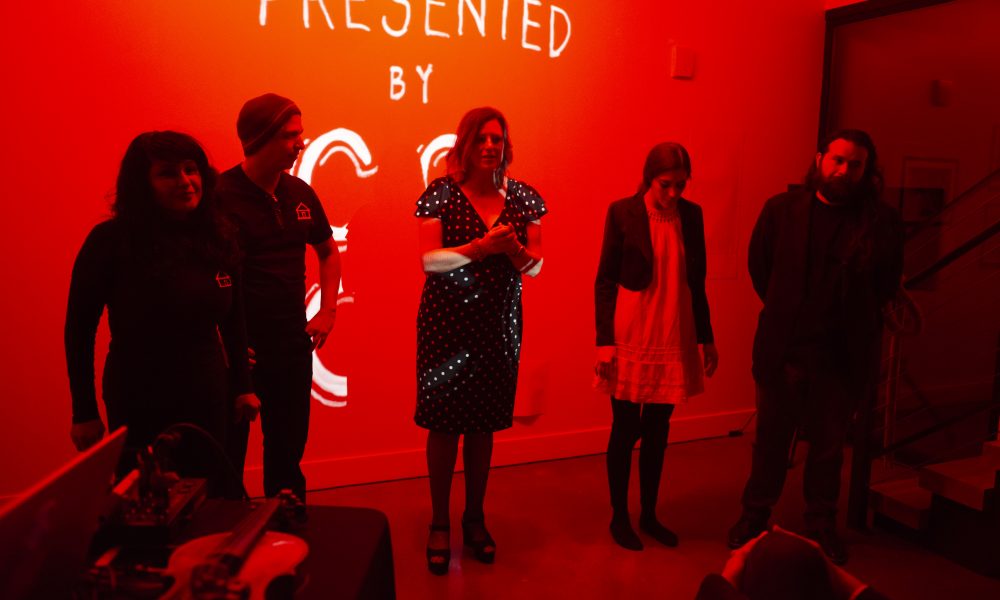
The 2008 recession was brutal and knocked me down for five years. I came back; now I’ve got a beautiful studio in the East Village that is a pleasure to work in, and I have some great projects built, under construction and on the boards. Women in architecture tend to innovate on the fringes since we are essentially pushed there by our male counterparts. I’ve got a hamster on my brain wheel that never stops; last year, I launched an art collective called Collateral Collective, dedicated to promoting art as an inclusive, immersive experience. We currently have a group of about 16 talented, multi-media professional artists, and we schedule a variety of events from hosted salons and discussions to avant-garde experimental art performances.
California is in the midst of a housing crisis, and we are in dire need of innovative solutions to get us out of it. After working with fire survivors in Santa Rosa to rebuild their homes, I realized that if we can solve the immense challenges to getting these traumatized people back in their homes as quickly and inexpensively as possible, that would be a solution that could be adaptable to the housing shortage in general. Phoenix Home is a design/build project that LCFA, together with Penna Construction and Design corp (interior design), have launched that combines the efficiencies and fire resistance of commercial construction methods with a sensitivity to the unique needs of residential clients. We have created a streamlined design process and a hybrid on-site/off-site construction sequence that will cut the production time in half, and reduce costs by 1/3.
I still have a lot more to do. In my early 50’s, and on the brink of yet another economic collapse due to the COVID-19 pandemic, I realize I can’t stop now. I keep walking the tightrope. Eyes focused straight ahead. And I never look down!
We’re always bombarded by how great it is to pursue your passion, etc – but we’ve spoken with enough people to know that it’s not always easy. Overall, would you say things have been easy for you?
In my experience, I have found that in order to be taken seriously by men, we absolutely have to avoid falling into the traditional gender trap. I was guilty of it, and I see young women (and even some older ones) still making the same mistakes. Being flirtatious, wearing clothing that attracts attention (whether it’s revealing, colorful, or excessively trendy – doesn’t matter), being overly eager to pick up extra tasks and responsibilities… these are just a few of the behaviors that I have seen the damage a woman’s potential for parity in the workplace.
No matter how much they protest and insist that they don’t – men do not look at a woman in the same way they look at a man. (I speak mostly of heterosexual men because it is very much sexual).
Ask a man to think about how he acts when he meets a man at work and how he acts when he meets a woman at work. Ask him what goes through his mind. Does he get nervous? Does he ask inappropriate questions? Or is he able to look her in the eye and get to work, just as he would with any male colleague? I believe it’s very important to have these conversations with as many men as you can. I’ve asked these questions of men, many men, for three decades. It has not only been incredibly beneficial to me and my career, but I think it’s also helped them learn some new things about themselves and possibly even change their behavior just a little bit.
We women may react to these male behaviors automatically, and sometimes we revert to traditional gender roles, perhaps without even realizing it. The woman is funny, charming, adorable, attractive… also competent, capable and reliable. Men are very comfortable with women, even women, they find attractive, if these women are in roles that are supportive and non-competitive. However, if they have to deal with a woman who is either a peer or their senior, outside of the traditional role, many men feel incredibly awkward.
I am used to men literally trembling in my presence. Burly, macho types – hands trembling and voice cracking. It’s happened so often that I can’t put a number on it. I have learned over the years how to turn that into an advantage, without scaring the crap out of them.
These days it really is becoming less about the idea that women are inferior, and more about the simple fact that men don’t know how to relate to us outside of a bar, a party or a date, or a traditional gender role. They have not been raised to see us as peers, friends and bosses. We can help them get there, and it’ll be that much easier if women don’t default to the old school traditional behaviors in our interactions. Act cool and professional, and it’ll be easier for them to treat you the same way.
So, take yourself seriously. Don’t think that the only way you’ll get your boss’ attention is by giggling and looking gorgeous when you walk by his office. You’ll get his attention all right, but it won’t get you the promotion. Dress seriously – look and feel great, but in a way that keeps the focus on you – not just your looks. Resist the temptation to be flirtatious. Unfortunately, you may have to forgo too much chumminess. Most men simply can’t draw the line between the meeting room and happy hour.
This is not to say that you should be a grumpy troll at work. Not. At. All. On the contrary, look and FEEL attractive. Confidence is the most important tool in our kit. When you have confidence, you will look gorgeous, but more importantly, you will have POWER. Even if you don’t feel confident at first, FAKE IT. Trust me – fake it often enough, and the day will come when you suddenly realize that you have the power. It’s yours!
Who do you look up to? How have they inspired you?
Ines de la Fressange – I quoted her: “confidence is the most important tool in your makeup kit” She was one of the first fashion models who “aged out” of the profession into power and entrepreneurial success. It’s a tough career – brutal on your self-esteem, and your mental and physical health. But she was among the first women to leave the profession relatively intact and STRONG
Julia Morgan, architect of the Hearst Castle. She was the first woman admitted to the Ecole des Beaux-Arts in Paris, finishing 13th on her third try at an entrance exam that had a fail rate of 90% – even though she wasn’t a native French speaker. She also designed many buildings in the Bay and Los Angeles areas with Bernard Maybeck.
Ann Richardson, former governor of Texas.
Democratic. Woman. Governor. Texas. I think that says it all, don’t you?
Contact Info:
- Address: LCFA Studio
895 Park Blvd. #120
San Diego, CA 92101 - Website: www.lcfarch.com
- Phone: 619-450-6237
- Email: info@lcfarch.com
- Instagram: @lcfarch
- Facebook: @lcfastudio


 Image Credit:
Michel Boutefeu
Suggest a story: SDVoyager is built on recommendations from the community; it’s how we uncover hidden gems, so if you or someone you know deserves recognition please let us know here.