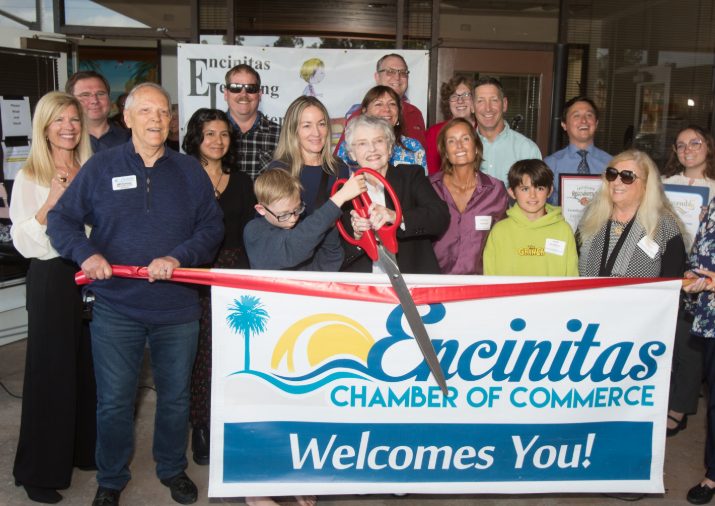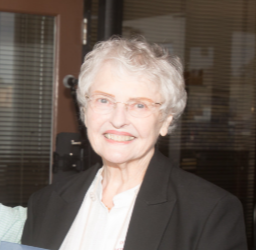
Today we’d like to introduce you to Lynda Detweiler.
Hi Lynda, so excited to have you with us today. What can you tell us about your story?
I was a dedicated music major in college when music and art were eliminated from schools. Like any student, I shifted to my other favorite subject (fancied myself a writer) and moved over to the English Dept. I became so good at critiques, I hated everything I wrote! So UCLA has a career testing program, I spent a week with them, and the outcome was a combination of the English Language skills and vocal training/auditory skills from Music, and became (upon their suggestion) a Communications Disorders major!! I received equal training in both audiology and Speech Pathology and ultimately specialized in Speech with Auditory Processing Deficit and Cognitive Fluency training.
It has proven to be challenging in many ways because I have had to continue to be a student of neurology and brain function, but it has also proven to be at the source of many varied types of learning disabilities. Building new connections in the brain results in faster and more accurate processing, and this is the foundation (core) of difficulties with following directions, memory, logic and reasoning, dyslexia, phonemic awareness, the list goes on. Since we know the brain can be trained (plasticity) through adult years, we have been able to work with all ages, all types of learning differences, including autism and ADHD, and realize outstanding outcomes. It is a joy to offer this training gathered over years of study. We have over 28 years of data and today thousands of successful clients, who are now adults and contributing members in their community.
I’m sure it wasn’t obstacle-free, but would you say the journey has been fairly smooth so far?
I worked in many settings beginning in the small migrant village of Santa Paula, the only therapist in a school district of 3800 pupils, grades K-12 who had never had Speech Therapy services before! Undaunted, I went back to my college assessment class and offered those students the unique opportunity of screening and entire district! It was 54 miles one way to the schools (from college), yet 6 hardy school chums took me on the offer and we spent three full days with a nurse and a dentist screening every child! The results were then presented to the District Board and County and, four years later we qualified for 4 Speech Therapists and a contained Language Handicapped Class taught by the fifth Speech Pathologist for this underserved population. So started the adventure from schools to hospitals, skilled nursing facilities, supervising 40 home health therapists – all ages, diagnoses, and settings that brought me to applying training that corrects brain function and the cellular level.
I lost everything in 2008 and was financially challenged as were many during those times, but we pivoted and I traveled doing assessments throughout Southern California in order to keep doors open! Now we are approaching 28 years . . . was it worth it? To be sure it was and that’s why I get up every day to change futures one person at a time!
Can you tell our readers more about what you do and what you think sets you apart from others?
Cognitive Training treating ADHD, Working Memory, Logic & Reasoning, Auditory Processing and Conditions related to Autism. We instruct academics using whole brain techniques for reading and math. We use Visualization and. Verbalization for building vocabulary to enhance descriptive written expression and comprehension/decoding with appropriate inflection.
Where do you see things going in the next 5-10 years?
I feel we will have better tools offered by neuroscience to affect brain changes – not through pharmaceuticals because that I am convinced is changing how the brain functions in a way that promotes dependence on the drugs rather than improving brain function. The brain is plastic, so if the drug produces chemicals FOR the brain, it will eventually stop producing these brain chemicals on it’s own, the question is whether the next generation reflects similar brain changes as we have seen in studies with monkeys and birds (one generation learns a skill and the next generation is born knowing that skill already). The interesting part is this; the “ADHD” child can’t read, but after years of medication, they still can’t read – so why aren’t we at least treating the underpinnings of the problem rather than just smoothing over behavior? How has it changed learning capabilities in these children?
Neurofeedback has been around for a few decades, but QEEG is evolving and becoming more sophisticated, so I see non invasive alternatives to ADHD “non attentive” therapy that incorporates actually building new connections in the brain, establishing new neural pathways, faster and more efficient through co-treatment of neural stimulation and innovative teaching that resolves these issues rather than just smoothing things over. Do we have any idea what the long term effect of Ritalin, Concerta, Adderol, etc. is on our brains?
Pricing:
- Initial Screening – $500 with report
- Hour Sessions – $155
- Individual Education Planning $250/hr
- Annual Check Up – $500 with report
- Plan of Care Proposal – $350
Contact Info:
- Website: https://www.encinitaslearningcenter.com
- Facebook: @encinitaslearningcenter
- LinkedIn: Lynda Detweiler