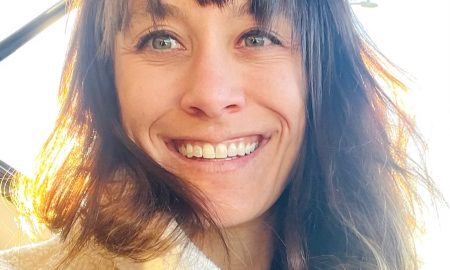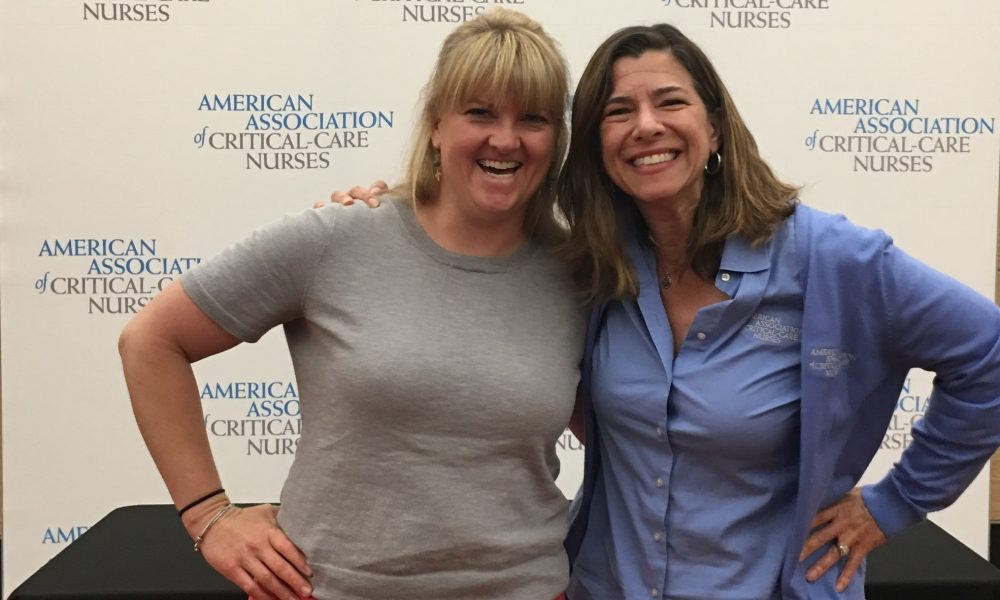
Today we’d like to introduce you to Melinda Beckett-Maines.
So, before we jump into specific questions, why don’t you give us some details about you and your story.
After more than 20 years working for Toyota in Southern California, the company announced plans to relocate to Indiana. Surprisingly, that was a gift. I knew well in advance that the move was coming, and it gave me time to think about what I wanted to do next while being gainfully employed. That led me to realize how much purpose in my work means to me. What I enjoyed most about my time with Toyota was creating Corporate Social Responsibility programs benefiting others, including veteran employment programs, thousands of tree plantings and the creation of an annual National Forklift Safety Day.
Before my tenure with Toyota ended, I had to face one of life’s hardest challenges – the loss of my father. He spent his final months in an intensive care unit. Although traumatizing, that experience gave me a new respect for nurses and healthcare teams. Seeking purpose, I made a massive career shift six years ago from corporate to nonprofit. That led me to the American Association of Critical-Care Nurses (AACN), the world’s largest specialty nursing organization.
AACN offers education, recognition, certification and advocates for acute and critical care nurses. Today, our work is more crucial than ever, as nurses are on the frontlines of this pandemic. Although this is an extremely challenging time, one positive from this pandemic is that nurses are more visible, appreciated and understood.
We’re always bombarded by how great it is to pursue your passion, etc – but we’ve spoken with enough people to know that it’s not always easy. Overall, would you say things have been easy for you?
Making the move from a corporate to a nonprofit environment was a huge adjustment. It’s not surprising that after being with Toyota for so many years, I’d experience some culture shock no matter where I went next. Continuous improvement, or kaizen, is a way of life at Toyota and something I still value. I didn’t realize how much of Toyota’s culture and values became my own. It took time to adapt and the guidance of a few of my coworkers, who helped me navigate the norms of my new workplace. There is so much to learn from nonprofits, including approaching our work with empathy and using appreciative inquiry. Regardless of where you work, it makes sense to listen, learn and absorb the new culture to know how best to contribute to it. At the same time, it’s also important for employers to welcome and listen to new team members’ ideas and feedback.
So, as you know, we’re impressed with American Association of Critical-Care Nurses – tell our readers more, for example what you’re most proud of and what sets you apart from others.
The American Association of Critical Care Nurses (AACN) formed more than 50 years ago to support nurses with the knowledge needed to provide optimal patient care. We’re adapting constantly to provide the most relevant and timely resources and information. Due to COVID infections, many critical care units are using a staffing model that pairs experienced critical care nurses with nurses from other areas.
To cross-train and prepare these nurses to care for patients with COVID-19, AACN created an eLearning course available at no charge for all nurses. To date, more than 120,000 nurses have registered for the course. We continue to identify and provide free access to educational resources that support nurses and all healthcare professionals in managing patients with contagious conditions such as COVID-19.
The demands placed on caregivers in this pandemic are immense and challenge them on a personal and professional level. We’re partners in the Well-Being Initiative, which provides free tools and resources to support nurses’ well-being, such as online self-assessment tools and peer-to-peer calls.
AACN is actively advocating for the resources and equipment needed to adequately care for all patients and to keep caregivers safe. From the White House to various federal agencies, we have spoken clearly and relentlessly about what nurses and others at the frontlines of this crisis need including PPE and life-saving equipment.
What role has luck played in your life and business?
While attending California State University, Long Beach, I was lucky enough to learn from Professor Frank Wylie. He retired from a successful career as the head of Chrysler’s public relations and also served as the president of the Public Relations Society of America and decided to give back by becoming a professor. He was tough, and at least 40% of the students dropped his class within a few weeks. Thankfully, I stuck with it. In my junior year, he recommended me for a summer internship at Toyota. It was the foot in the door that turned into 23 years of employment. He attended my wedding and many years later, I spoke at his funeral service. His impact on my life is immeasurable. We all need mentors.
Luck also brought Team Kids, a nonprofit organization that empowers youth, to my sons’ elementary school a decade ago. That introduction led me to become more involved as a parent volunteer, join the board and eventually serve as board president from 2018-2020. My son even wrote and performed a song to benefit the group. It is beyond rewarding to see children realize the power they have to make the world a better place through service.
Contact Info:
- Website: https://www.aacn.org |
- https://www.teamkids.org/
- Phone: 1-800-899-2226


Suggest a story: SDVoyager is built on recommendations from the community; it’s how we uncover hidden gems, so if you or someone you know deserves recognition please let us know here.