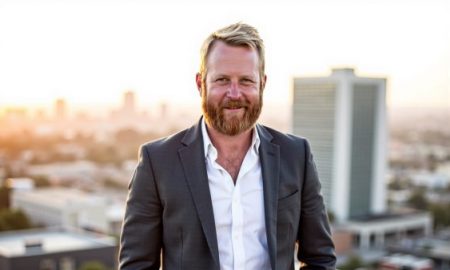
Today we’d like to introduce you to Beau Trifiro.
Thanks for sharing your story with us Beau. So, let’s start at the beginning and we can move on from there.
I actually started Open Source Skateboards without much of a plan. In 2014, I left my job in Allentown, PA to move to San Diego to start a business. I didn’t know what kind of business I wanted to start at first, just that I wanted to start something. I quickly decided I’d make skateboards because I loved skateboarding (I had been a skateboarder since I was 10) and was a mechanical engineer. It seemed logical (and fun).
As a skater, I really wanted a symmetrical skateboard deck that was built with responsibly-sourced materials, which I couldn’t find at the time. I also wanted a good understanding of the geometry and construction of my board. It seemed kind of weird to me that skateboards are sold with only a few dimensions identified, with some pretty significant dimensional information missing. Through designing the boards I was making, I quantified skateboard geometry as much as I could and started publishing the engineering drawings of boards I was building online for anyone to use (hence the name “Open Source”).
While designing and building, I realized how much I was using my engineering education: I was using CAD to plan out my designs and shapes; using trigonometry and algebra to fabricate a mold; using various tools to prototype and produce high-quality boards as efficiently as possible. At the end of the summer of 2015, I applied for a job as a tutor at a small private school, and they ended up hiring me to teach a skateboard design/build class. At the same time, I met a teacher at a public school that loved the idea of his student’s building boards.
Those two opportunities allowed me to develop a program that was focused on students having fun producing high quality, custom skateboards while applying technology, math, and science in ways that weren’t just relevant but required to create the final product.
Around the same time, I started teaching weekend workshops in makerspaces so anyone could come in and design and build a custom board in just two days (not just school students). From there, I started getting more opportunities to share the Open Source Skateboards program and more opportunities to build custom skateboards.
Open Source wouldn’t be at the stage it is today without the amazing people that have supported it along the way. They’re awesome!
Overall, has it been relatively smooth? If not, what were some of the struggles along the way?
Starting and growing Open Source Skateboards has not been a “smooth road” – there have been, and continue to be, many challenges, but it’s been an amazing learning experience. One challenge, for example, has been getting the program into schools. I’ve found that Open Source Skateboards really needs an administrative champion in schools to reach students. The program isn’t cheap and quick, and some schools see that as a limitation.
However, some schools see the duration as a benefit and can leverage STEM funding to support it. I continue to experiment with program modifications to help make implementation as easy as possible without sacrificing the value of the program and am still learning what works and what doesn’t. The challenges I’ve encountered make it sort of fun, though. That’s what drew me to skating. It’s what drew me to engineering.
Looking at challenges as fun opportunities are part of the Open Source Skateboards mentality!
Open Source Skateboards – what should we know? What do you guys do best? What sets you apart from the competition?
Open Source Skateboards promotes creativity and curiosity through skateboarding. More specifically, I think it can be defined in two parts:
-First, it’s a custom skateboard design/build shop. This is where it started. There is (almost) nothing I won’t attempt to build. I’ve made boards for skaters of all levels (beginners to pros) and all over the world. Skaters can design their boards via a 3D modeling tool on the OSS website called SK8CAD (built in-house using open source software), submit their specs, and get their custom shape made to order.
Skaters are definitely not limited to what can be designed with that tool, though. It’s pretty fun to work with customers, to understand their goals and design intentions, and occasionally get to help them make design decisions. I’ve made some different shapes and have used some unique materials to make boards (like old jeans).
-Second, it’s a learning experience provider. This means Open Source provides the tools and resources for anyone wanting to learn how to build boards or teach board building. This is done through weekend workshops, school programs, summer camps, teacher professional development sessions, and online resources on the website and YouTube. One goal of the workshops and educational programs is to have fun, first.
Another goal of the programs is to have the students develop more questions they came in with and to be excited about designing and building again – whether it’s a skateboard next time, or something totally different. In my experience, it’s pretty hard to accomplish that second goal without the first.
What is “success” or “successful” for you?
I’m glad “personally” is part of this question, because success is different for everyone.
My views can always change, but right now, I think I define success for Open Source Skateboards as being a useful tool for people to explore their curiosity and creativity, and enabling them to feel empowered to solve problems. Engineering and skateboarding are both about problem-solving. There are a lot of problems that need solving right now, on all different scales of life – from global problems to individual/personal ones – and I think Open Source Skateboards can help more of us become better problem solvers. Success would mean that Open Source Skateboards is creating more problem solvers.
Success may take on different forms, but generally I’m looking for: seeing lots of smiles and excitement throughout the design/build workshops; hearing from skaters that are highly engaged, asking many questions, and are happy with the final product after designing a custom board; hearing about projects, plans, or accomplishments that an interaction with Open Source Skateboards has helped inspire.
Contact Info:
- Website: www.opensourceboards.com
- Email: contact@opensourceboards.com
- Instagram: https://www.instagram.com/opensourceboards/
- Facebook: https://www.facebook.com/opensourceskateboards/


 Image Credit:
Dan Malabuyo, Beau Trifiro
Getting in touch: SDVoyager is built on recommendations from the community; it’s how we uncover hidden gems, so if you know someone who deserves recognition please let us know here.
Popular
-

Gina Gerrato Greenhaus on Early Intervention, Intentional Planning, and Redefining What Makes Students Stand Out
-

Desiree Borja on Reframing ADHD, Embracing Neurodivergent Strengths, and Using AI as a Tool for Equity
-

San Diego’s Most Inspiring Stories
-

Hidden Gems: Local Businesses & Creatives You Should Know