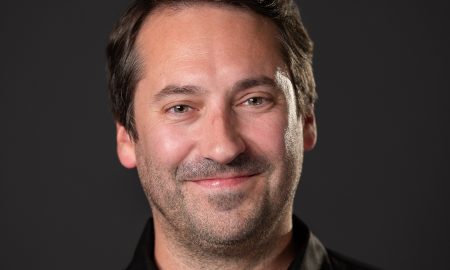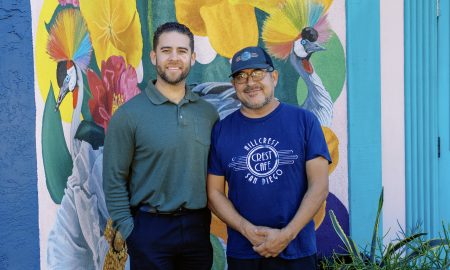
Today we’d like to introduce you to Dustin Kahia.
Dustin, can you briefly walk us through your story – how you started and how you got to where you are today.
Sure. As you mentioned, my name is Dustin Kahia, and I am a screenwriter, director, and producer. However, I primarily consider myself a director, specifically in the field of motion pictures, and even more specifically, in the genre of narrative fiction. I am getting closer every day, but by my standards, I still haven’t “made it” yet. Yes, I have directed a feature film and a handful of shorts, but the success I am reaching for is far beyond what many believe possible. I started making home movies with my father’s video camera, which led to an interest in film editing. In high school, and shortly after graduation, I started making narrative short films. I worked a full-time 9 to 5 job while pursuing a filmmaking career on the side. In a nutshell, the way I financed my short films was through the job I worked and the help of my hardworking mother.
Great, so let’s dig a little deeper into the story – has it been an easy path overall and if not, what were the challenges you’ve had to overcome?
No road is ever 100% smooth, whether it’s your personal or professional life. In my personal life, I lost my father to cancer at 14 years old. That was tough because my father was actually a good father, and I know not everyone is fortunate enough to have a real father in their life. So, I consider myself lucky in that regard.
But to make matters worse, after my father’s death, my other family members (i.e., aunts, uncles, and cousins) totally abandoned us (i.e., myself, mother, and younger sister). That was hard. In some respects, harder than the loss of my father. Why? Because it’s one thing to lose someone you love, it’s another thing altogether to lose all emotional support amid such loss, especially from individuals who bear the name “family.” Growing up from that point on was difficult.
When it comes to work… let’s face it… nobody’s work is perfect, and I definitely have made my fair share of big mistakes along the way. Most people tend to deny their failures, but I, on the other hand, choose to acknowledge them. I find it useless to bury one’s failures because to bury them signifies no real growth in myself. To hide one’s failures demonstrates too much personal pride and not enough accountability and humility.
On my first feature film, CALL OF THE VOID, I made plenty of mistakes… mistakes that I wish I could have back. Yes, there were other individuals involved with the project who were equally, if not more, culpable for big mistakes. Still, I honestly don’t care to blame others because it does no good. I hold myself 100% accountable for the failures of that project because even if others were at fault, I should have seen past those errors and stepped up to address them. So what were those mistakes that I made?
MISTAKE #1 — I made the awful mistake of agreeing to shoot the motion picture based on a ‘first draft.’ What a horrible mistake that was… yikes! If you’re a filmmaker who’s reading this, then you know how dumb of an action that was, but nevertheless, I shot the film based on a first draft because the money poured in to finance the project. We raised nearly $60K for the project in 30 days via Kickstarter, which leads to…
MISTAKE #2 — It was not nearly enough money for the project we were trying to make. We were wildly underfinanced but too naive to know it. Why? Because it was a ‘period-piece’ set in the 1940s, which required custom-built sets, picture cars, costumes and wardrobe, specialty props, and set dressings, and $60K was not going to cut it. Not even close. We needed more money, which leads to…
MISTAKE #3 — We shot the film in four days. Yes, you read that right: four days! Oh, how foolish I feel now. But in retrospect, that’s all we could do based on the money we had. The $60K budget did not allow for more shooting days, so we made do with what we had, but we should have done better.
MISTAKE #4 — I rushed the casting process. Not intentionally, or even consciously, but I did. I did not spend enough time casting. This is due in part because of a lack of funds and a tight schedule, but mainly because I was not aware of how vitally important casting is to a movie. To clarify, I knew it was important but not vitally important.
MISTAKE #5 — I didn’t do the proper market research before writing my screenplay. I simply wrote a script in a genre without ever wondering if the premise could actually sell to a distributor and make money.
WHAT I LEARNED #1 — Never shoot the first draft. Be diligent and proactive about getting quality feedback on your screenplay from individuals who know the craft well. Don’t just give the script to your friends and family members, give it to real industry pros, so that they can rip your precious story to bits and let you know that it’s not as good as you think it is. I’ll end this point by quoting the great Ernest Hemingway, who once said, “The first draft of anything is shit.”
WHAT I LEARNED #2 — Never underbudget yourself and hire a fantastic Line Producer. If you’re not familiar with Line Producers, they typically create and manage the budgets for feature films. And when it comes to budgeting your movie, you want to get the numbers right. We got the numbers wrong because we tried to budget the film ourselves without a Line Producer. Sure, we had a substantial amount of film production experience onboard, but that was not enough to compensate for the level of direct expertise needed with regards to film financing and predicting what things are going to cost.
WHAT I LEARNED #3 — Never shoot a feature film in four days. Never shoot a feature film without the proper amount of days necessary to shoot the movie. I don’t care how talented you are or how amazing your impromptu skills are. You will shoot yourself in the foot if you attempt to shoot your film without the proper amount of days to do it. You need time, and time in the motion picture industry costs money.
So as you can see, a lot of these mistakes are interrelated… one feeds off of the other. If you don’t have enough money, you won’t have enough time to do your project right. So instead of rushing to do your project because you have some funds in the bank, you should first calm down, be patient, and wait for more funds, and by “wait,” I mean, go seek them out.
WHAT I LEARNED #4 — Casting is 80-90% of the film, so never rush the casting process. Spend as much time as possible getting the casting right because it can make or break your movie. You will save yourself so much headache as a director if you get this right at the beginning because once you sign a deal with an actor, it’s challenging to walk back.
WHAT I LEARNED #5 — There was no real market for my film. Film noirs, especially black-and-white ones, are a thing of the past, and unfortunately, there’s no real market for them today. In fact, even if I had not made the mistake of filming my first draft, it wouldn’t have mattered… it wouldn’t have mattered if it was the first draft or the 11th.
As you can see, there is a ton of value in analyzing your failures and learning from them. What I learned was immeasurable and extremely beneficial to my career as a filmmaker. Yes, it was a financially costly mistake, but it was an educational experience that not even the top film schools in the world can offer you. And that, my friends, is priceless. Before completing my first feature film, I had what Mark Freiburger refers to as the “fresh out of film school mentality.” I was naive beyond belief, but there are still some accomplishments that emerged out of this failure.
ACCOMPLISHMENT #1 — I got a feature film made. I finished the movie. Was it the best movie ever? No, but I still got one financed for $60K and completed both production and post-production. That’s something most people never accomplish. Getting a film made is arduous work, and anyone who has done so can tell you first hand.
ACCOMPLISHMENT #2 — I directed a movie with beautiful cinematography and a breakout role for our lead actor, Mojean Aria. Thereafter, Mojean won the 2017 Heath Ledger Scholarship award and went on to be signed with one of Hollywood’s top talent agencies, UTA. These were satisfying moments for me because, during pre-production, I spent countless hours, days, weeks, and months prepping for the cinematography and performances. It was deeply gratifying to know that I had succeeded in directing a strong performance and praiseworthy cinematography.
ACCOMPLISHMENT #3 — My movie premiered to a sold-out crowd. I will never forget the moment when I walked into a packed movie theater of about 90 people who had all gathered together to watch a movie I had made. It was a surreal experience because people actually paid money to come see my film.
ACCOMPLISHMENT #4 — I worked with an Academy member (AMPAS) at 20th Century Fox for the sound mixing of the film, and the sound turned out brilliant. When we started the process of making this film, I never could have imagined the privilege of being able to work with a professional of that caliber. Most filmmakers never get that opportunity, and I did, let alone on my first feature.
All-in-all, what makes a person a “success” is not that they’ve never made mistakes before. If anything, it’s comforting to know that another person has been “in the trenches” before. The most successful people in the world have all made big mistakes. What then separates the winners from the losers is the ability to rise up from the ashes and learn from those mistakes. That’s the difference, and most likely, the great key to success in life.
Do you look back particularly fondly on any memories from childhood?
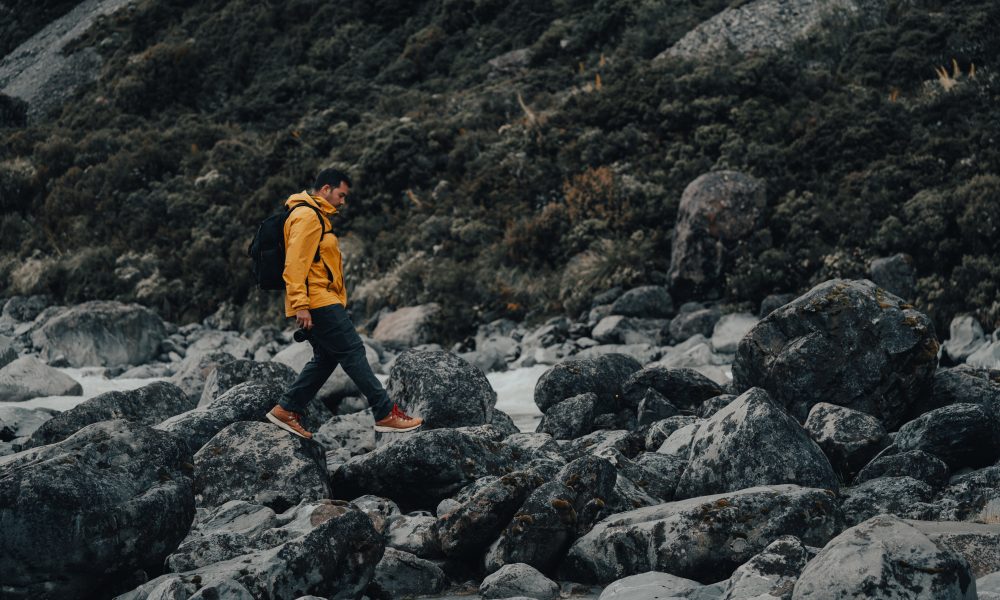
One of my favorite childhood memories is the first time I saw real mountains. It was June of 1996. I had just turned seven years old, and my family went on a road trip to Yosemite National Park at a time when the waterfalls were raging in full force. The experience was also my first trip to any national park. Even though I was a young boy, it was still wildly impressive to me. It left me in awe and wonder of creation. This experience sparked my love of nature and the great outdoors.
Contact Info:
- Website: www.dustinkahia.com
- Instagram: https://www.instagram.com/dustinkahia
- Facebook: https://www.facebook.com/dustinkahia
- Twitter: http://twitter.com/dustinkahia


 Image Credit:
Paulina Kahia
Justin Daniels
Will Armijo
Andrew Hermiz
Suggest a story: SDVoyager is built on recommendations from the community; it’s how we uncover hidden gems, so if you or someone you know deserves recognition please let us know here.