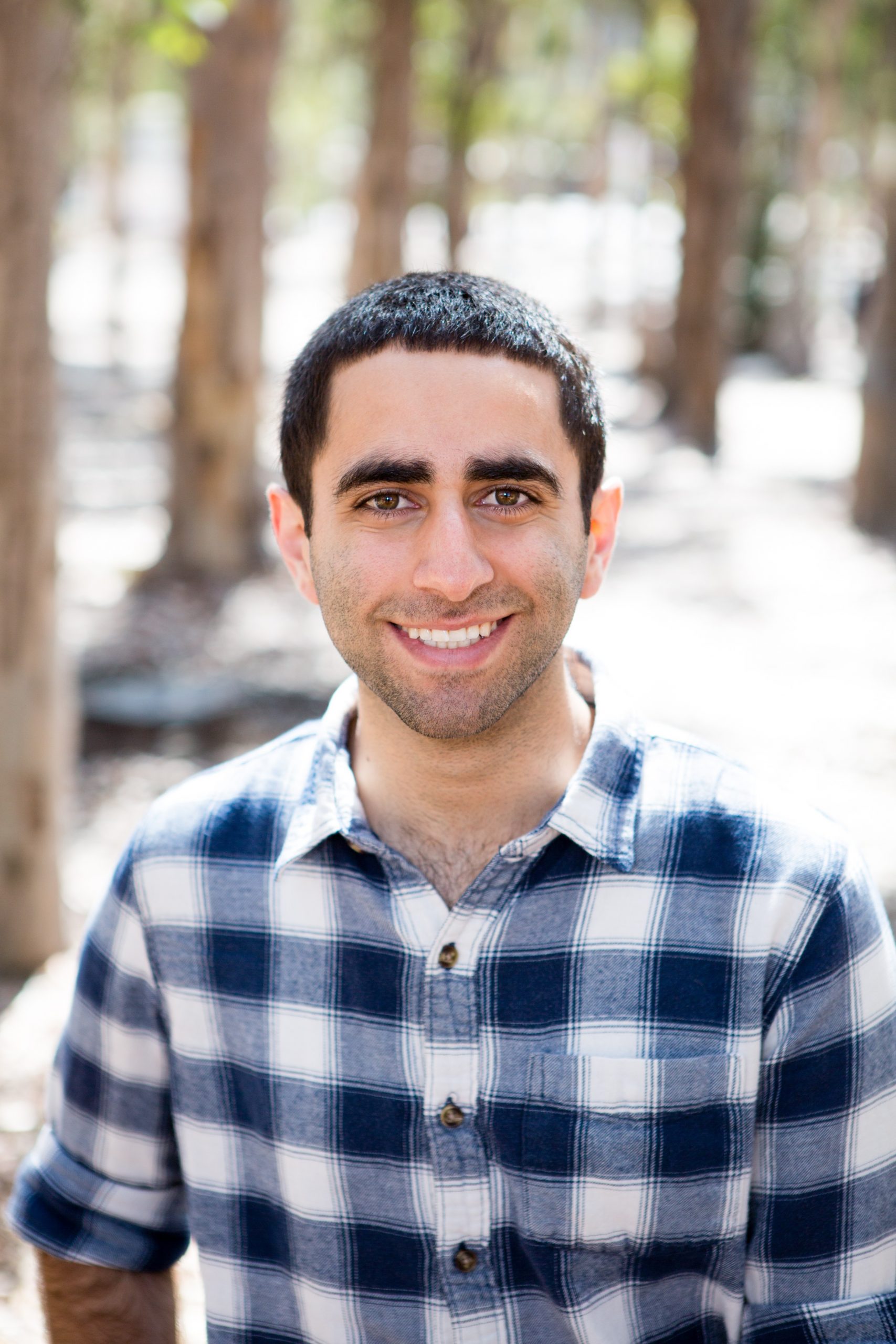
Today we’d like to introduce you to Niema Moshiri
Hi Niema, so excited to have you on the platform. So before we get into questions about your work-life, maybe you can bring our readers up to speed on your story and how you got to where you are today?
I’ve lived in San Diego County my entire life. I grew up in Bonita (in the South Bay), graduated from Bonita Vista High in 2011, received a BS in Bioengineering: Bioinformatics from UC San Diego in 2015, received a PhD in Bioinformatics & Systems Biology from UC San Diego in 2019, started as an Assistant Teaching Professor (tenure-track teaching-focused professor) in the Computer Science & Engineering (CSE) Department at UC San Diego that same year (2019), became an Associate Teaching Professor (i.e., earned tenure) in the same department in 2023, and have continued in this same position since 2023. Ever since I was young, I’ve always been interested in careers in improving human health, and my whole life, I thought I wanted to be a doctor. However, in my personal life, I’ve always loved technology: I was a huge gamer, and I loved tinkering with my electronics. When I was a premed Human Biology major in college, I found out about the field of Bioinformatics (the intersection of Biology and Computer Science), and I learned that I could merge my passion for technology with my career goals in health. I took a leap of faith and switched majors to Bioinformatics, and I’ve continued in this field ever since. Currently, I teach the Advanced Data Structures course in my department, and my research focuses on building faster tools for analyzing viral genome sequences. During the COVID-19 pandemic, with my colleagues at UCSD, we built a framework for tracking COVID-19 variants throughout San Diego County.
I’m sure it wasn’t obstacle-free, but would you say the journey has been fairly smooth so far?
It was definitely a bumpy road. Throughout undergrad, I worked multiple on-campus jobs (typically 20-30 hours per week), and it was challenging to juggle work with my engineering course load. After college, like with any doctoral degree, pursuing a PhD was incredibly difficult: there’s a lot of learning new topics and skills on-the-spot, research experiments can fail, research papers you submit for publication can get rejected, etc. Then, when I started as a professor in 2019, even though I went into the job expecting it to be a lot of work, I *still* was surprised by the amount of work day-to-day. UC San Diego is a large public university, and as a Teaching Faculty member, I teach ~400 students each quarter = ~1,200 students every year, which is a *lot* to oversee and run smoothly. To teach these large courses, I typically oversee 20-30 members of my course staff (usually 1-2 graduate students as Teaching Assistants, and over 20 undergraduate instructional assistants), so I essentially have to start up a small “company” with hundreds of “customers” every ~3 months. This is on top of all of my other duties as a faculty member (e.g. various committees I serve on, conducting research, etc.). Also, I started as a professor in Fall 2019, meaning I had only ~6 months of “normal” professor life before the COVID-19 pandemic hit: my work in education focuses on designing effective and scalable online learning materials, and my Bioinformatics research focuses on building tools to study viral genomes and viral evolution, so both of those went into overdrive during the pandemic. That being said, I do want to recognize my privilege during each step of the way: in undergrad and grad school, I had amazing mentors who helped me navigate the academic career path, and even during the COVID-19 pandemic, I was privileged to have a job that I was able to do fully remotely.
Thanks for sharing that. So, maybe next you can tell us a bit more about your work?
I’m an Associate Teaching Professor in the Computer Science & Engineering (CSE) Department at UC San Diego. This is a tenured professor position, but instead of focusing on research like traditional “Associate Professor” positions, the Teaching Faculty track focuses on teaching (but still includes research). On the education front, I focus on developing “Massive Adaptive Interactive Texts” (MAITs): traditional textbooks are typically pretty boring, and they are typically fairly passive (students read a chapter, and *maybe* they work on some problems at the end). A MAIT is essentially an online interactive textbook: a given chapter is broken down into individual shorter pages (where each page focuses on one specific takeaway), and rather than having a student just read a bunch of pages of instructional text, there are challenges (e.g. multiple choice, short answer, math, and even live coding) embedded throughout the text. Traditional textbooks are also expensive, which is why I release all of my materials to the public for free. The two that I’ve written and am most proud of are about Python programming, currently used in UCSD CSE 6R (https://cogniterra.org/326), and Data Structures, currently used in UCSD CSE 100 (https://cogniterra.org/330). In terms of research, my area is in Bioinformatics, and I specifically focus on building faster tools for analyzing viral sequence data and studying viral evolution. My work has historically focused on HIV, but during the COVID-19 pandemic, I (along with most folks working on viruses) shifted gears to focus on COVID-19. I received one of under 500 NSF RAPID COVID-19 grants across the country (https://www.nsf.gov/awardsearch/showAward?AWD_ID=2028040), and with that funding, I built the foundations of the data analysis workflow used at UC San Diego to track COVID-19 variants throughout San Diego County. On my website, you can find my research publications (https://niema.net/research) and my awards/grants (https://niema.net/awards). I’m proud to have received distinguished awards for both my teaching and research, including being one of the 2023 Forbes 30 Under 30 recipients, in the Healthcare category.
So maybe we end on discussing what matters most to you and why?
What matters most to me is that everybody has access to education. I don’t necessarily mean formal higher education (though that’s part of it): I also mean access to learn whatever knowledge or skills they may be interested in. Currently, advanced topics in any given discipline are typically only taught in university courses, but enrolling in a university can be prohibitively expensive, and folks may not be able to pursue college education full-time due to other life obligations (e.g. work, family care, etc.). I want *anybody* (any age, income, region, etc.) to be able to take courses and receive training in whatever topics they find interesting. This is why I release all of the educational materials I create (including my UCSD lectures!) freely on the internet, and it’s why I do a lot of education outreach to engage students from backgrounds that are historically underrepresented in computing (e.g. high school summer research program, workshops at local high schools, etc.).
Contact Info:
- Website: https://niema.net
- Twitter: https://twitter.com/niemasd
- Youtube: https://youtube.com/niemasd
- Other: https://niema.net
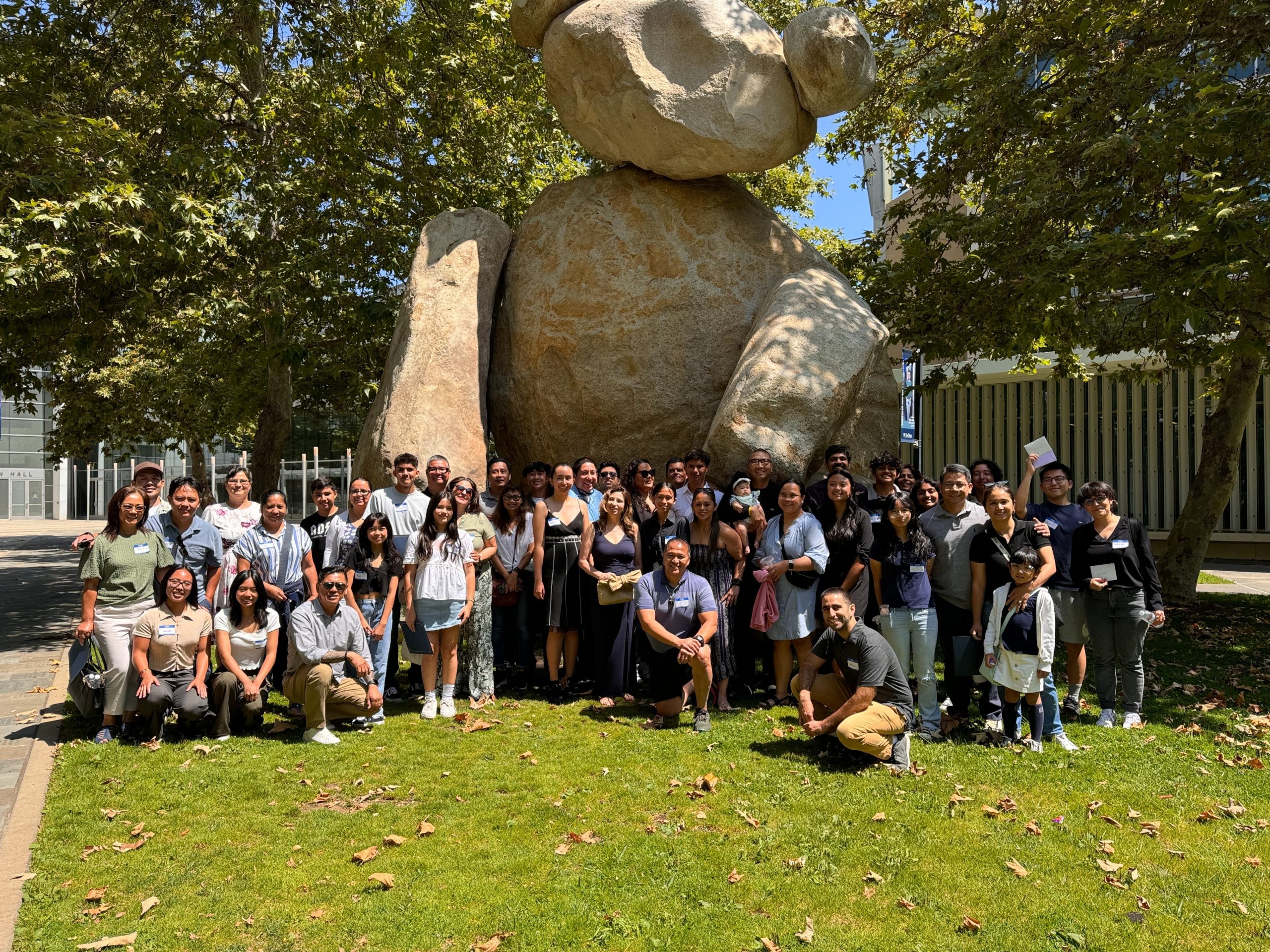
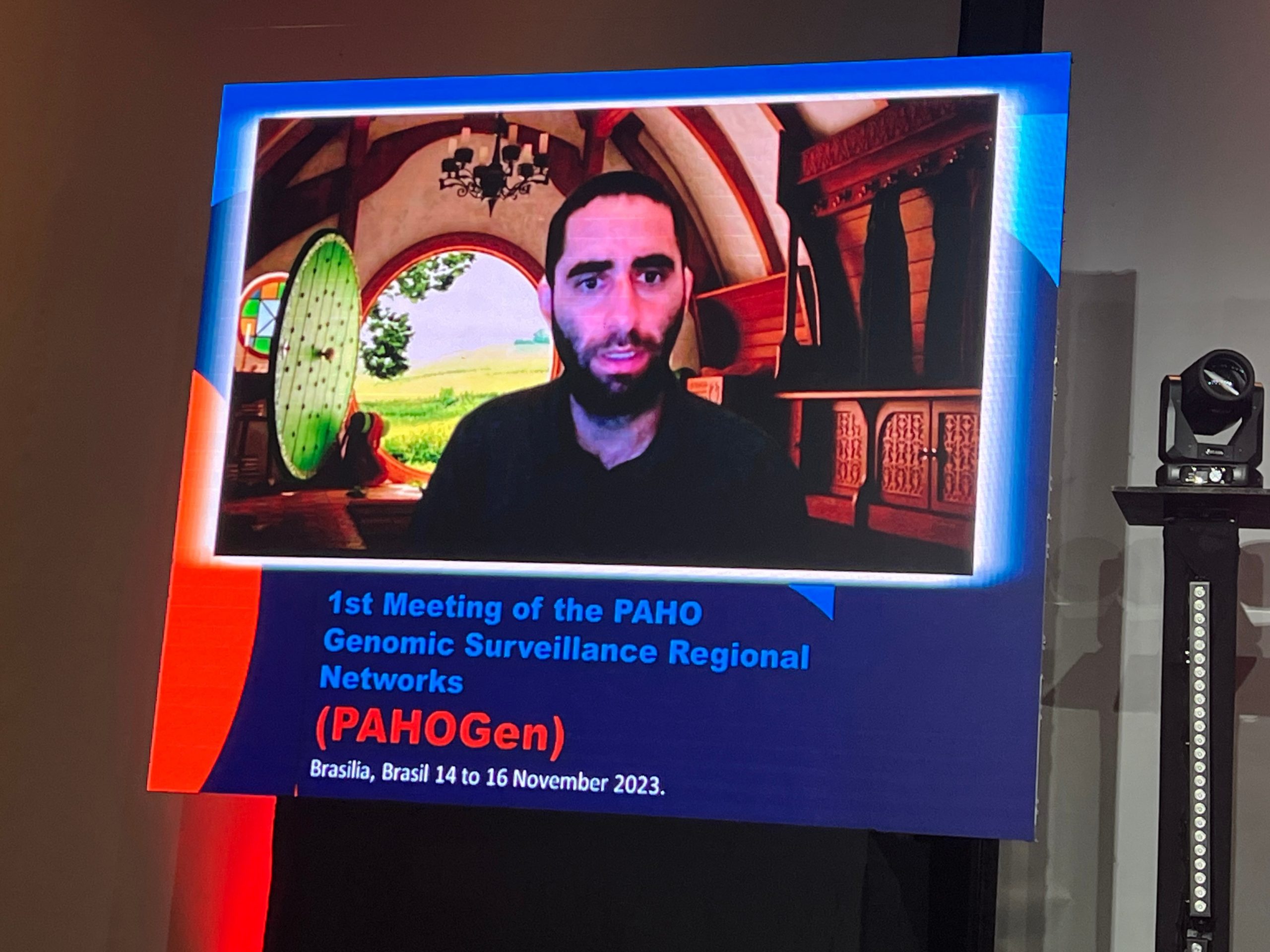
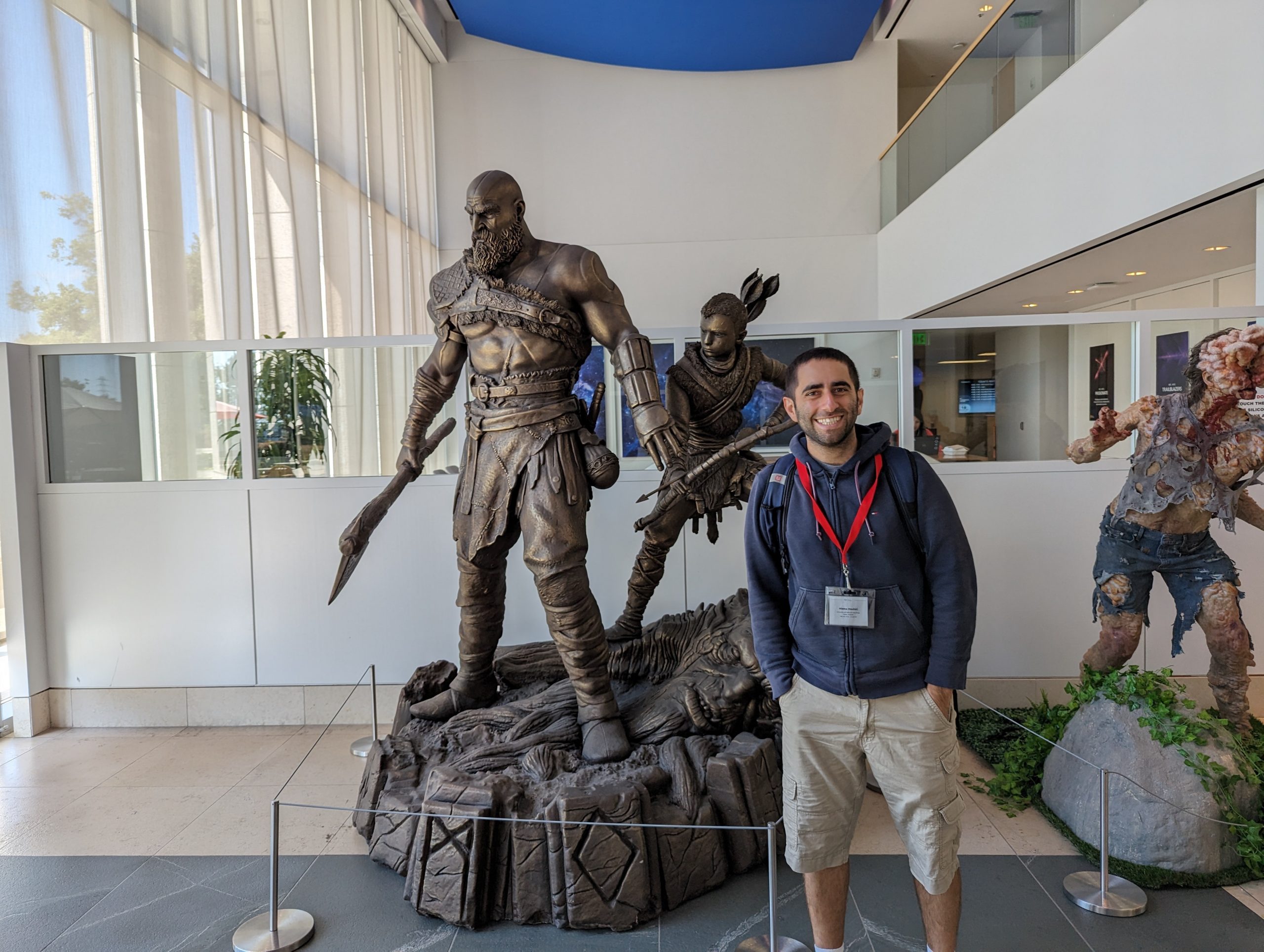
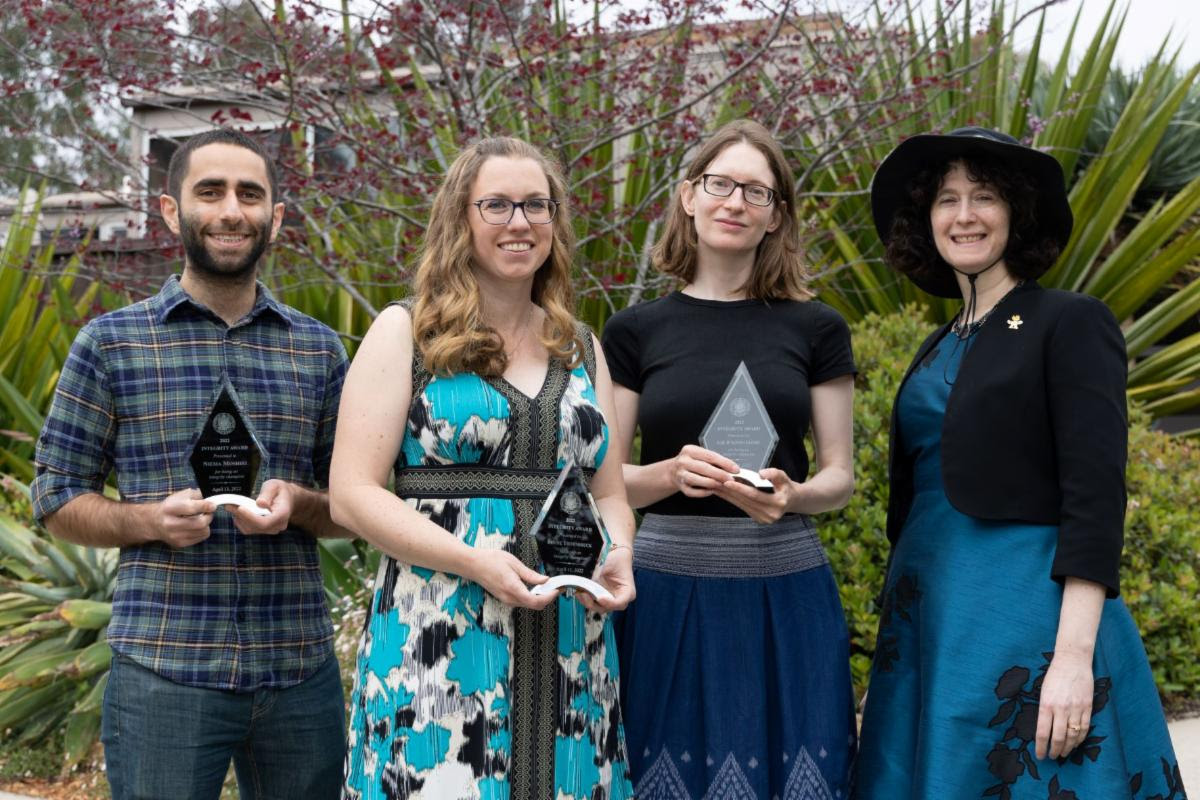
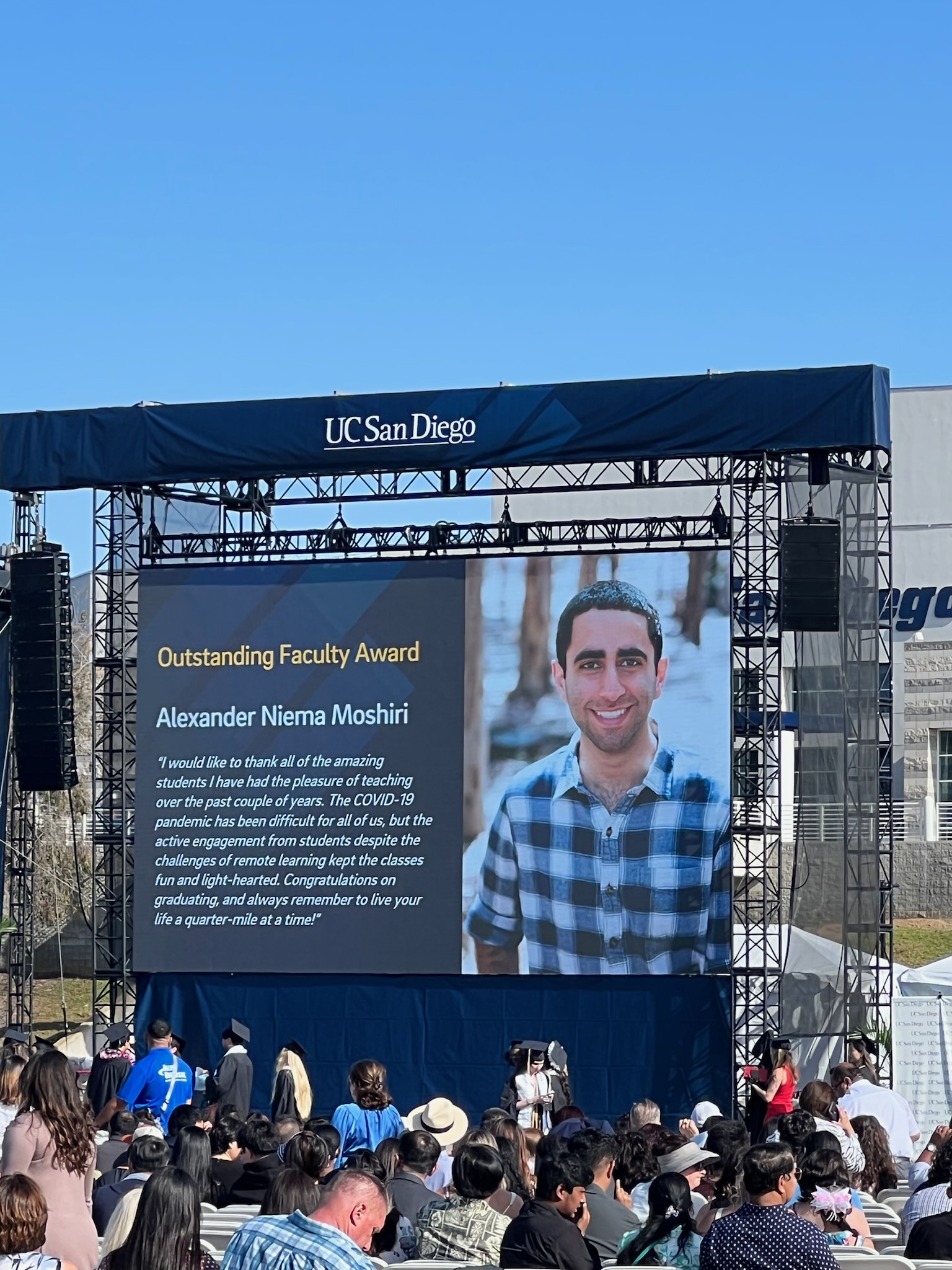
Image Credits
Amin Ronaghi (graduation ceremony photo), Niema Moshiri (hot sauce photo), Sony Interactive Entertainment (Kratos statue photo), PAHO (PAHOGen photo), and UC San Diego (all other photos)