Today we’d like to introduce you to Riot Productions
Hi Riot, so excited to have you with us today. What can you tell us about your story?
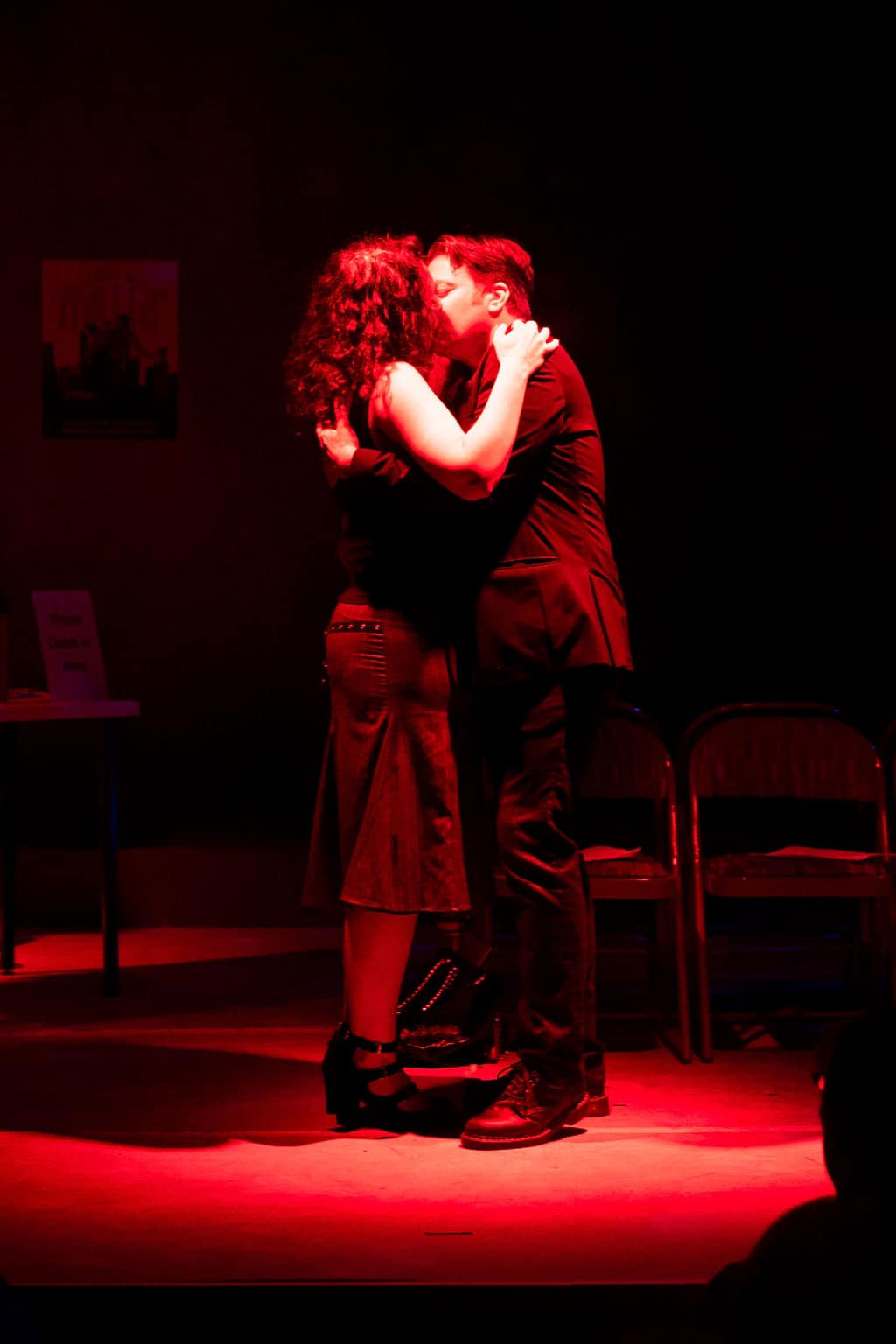
Riot Productions Inc is finishing its first full production year as a 501c3 production company. We started with the mission of creating more women centered theatre, specifically musicals, and founders Sarah LeClair and Josalyn Johnson began the goal of raising funds to pay for the legal fees of the 501c3 creation. Following several successful fundraising ventures, Riot began to continue Sarah’s work as an educator in East County for underprivileged teens by creating an official scholarship competition specifically for East County, “East County Star”, in collaboration with “Sing With Chrissy Studios”, with a fundraising cabaret, the songs of “Hamilton”. Riot then followed this up with a development reading and then a fully staged production of the works of celebrated San Diego actor and author, Carla Navarro, entitled “Cats Cant Eat Yarn”, featuring the direction of Alicia Gonzalez, Martie Clark, Vanessa Duron and Elizabeth Arellano and starring Jennifer Scibetta, Katee Drysdale, Anyelid Meneses, Pamela Basurto, Nettie Allen, Adriana Cuba, Andrea Garcia-Roebuck, and Frank Guttiere.
In April of 2024, Riot produced its first “East County Star” with over 40 competitors, middle school, high school, and post high school ages, featuring star judges and performers BJ Robinson, Eboni Muse, Carjanae Evans, Kris Bona, and emcee Tiffie “Starchild” Polite. In May, Riot produced its first offering for Fringe, with an original play “Audition Sides”, directed by Kay McNellan and featuring Sarah LeClair, Josalyn Johnson and Jason Schlarmann, which won the Fringe “Outstanding World Premiere”. In June, Riot produced its first musical work “White Space” by Korrie Yamaoka, a song cycle about the struggles of motherhood, featuring the author alongside Faith Carrion and Sasha Weiss at New Village Arts.
This fall Riot returned with a fundraising cabaret with the music of Six featuring Alyssa Schechter, Megan Tafolla, Katelynn Grunstad, Milla Isobelle, Tara Sampson and Josalyn Johnson under the direction of Jennifer Guttiere, and plans to continue the East County Star competition for the second year in April.
Riot is the recipient of the William Male Foundation Grant, the Amazon Together we Give Grant, and the Kellie Evans O’Connor Foundation Grant. Riot plans to produce a new original piece for Fringe 2025 and will be focusing on two offerings for International Women’s Month–“Fiel a mi Misma”, a collection of plays by Carla Navarro and Xochitl Ramos at El Centro Cultural de la Raza, and “Ashland” by Laura Preble, a story about mothers with autistic children.
I’m sure it wasn’t obstacle-free, but would you say the journey has been fairly smooth so far?
I think our biggest challenge along the way has been making sure that we stop and listen despite how deeply passionate we are about specific projects. As women in the theatrical industry we’ve experienced toxic behavior, sexual harassment, misogyny, and the simple shared experience of not being heard or action not being taken when we do speak up. We’ve been told in word and action that being “difficult”–standing up for ourselves or others–means most often that we are replaced and removed, ostracized and cut off from the community. We want to create safe spaces for women at the intersection of the LGBTQIA+ and BIPOC communities where it’s okay to have uncomfortable conversations about differing experiences; and that has meant slowing down to have conversations and stopping to listen and react when issues arise. In one particular intimate scene the team worked using techniques from intimacy coordination and really wanted to make sure that everyone felt safe enough to say “no” at any time, during and after the scene work; and what came up was a maelstrom of stories and wrenching emotions about the numbers of times all of us including our youngest cast members had been unable to say “no” and have agency over our bodies. We’ve also had to let go of projects that we were passionate about because there wasn’t a way forward with them that didn’t cause distress, regardless of our intentions, and we’ve tried to be sensitive to that and hear when people present experiences that are disparate from our own.
We’re trying to create something different here, which means to some extent learning as we go how to speak with kindness but yet hold to exacting standards, create safe spaces which may look differently than what we expected, and put structures in place that make this a thriving place to work. We make a lot of mistakes and we’ve tried every time to learn from that and incorporate new policies to make things work better on the next project. The biggest thing we’ve learned in this year, despite our successes, is humility from our many failures.
Appreciate you sharing that. What else should we know about what you do?
We’ve worked hard at Riot to maintain our original mission which is to tell stories for women who have arc and agency of their own. When we tell stories about mothers the mothers are at the center of the story, telling it from their point of view, letting us see their vulnerabilities and struggles and failures; they don’t exist purely to make other characters grow as we often see in traditional theatre. We try not to allow our characters in the stories we tell to be defined by who loves them–they are not just wives and mothers and daughters and sisters but revolutionaries, artists, alcoholics; they are promiscuous, violent, unapologetic. They struggle and fail and they are their own main characters.
I’m most proud of how hard we work to bring representation to the stage; not only in the intersectional BIPOC and LGBTQIA+ stories we tell and actors and production teams we give voice to, but also in body positivity and age representation. We are done watching musicals with 18-30 year old petite cis white ingenues who exist only to teach a man to be a better man. We want real stories about real women, whatever they look like and however they identify, and we spend the time trying to find those scripts and scores and watching shows all over the city to find those actors and production teams. We work hard to only have female writers and directors, and to make sure that our casts have more women than men, and that all the characters including the supporting ones have arc and agency of their own. We want everyone involved in our productions to feel proud of being part of something special with purpose.
I think above all that’s what sets us apart from others. Because we don’t maintain a physical permanent space we have more work to do to find rehearsal spaces and venues but it also gives us the freedom to only produce things we think are important. We’re able to think about all the roles inside of a show with the perspective of the actor, of wanting people to enjoy being a part of any given production because it will be a challenge. It’s hard sometimes when a theatre is producing a big budget piece with a ton of production and ensemble in it that’s a crowd pleaser and a big ticket draw but can feel kind of soulless for the actors inside. We hope that every piece we select will feel important to everyone involved, and make us more connected as womxn making art within the theatrical community.
Can you talk to us a bit about the role of luck?
Luck has not been a part of our business model. In fact, as women, the whole reason we created this production company is we were sick of going to auditions with our stacked resumes and fighting over a single female identifying role inside a production full of male characters. It’s very rare to see multiple female leads with their own arc and agency in any given show and on the flip side of that as actors, you find that there are exponentially more women than men who show up for any given audition. It means that as women your odds of making it into a show are critically low and you have to work incredibly hard for every step you take. Nothing is given to you because of any work you’ve done in the past except that you may have a reputation that precedes you–but no work is guaranteed because of your former successes. We have to work for every inch that we gain, whether that’s been in classes and lessons and master classes and audition coaching, or whether that’s been in networking and supporting each other’s shows, and just showing up to auditions. In the case of Riot it’s meant drawing on existing networks of friends and acquaintances and having knowledge of people’s special skills in writing and directing and organizing and producing. It’s meant going to see dozens of shows to be able to recruit the right people for casting when we didn’t have that inside of an existing network. It’s meant talking to everyone, about everything, all the time in order to constantly be moving forward on producing the next project.
In short, it’s not luck, it’s not talent, it’s not magic.
It’s grit.
Pricing:
- Fringe tickets: $15 (includes Fringe tag)
- City Heights Performance Annex: free
- El Centro Cultural de la Raza: free
Contact Info:
- Website: https://riotproductions.art
- Instagram: @riotproductionsinc
- Facebook: https://www.facebook.com/profile.php?id=61557642962380
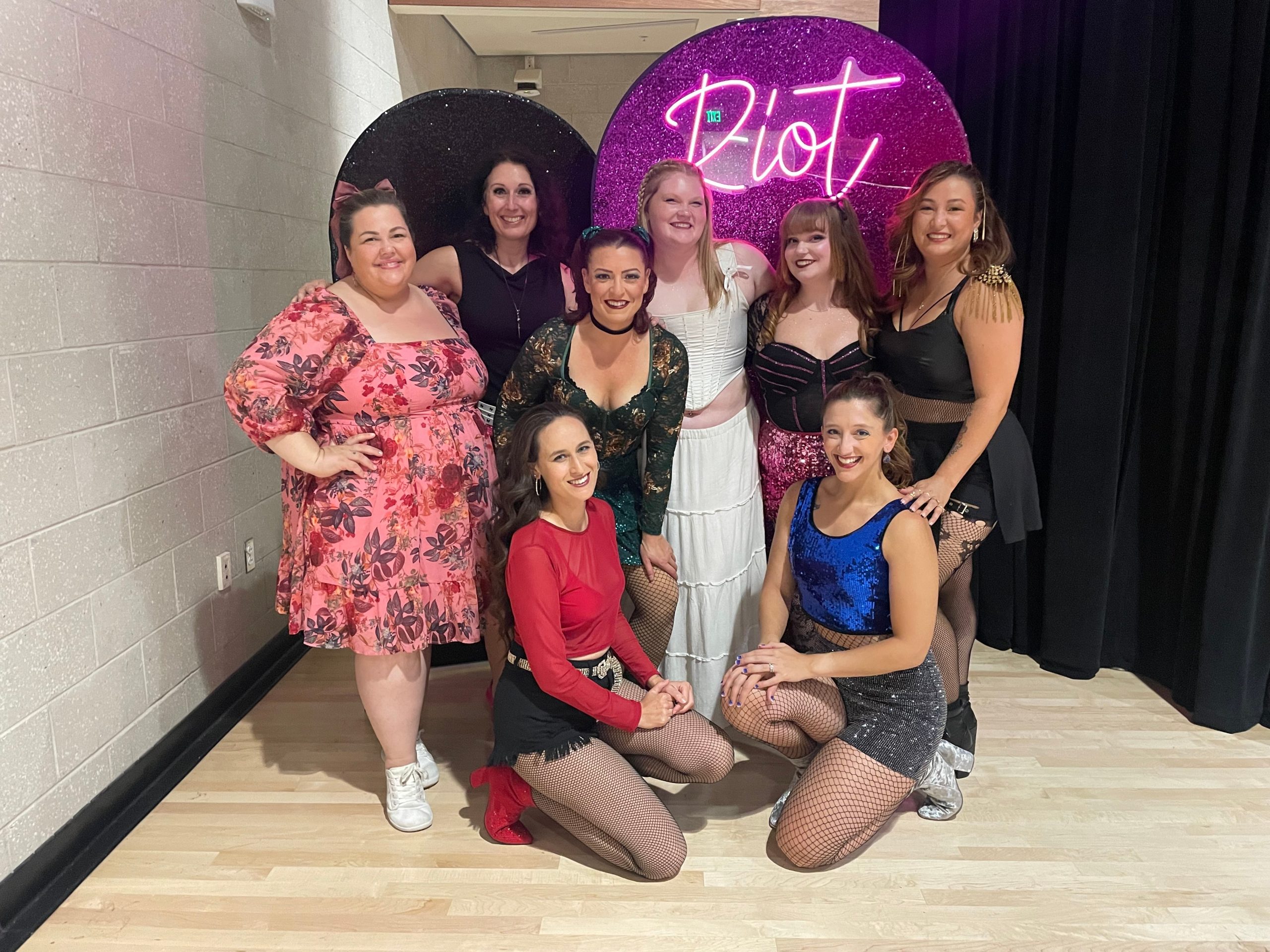
Image Credits
Jennifer Guttiere
Michael Prine